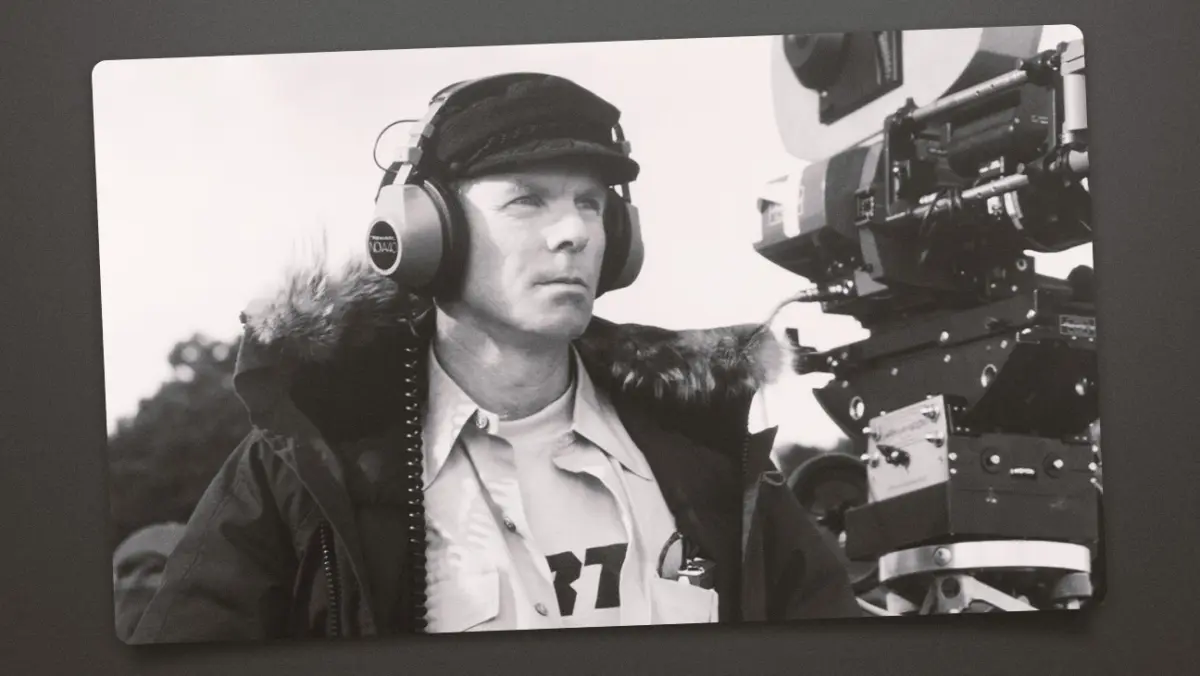
The filmmaker passed away on August 24 while in hospice care in Henderson, Nevada, due to natural causes. His death was confirmed to The Hollywood Reporter by his brother, Gil Karson. His passing marks the end of an era for the low-budget, high-impact action cinema of the 1980s and 1990s, a period defined by the rapid rise of international martial arts stars and the expansion of the independent home video market.
Early Life and Hollywood Foundations
Born on March 5, 1940, in Phoenix, Arizona, Eric Karson was raised in an environment deeply steeped in the machinery of the entertainment industry. He was the son of Lee Karson, a prolific television writer known for creating the 1956–1959 series The Gale Storm Show (also titled Oh, Susanna), a precursor to the cruise-ship-based comedy formula later popularized by The Love Boat. His father’s credits also included foundational Westerns and crime dramas such as Wagon Train, The Restless Gun, and The Detectives. His mother, Mary, transitioned from a career as a theater actress to focus on raising their four children.
The Karson family relocated to Los Angeles in the 1950s, settling in the Hancock Park neighborhood. The young Karson was exposed to the pinnacle of Hollywood stardom early on, as the family famously resided next door to Western icon John Wayne. After graduating from Cal State Northridge, Karson initially pursued a career as an actor. However, he soon pivoted behind the camera, spending his early professional years in Australia, where he honed his craft directing commercials and documentaries. Upon his return to Los Angeles, he joined The Peterson Co., then a preeminent production house, eventually rising to the position of vice president. This corporate background provided him with the logistical expertise required to manage the tight budgets and demanding production schedules that would later define his feature film career.
The Rise of the Ninja and the Action Boom
Karson’s transition to feature films coincided with the burgeoning fascination with martial arts in American pop culture. In 1980, he was offered the opportunity to make his directorial debut with The Octagon. The film was written by Leigh Chapman, a screenwriter recognized for the cult classic Dirty Mary, Crazy Larry. The Octagon arrived at the precise moment the “ninja movie craze” was taking hold of American theaters.
Starring Chuck Norris as Scott James—a retired karate champion battling a clan of assassins led by his estranged foster brother—the film proved to be a pivotal moment for both the director and the star. It established a blueprint for the 1980s action thriller: stylized fight choreography, high-stakes personal vendettas, and the elevation of martial arts practitioners to the status of traditional Hollywood leading men.
Defining the Career of Jean-Claude Van Damme
Karson’s most significant impact on the industry, however, may be his work with Belgian martial artist Jean-Claude Van Damme. Working through Imperial Entertainment, Karson directed Van Damme in the 1988 film Black Eagle. The collaboration proved to be highly synergistic, leading to their reunion on the 1990 film Lionheart, directed by Sheldon Lettich and produced by Karson.
Lionheart remains one of the most critical entries in Van Damme’s filmography. By portraying Lyon Gaultier—a soldier who deserts the French Foreign Legion to participate in underground street fighting to provide for his murdered brother’s family—Van Damme transcended the “brawler” archetype. The film’s success cemented his position as a viable, charismatic leading man in the U.S. market, setting the stage for his subsequent string of box-office hits throughout the decade. Karson’s role as a producer allowed him to bridge the gap between European martial arts sensibilities and the expectations of the American domestic audience, a skill set that was vital during the globalization of action cinema.
Mentorship and Technical Versatility
Beyond his work with global icons, Karson was instrumental in the career trajectory of French kickboxer Olivier Gruner. Karson directed Gruner in his 1990 debut, Angel Town, and produced his 1992 follow-up, Nemesis. Gruner, who frequently cited Karson as a vital mentor, represented the director’s ability to identify and nurture raw athletic talent. Karson’s approach was rooted in his understanding of the “action-first” narrative, where the physical prowess of the performer dictated the rhythm of the film.
Karson’s versatility extended to his roles both in front of and behind the camera. He directed the 1986 action thriller Opposing Force, which featured a more dramatic cast including Lisa Eichhorn and Tom Skerritt. He also frequently made cameo appearances in his own productions, playing a CIA chief in Black Eagle and a physician in Lionheart, providing a consistent, grounded presence in the chaotic world of independent action production.
Chronological Overview of Key Credits
- 1980: The Octagon (Director) – A landmark film that helped define the ninja craze and solidified Chuck Norris as a major box-office draw.
- 1986: Opposing Force (Director) – A shift toward high-stakes ensemble thrillers.
- 1988: Black Eagle (Director) – The beginning of a fruitful partnership with Jean-Claude Van Damme.
- 1990: Angel Town (Director) – The feature film debut of Olivier Gruner.
- 1990: Lionheart (Producer) – A cornerstone of Van Damme’s transition to superstardom.
- 1992: Nemesis (Producer) – Furthering the development of the high-concept sci-fi martial arts genre.
Industry Impact and Legacy
The death of Eric Karson highlights the loss of a specific type of Hollywood artisan: the specialist producer-director who navigated the transition between the fading studio system and the explosive growth of the home video market. In the 1980s and 1990s, the independent action film was the lifeblood of the burgeoning VHS rental industry. Karson’s films were staples of this era, providing the visceral, fast-paced entertainment that consumers demanded.
From a production standpoint, Karson was lauded for his ability to maximize limited resources. His films were rarely the most expensive on the slate, yet they consistently punched above their weight in terms of international distribution and profitability. By fostering long-term relationships with performers like Van Damme and Gruner, Karson helped create a pipeline of talent that kept the action genre vibrant for nearly two decades.
The ripple effect of his work continues to be felt in contemporary action cinema. The choreography and narrative structures he helped establish in the 1980s are still referenced in modern action franchises. While he may not have been a household name in the same vein as the stars he directed, his influence on the aesthetics of the genre is undeniable. He was a craftsman who understood the audience’s hunger for spectacle, hero-driven narratives, and the raw, kinetic energy of the martial arts.
Personal Life and Survivors
Despite the high-octane nature of his professional life, Karson maintained a close-knit family environment. He is survived by his wife of two decades, Tara, whose support was a constant in his later years. He is also survived by his siblings, Gil Karson—a talented musician and film editor who often collaborated with him—as well as his siblings Lisa and Michael. His extended family includes his nieces, Sylvia and Jackie Lee, and his nephew, Josh.
As the industry reflects on his contributions, Karson’s legacy remains tied to his ability to blend technical production knowledge with a keen eye for talent. His career serves as a case study in the evolution of the independent action film, proving that a dedicated director with a background in the realities of production can leave a lasting imprint on global cinema. His passing leaves a void in the community of action filmmakers who prioritize physical storytelling and the mentorship of the next generation of performers.