The Karlovy Vary International Film Festival (KVIFF) has marked a historic milestone, celebrating its Diamond Jubilee 60th edition across an 80-year legacy defined by remarkable geopolitical shifts, institutional survival, and artistic reinvention. Nestled in the historic spa town of the Czech Republic, this year’s "Vary Special" festival once again served as a vital global crossroads for international cinema. Blending the nostalgic Brutalist architecture of its headquarters, the Hotel Thermal, with a fiercely progressive programming vision, the festival continues to honor its complex historical roots while firmly establishing itself as a premier destination for both contemporary world cinema and vital repertory rediscoveries.
A Storied Chronology: From Post-War Origins to Category-A Prestige
The institutional history of KVIFF is inextricably linked to the turbulent geopolitical landscape of Central and Eastern Europe. Its inaugural edition was held in 1946, commencing just months after the restoration of Czechoslovakia following Nazi occupation and mere weeks before the launch of the inaugural Cannes Film Festival. As the Cold War intensified and the nation transitioned into a state communist regime, the festival’s international stature paradoxically grew. By 1958, the International Federation of Film Producers Associations (FIAPF) designated KVIFF as a category-A film festival, placing it in the highest tier of global cinematic impact alongside Cannes, Venice, and Berlin.

However, state control soon imposed external limitations. Beginning in 1959, the Soviet Union dictated that KVIFF share its platform on an alternating biennial schedule with the Moscow International Film Festival. This arrangement persisted for decades until the geopolitical landscape shifted dramatically with the dissolution of the Soviet bloc and the Velvet Revolution. In 1994, following the establishment of the independent Czech Republic, KVIFF regained its annual frequency and complete curatorial autonomy. Over the ensuing decades, festival leadership—championed in recent years by artistic director Karel Och—has successfully navigated the delicate balance of preserving the festival’s historical identity while discarding its ideological baggage.
Retrospective Programming and the "Out of the Past" Showcase
The 60th edition placed significant emphasis on historical context through its flagship retrospective program, titled "Out of the Past – KVIFF 60/80." This curated section served as an archival bridge, examining milestone films that mirror the festival’s evolution. Among the historical screenings was Powell and Pressburger’s fabulist war melodrama A Matter of Life and Death (1946), which had reached Czechoslovak audiences shortly after the end of World War II.
The retrospective also highlighted prominent recipients of the festival’s highest honor, the Crystal Globe. These included Ján Kadár and Elmar Klos’s acclaimed courtroom drama The Defendant (1964), and Ken Loach’s Kes (1970), which secured the top prize immediately following the pivotal events of the Prague Spring. Furthermore, the program shed light on previously suppressed works by censored directors such as Juraj Jakubisko, whose Birds, Orphans and Fools (1969) remained shelved until 1990. Demonstrating KVIFF’s long-standing commitment to global cinematic traditions beyond the European continent, the retrospective featured Barravento (1962), the directorial debut of Brazilian Cinema Novo pioneer Glauber Rocha.

Complementing these historical screenings were major world premieres of meticulously executed digital restorations. Repertory audiences lined up for high-definition presentations of Jonathan Glazer’s Sexy Beast (2000) in the packed Grand Hall, alongside Věra Chytilová’s psychosexual tragicomedy of the early AIDS era, Tainted Horseplay (1988).
Contemporary Panorama: Cannes Highlights and Transnational Narratives
Alongside its repertory offerings, KVIFF showcased several prominent titles fresh from the circuit, notably Emmanuel Marre’s A Man of His Time and Sandra Wollner’s Everytime.
Marre’s 155-minute historical drama presents an uncompromising examination of creeping fascism and moral compromise. Set against the backdrop of the Vichy regime, the narrative follows Henri, a bureaucratic climber whose ambition and mediocrity secure him a position within a deeply corrupt apparatus. Captured through Olivier Boonjing’s stationary, observant cinematography and anchored by Swann Arlaud’s chillingly ambivalent performance, the film serves as a potent, timely exploration of the banality of evil.

In contrast, Sandra Wollner’s Everytime offers a delicate, formally inventive exploration of childhood grief and memory. Sharing a cinematographer, Gregory Oke, with Charlotte Wells’s acclaimed Aftersun (2022), Wollner’s film blends urban realism with a hallucinogenic register, utilizing narrative fiction as an emotional salve against the fractures of reality.
Competitive Sections and Emerging Voices
KVIFF’s competitive landscape continues to serve as a bellwether for international talent, anchored by its two primary sections: the Crystal Globe Competition and Proxima.
The Proxima section, which evolved five years ago from the regionally focused East of the West sidebar to embrace a borderless platform for emerging cinematic voices, awarded its Grand Prix to Lover, Not a Fighter. Directed by Slovak filmmaker Martina Buchelová, the feature chronicles the self-destructive romance of a twenty-something slacker named Andrej and his partner Miša against the surreal backdrop of her father constructing a family bunker. Buchelová’s incorporation of scrappy, vertical phone footage and reflexive subtitling marks a bold formal experiment in contemporary youth cinema.

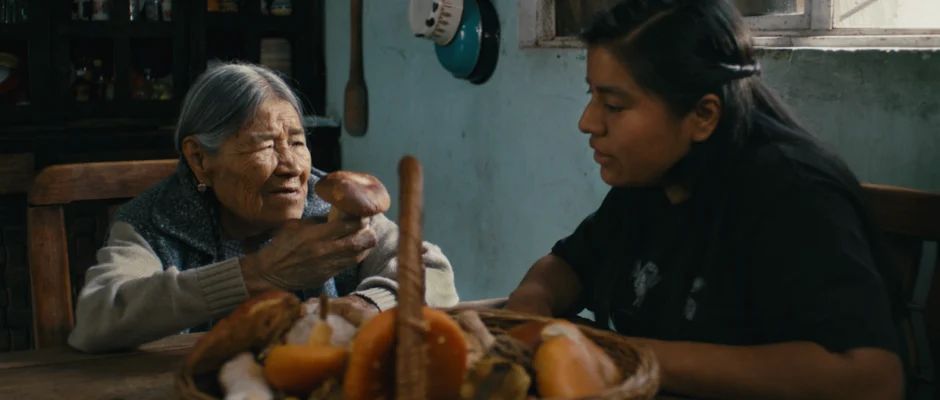
In the main Crystal Globe competition, which focuses on established global auteurs, Aung Phyoe’s Yangon-set romance Fruit Gathering claimed the top jury prize, while Slovak director Ivan Ostrochovský’s Only Beautiful Things to Look At received the FIPRESCI prize.
However, one of the most intellectually provocative entries in the broader festival lineup was the Bulgarian-language feature Black Money for White Nights, directed by Kristina Grozeva and Petar Valchanov. The narrative centers on Marina and Gosha, an elderly couple who have spent decades pocketing minor workplace bribes to finance a dream trip to St. Petersburg to witness the city’s famed "white nights." As they collect their final funds, Russia launches its full-scale invasion of Ukraine. Despite the geopolitical upheaval, the tour agency insists the trip will proceed, prompting the couple to deliberately turn down the volume on their television news.
Rather than serving as a simplistic critique of systemic corruption, Grozeva and Valchanov’s film operates as a tragicomic fable concerning the psychological illusion of political detachment. The protagonists’ domestic space—characterized by living room wallpaper featuring birch forests inspired by classic Russian literature—visualizes an anachronistic romanticism that ultimately collapses under the weight of contemporary reality. Although the film walked away without a formal jury prize, its thematic engagement with historical memory and geopolitical denial provided a fitting thematic coda to an anniversary edition defined by self-reflection.
Broader Implications and Industry Analysis

Film industry analysts view the 60th edition of KVIFF as a testament to the enduring viability of regional European festivals that successfully pivot toward global curation without abandoning their local heritage. By maintaining strict attendance structures—such as daily ticket caps that encourage deliberate viewing habits—the festival preserves an intimate critical environment despite drawing tens of thousands of accredited professionals and film enthusiasts.
As KVIFF looks toward its future, its ongoing dialogue with its own institutional past establishes a benchmark for cultural resilience. By confronting the ideological compromises of its mid-century history while championing bold, boundary-pushing contemporary narratives, the festival reaffirms its status as an indispensable pillar of the international cinematic ecosystem.