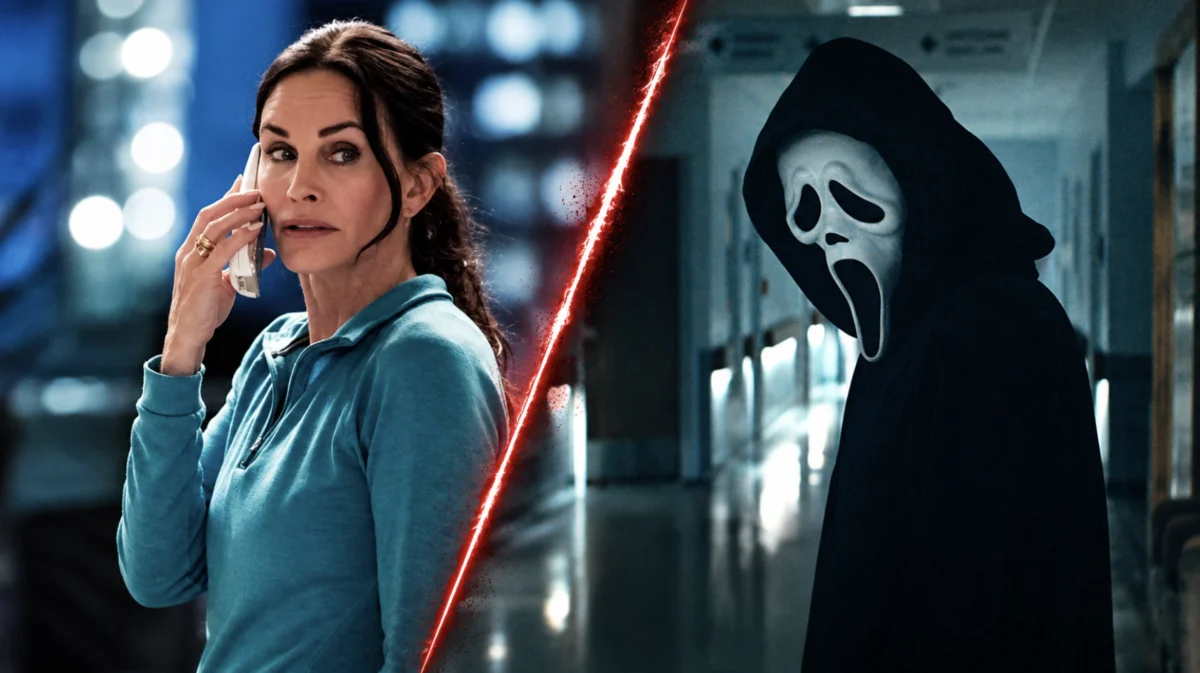
The iconic horror franchise that defined the meta-slasher genre for three decades is currently at a narrative and production crossroads, and one of its longest-tenured stars is signaling a desire to transition into a new creative role. Courteney Cox, who has portrayed the tenacious investigative journalist Gale Weathers in every installment of the Scream series since its 1996 debut, officially expressed interest in helming the upcoming eighth installment of the franchise during a recent appearance at the Toronto International Film Festival (TIFF).
Speaking at the Deadline Studio in September 2026, Cox addressed the vacancy left by the departure of director Kevin Williamson, who helmed the seventh installment but has confirmed he will not return for the eighth. Cox’s assertion that she possesses an unparalleled understanding of the franchise’s DNA has sparked industry conversation regarding the potential for a veteran cast member to step into the director’s chair—a move that would represent a significant shift in the production strategy of the multi-billion dollar slasher saga.
A Legacy Spanning Three Decades
To understand the weight of Cox’s suggestion, one must consider the historical continuity of the Scream franchise. Since Wes Craven’s original film hit theaters in December 1996, the series has served as a cultural barometer for the horror genre. Craven, a pioneer of psychological horror, directed the initial quartet of films, establishing a tone that balanced genuine terror with biting satire.
Following Craven’s passing in 2015, the franchise remained dormant until 2022, when directors Matt Bettinelli-Olpin and Tyler Gillett, known collectively as Radio Silence, successfully revived the series. Their approach modernized the "whodunit" mystery while maintaining the self-referential humor that has become a staple of the Woodsboro narrative. Their work on Scream (2022) and Scream VI (2023) earned both critical acclaim and significant box office returns, effectively introducing the franchise to a new generation of cinemagoers.
The subsequent transition to Kevin Williamson—the franchise’s original scribe—for Scream 7 marked a return to the series’ roots. However, with Williamson stepping away from the director’s chair for the eighth chapter, the studio faces the complex task of finding a filmmaker who can balance the franchise’s established history with the need for continued innovation.
Chronology of Production and Creative Shifts
The production history of the Scream series is marked by distinct eras of leadership, which now informs the current search for a new director:
- 1996–2011 (The Craven Era): Wes Craven directed Scream, Scream 2, Scream 3, and Scream 4. During this period, the franchise solidified its reputation for deconstructing horror tropes.
- 2022–2023 (The Radio Silence Era): Matt Bettinelli-Olpin and Tyler Gillett oversaw the successful soft reboot, focusing on a new cast led by Melissa Barrera and Jenna Ortega.
- 2024–2026 (The Williamson Transition): Kevin Williamson took the helm for the seventh installment, signaling a shift toward legacy-driven storytelling.
- Late 2026–Present (The Search for a Successor): Following the announcement that Williamson would not return, the studio has entered a period of recalibration, with Cox’s recent comments injecting a new candidate into the public discourse.
Supporting Data and Franchise Performance
The commercial viability of the Scream series remains high, making the selection of a director for the eighth film a high-stakes decision for the production studio. According to historical box office data, the series has consistently performed well even amidst shifting market trends.

The original 1996 film grossed over $173 million against a $15 million budget, a return on investment that established the slasher sub-genre as a major studio priority. Subsequent entries maintained this momentum, with Scream VI achieving a global box office gross of approximately $169 million. This stability indicates that the audience for the franchise is not only loyal but also resilient to changes in creative personnel. For the studio, hiring a director like Cox—who holds a deep, internal knowledge of the franchise’s structure—could be viewed as a strategy to maintain brand consistency while simultaneously generating significant publicity.
The Case for Actor-Turned-Directors
In Hollywood, the transition from acting to directing is a well-documented trajectory. Successful examples range from Clint Eastwood to Greta Gerwig, demonstrating that actors often possess a unique understanding of pacing, character motivation, and performance—the primary elements required for a slasher film to succeed.
Cox’s argument that "nobody knows more about that movie than I do" is grounded in the fact that she has been present for the franchise’s entire lifespan. She has worked under the direction of Wes Craven, collaborated with the writers who developed the "rules" of the Ghostface lore, and navigated the evolving tone of the scripts over thirty years. From a production standpoint, this level of institutional knowledge could mitigate the learning curve usually associated with bringing in an outside filmmaker to manage a high-pressure, established intellectual property.
Implications for Scream 8
The public call for a female-led or legacy-led directorial vision for the next installment arrives at a pivotal moment. The horror genre is currently experiencing a "prestige" shift, where character-driven narratives are increasingly favored alongside traditional jump-scares. Should the studio entertain the possibility of Cox, or another long-term veteran, taking the helm, it would represent a departure from the traditional search for rising independent directors.
Furthermore, there is the question of the "publicity factor" mentioned by Cox. In an era where franchise fatigue is a legitimate concern for major studios, having a recognizable, beloved figure like Cox at the helm provides a unique marketing narrative. It effectively bridges the gap between the original fans of the 1996 film and the younger demographic that flocked to the 2022 revival.
Industry Outlook and Studio Response
While there has been no official word from the studio regarding the short-list for Scream 8, industry analysts note that the search is likely in its preliminary stages. The studio is currently balancing the need for a director who can maintain the franchise’s dark, satirical edge with the logistical demands of a large-scale production.
As meetings continue, the industry will be watching closely to see if the studio views Cox’s interest as a viable creative path or merely a passionate comment from a dedicated star. For now, the suggestion has successfully placed the conversation regarding the next chapter of Ghostface firmly in the hands of the franchise’s most enduring survivor. Whether or not this results in a formal contract, the dialogue surrounding Scream 8 has shifted toward an appreciation of the franchise’s longevity and the enduring impact of those who helped define it.
As the production team evaluates the future, the primary objective remains the same: to honor the legacy established by Wes Craven while ensuring the series remains a relevant, terrifying, and meta-commentary on the state of the horror genre today. With the script currently in development and the search for a creative lead underway, the next few months will prove decisive for the future of the franchise.