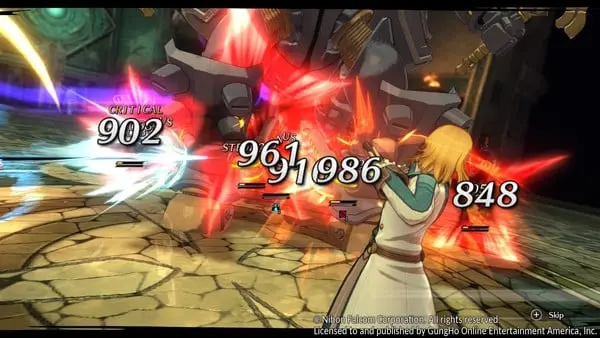
The release of Trails in the Sky 2nd Chapter, the 2025 remake of the seminal Japanese role-playing game (JRPG) originally developed by Nihon Falcom, marks a significant milestone in the preservation and modernization of the Kiseki (Trails) series. Following the 2025 release of the Trails in the Sky 1st Chapter remake, this second installment completes the narrative arc established at the dawn of the franchise. Published by GungHo Online Entertainment America, the title integrates modern graphical fidelity and refined mechanical systems while maintaining the structural integrity of the original 2006 release.
Historical Context and Development Timeline
The Trails franchise, a sub-series of the larger Legend of Heroes property, has undergone a massive resurgence in the Western market over the last five years. The series follows a sprawling, interconnected narrative across the continent of Zemuria. The original Trails in the Sky trilogy established the foundation for the series’ world-building, focusing on the Kingdom of Liberl.
The timeline of the current remakes aligns with a broader strategy by Nihon Falcom to introduce the franchise’s origins to a generation of players who entered the series through recent titles like Trails Through Daybreak (2021) and its subsequent sequels, Daybreak II and Beyond the Horizon. By modernizing the Sky duology, the developer ensures that the narrative continuity remains accessible, providing a bridge between the foundational 2000s-era storytelling and the high-definition standards of the modern gaming landscape.

Narrative Architecture and Structural Design
Trails in the Sky 2nd Chapter is divided into a series of distinct chapters, each focusing on a specific region within the Kingdom of Liberl. The overarching plot follows the protagonist, Estelle Bright, as she navigates a complex political conspiracy while simultaneously managing her professional responsibilities as a Bracer—a member of an international guild dedicated to peacekeeping and humanitarian aid.
The game’s progression system requires a balance between main narrative objectives and peripheral side quests. These tasks, ranging from monster subjugation to social arbitration, provide critical world-building and character development. Mechanically, the game utilizes a time-sensitive progression model; certain side quests become inaccessible once the main story advances, requiring players to exercise deliberate pacing. While this system does not mirror the strict, calendar-based constraints found in modern titles like Persona, it necessitates a level of strategic planning that distinguishes the series from more linear RPG experiences.
Combat Mechanics: The Synthesis of Real-Time and Turn-Based Strategy
The combat system in 2nd Chapter represents a dual-layer approach to tactical engagement. Players initially interact with enemies in a real-time environment, which allows for the weakening of foes or the preemptive initiation of combat. This phase acts as a prologue to the primary engagement: the turn-based Command mode.
Data-driven analysis of the combat system reveals a heavy emphasis on positioning, elemental affinities, and resource management. The "Orbment" system—a series of customizable slots that grant magical abilities (Arts)—requires players to calculate the cost and benefit of spell casting against the movement of enemy units. The following tactical elements define the core gameplay:

- Turn Bonuses: Randomly occurring benefits that reward players for precise timing.
- S-Crafts: Powerful, cinematic special attacks that can be deployed outside of the standard turn order, providing a critical tactical advantage.
- Positional Strategy: Enemy AI reacts to the spatial arrangement of the player’s party, making the proximity of allies a key factor in mitigating area-of-effect damage.
According to technical reviewers and early adopters, the balance on the "Normal" difficulty setting is designed to facilitate a "flow state," where the player moves between strategic decision-making and fluid execution. However, the game maintains a high ceiling for difficulty, particularly during boss encounters, where the failure to manage minion-to-boss ratios—specifically concerning enemy healing buffs—can lead to total party defeat.
Character Development and Narrative Maturity
The writing within the Trails series is frequently cited by industry analysts for its focus on character longevity. Unlike many RPGs that relegate non-playable characters (NPCs) to static exposition, the Liberl setting features a consistent cast of secondary characters who undergo personal growth alongside the main party.
A notable example of this narrative design is the character of Estelle Bright. In the transition from the 1st Chapter to the 2nd, the game implements a mechanical reset regarding her magical capabilities. Rather than retaining endgame-tier spells from the previous installment, the narrative dictates that she must re-acquire her skills. This decision serves two purposes: it creates a fair leveling curve for the player and reinforces the character’s growth from a rookie Bracer into a seasoned strategist who understands the necessity of foundational knowledge.
Furthermore, the central relationship between Estelle and Joshua is highlighted as a complex, multi-year character arc. The development team’s ability to portray the evolution of their relationship from childhood companions to romantic partners is regarded as a high-risk narrative endeavor that is handled with a focus on emotional continuity.

Industry Implications and Market Reception
The release of 2nd Chapter is part of a larger commercial push to unify the fragmented history of the Trails franchise. By aligning the mechanics of the Sky remakes with the established systems of the Daybreak era, Nihon Falcom has successfully homogenized the player experience. This is a critical strategic move for the publisher, GungHo Online Entertainment America, as it lowers the barrier to entry for Western audiences who may have previously been intimidated by the sheer volume of content in the series.
From a production standpoint, the musical score and the integration of voice-acting updates have received favorable attention. The audio-visual presentation serves to modernize the 20-year-old source material without sacrificing the "classic" feel that long-term fans associate with the Liberl arc.
Conclusion: The Legacy of the Liberl Arc
The conclusion of the Trails in the Sky 2nd Chapter remake reinforces the series’ reputation for dense, high-stakes storytelling. By bridging the gap between the original 2006 narrative and the current standards of the genre, the title provides a coherent conclusion to the Liberl story.
The game’s design philosophy suggests that the longevity of the franchise rests on its commitment to character-driven plots and a combat system that rewards iterative learning. As the industry continues to see a trend toward the remaking of classic JRPGs, Trails in the Sky 2nd Chapter sets a benchmark for how to preserve legacy content while updating it for contemporary hardware. For both new players and those familiar with the franchise’s history, the title offers a comprehensive look at the genesis of one of the most expansive narratives in modern gaming, ensuring that the legacy of the Bracers of Liberl remains a foundational pillar of the Trails experience.