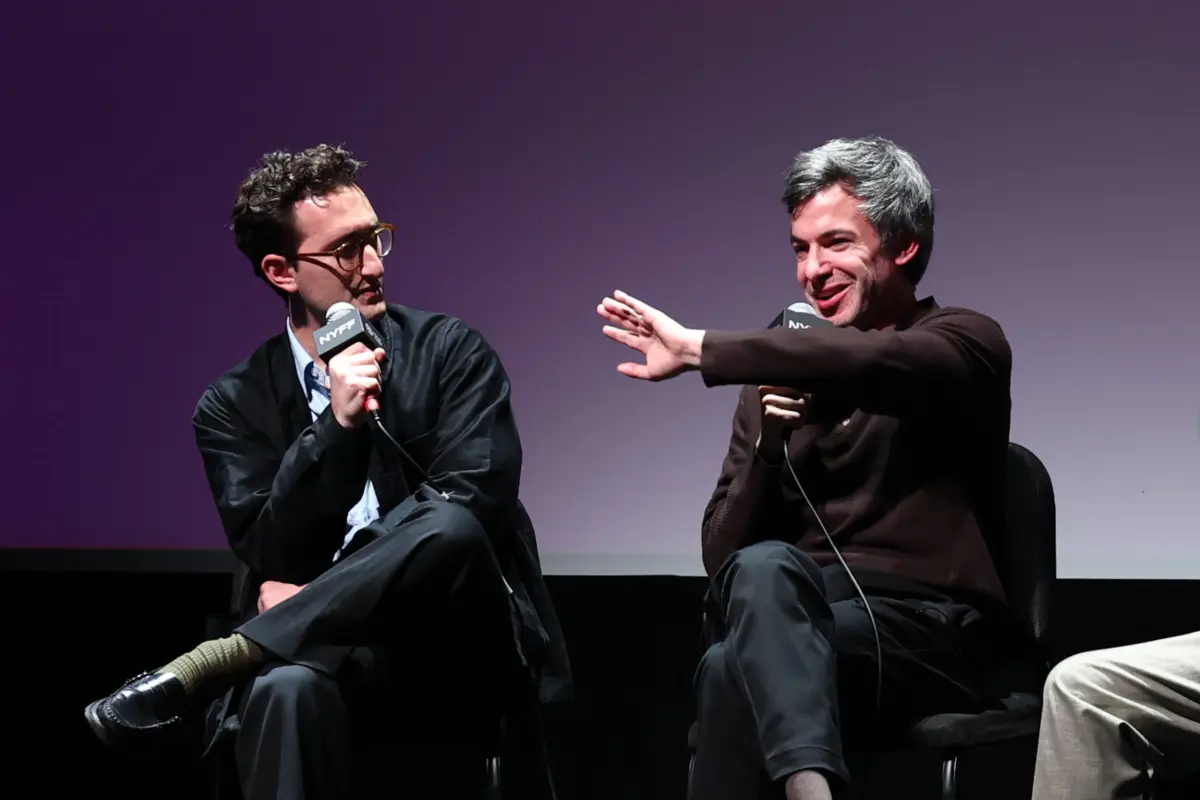
The cultural landscape of 2026 is currently witnessing a profound intersection between the unchecked influence of technology moguls and the resurgence of narrative filmmaking as a tool for public accountability. This weekend, A24 released You Can See Everything, a documentary directed by Nathan Fielder and Lance Oppenheim that probes the psyche and legal downfall of Elizabeth Holmes. The film’s debut follows a concentrated wave of high-profile releases—including Alex Gibney’s Musk, the Meta-focused drama The Social Reckoning, and Luca Guadagnino’s Artificial—that collectively function as a cinematic audit of the modern tech oligarchy. These works arrive at a moment of significant public skepticism, as the promised "solutions" of Silicon Valley face increasing scrutiny from regulators, labor unions, and now, the creative class.
A Chronology of the Silicon Valley Cinematic Pivot
The recent surge of interest in tech-centric investigative media is not a sudden phenomenon but rather the culmination of years of escalating tensions between digital platforms and traditional content creators.
- 2023–2024: The proliferation of Large Language Models (LLMs) triggers widespread anxiety within the entertainment industry regarding intellectual property and the potential displacement of writers and actors.
- Late 2024: Production begins on several high-budget projects focusing on the internal operations of OpenAI, Meta, and SpaceX, signaling a shift in studio appetite toward critical tech investigations.
- September 2025: The New York Film Festival serves as a flashpoint, premiering Artificial to widespread critical acclaim, highlighting the internal fractures at OpenAI.
- May 2026: Legal battles involving Elon Musk and various AI conglomerates reach a fever pitch, creating a backdrop of instability that fuels audience demand for transparency.
- Current Date: The simultaneous theatrical release of four major titles centered on tech leaders marks a rare moment of coordinated industry-wide critique, challenging the narrative of the "tech savior."
Anatomy of the Tech Alpha: Data and Context
The figures at the center of these films—Elon Musk, Mark Zuckerberg, and Sam Altman—represent a distinct class of corporate leadership. Their influence extends beyond product development into the realms of geopolitical policy, global infrastructure, and public discourse.
In the case of Elon Musk, Alex Gibney’s four-hour documentary presents a detailed look at the centralization of power. The film examines the role of Starlink, the satellite constellation operated by SpaceX. According to internal reports and recent geopolitical analysis, Starlink has become a critical piece of infrastructure for both civilian communications and military operations in conflict zones, most notably Ukraine. The film documents claims that restrictive usage policies on the platform may have influenced tactical outcomes, effectively granting a private individual the power to dictate the military reach of sovereign nations.
Similarly, The Social Reckoning explores the business model of Meta. Financial analysis of the company’s Q3 2025 earnings report suggests that a significant portion of its ad revenue is tethered to engagement metrics that favor high-arousal, divisive content. The film argues that this is not a side effect of the platform, but a structural necessity for the company’s fiscal performance, raising questions about the ethics of algorithmic governance.
The Rise of the Creative Counter-Narrative
Perhaps the most compelling aspect of this trend is the direct tension between the subjects and the filmmakers. Unlike traditional biographical films, these works are being marketed as "investigative interventions."
Luca Guadagnino’s Artificial, which features a performance by Andrew Garfield as Sam Altman, has been noted for its focus on the human cost of rapid development. By highlighting the perspective of figures like Ilya Sutskever, who reportedly left OpenAI citing safety concerns, the film frames the race toward Artificial General Intelligence (AGI) as a series of moral compromises. When asked for comment regarding the film’s depiction of the company’s internal culture, an OpenAI spokesperson issued a brief statement: "We are focused on the future of our technology. We do not believe these dramatizations accurately reflect the rigorous safety and ethical frameworks we have implemented."
Critics argue that the effectiveness of these films lies in their ability to translate complex, often opaque, technical processes into emotionally resonant stories. By placing human agents—engineers, whistleblowers, and victims—at the center of these narratives, the filmmakers are reclaiming the ground lost to automated systems and "black box" corporate logic.
Industry Implications and Market Shifts
The studio strategies behind these films indicate a shifting alliance within Hollywood. While major distributors such as Sony, Neon, and A24 have historically sought tech partnerships for distribution and capital, the current cycle suggests a strategic distancing.
The rejection of trailer advertisements for the film Musk by major digital platforms earlier this year served as a catalyst for the industry to reconsider its dependence on tech-owned advertising ecosystems. Although some studios remain entangled with Silicon Valley—for instance, HBO’s ownership structure remains sensitive to broader corporate interests—there is a noticeable trend toward prioritizing editorial independence.
The financial success of these films in their opening weeks suggests that audiences are not merely indifferent to the tech industry’s influence; there is a tangible market for skepticism. As these films move from theaters to home streaming, the conversation is likely to broaden. The "long-term grudge" mentioned by industry analysts is not directed at the individuals themselves, but at the ideology of "accelerationism"—the belief that technological progress should supersede human oversight and social stability.
Analyzing the "Solve" vs. The Story
The linguistic shift identified by many of these films—the transformation of the verb "solve" into the corporate noun "solve"—is highlighted as a symptom of a deeper detachment from reality. When tech leaders speak of a "solve" for complex human issues like democracy, education, or warfare, they are often abstracting the problem to a point where human nuance is lost.
These films represent a significant pushback. By documenting the gap between the promises of tech leaders and the outcomes experienced by the public, directors like Fielder and Gibney are asserting that the human story remains the primary unit of cultural value. As the AI revolution continues to automate creative tasks, the "filmmaker uprising" serves as a reminder that the ability to contextualize power and critique systemic failure is a uniquely human attribute that cannot be replicated by algorithms.
While it would be reductive to suggest that these films alone can alter the trajectory of global technological development, they serve as a powerful societal check. They provide the public with a shared vocabulary to discuss the opaque systems governing their lives. Whether or not this cinematic movement results in tangible policy changes, it has successfully established a new, critical discourse that places the tech industry firmly under the lens of the arts. As the season progresses, the impact of these narratives will be measured not just in box office returns, but in the evolving public demand for accountability from those who seek to rewrite the social contract through lines of code.