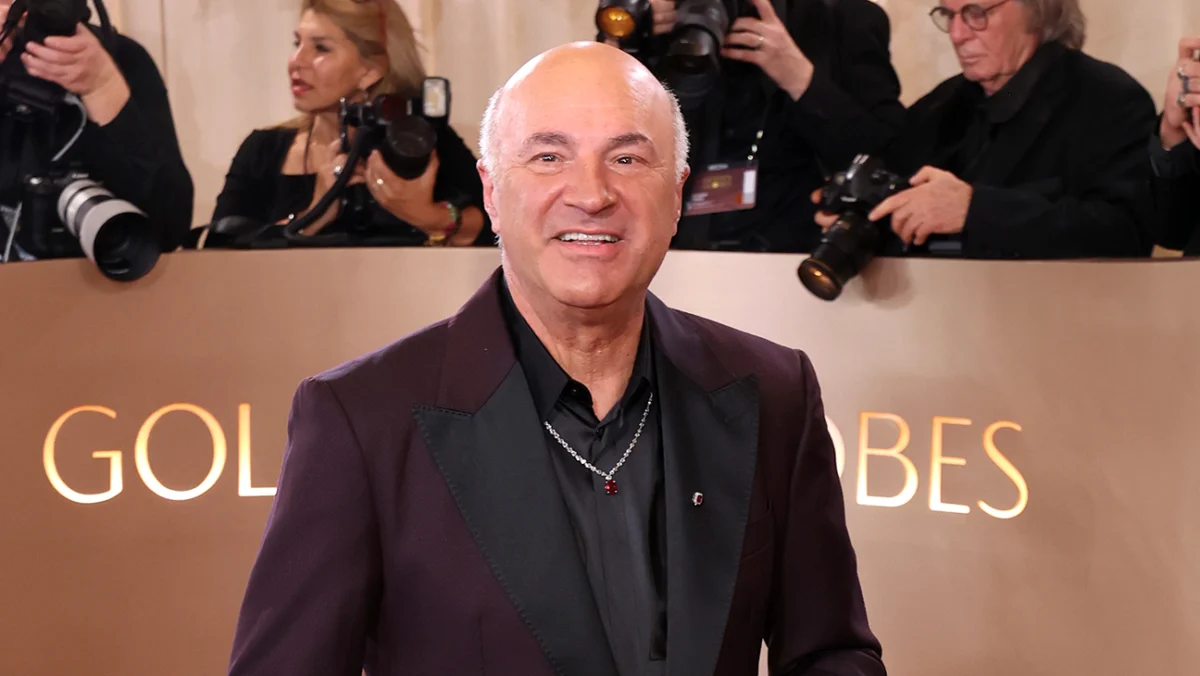
The intersection of high-stakes infrastructure development, national security rhetoric, and media responsibility has culminated in a significant legal challenge as Kevin O’Leary, the prominent venture capitalist and "Shark Tank" personality, faces a defamation lawsuit. Filed on Wednesday in a Utah federal district court, the litigation centers on a series of televised statements in which O’Leary allegedly accused local opponents of his proposed artificial intelligence data center of being covertly funded or influenced by the Chinese government. The plaintiffs, which include the non-profit organization Alliance for a Better Utah, the consulting firm Elevate Strategies, and individuals Gabrielle Finlayson and Josh Kanter, contend that these "baseless" accusations have resulted in profound personal and professional damage.
The lawsuit marks a pivotal moment in the ongoing debate over the expansion of AI infrastructure in the United States. As developers race to build the massive data centers required to power the next generation of large language models, they are increasingly meeting resistance from local communities concerned about environmental impact, energy consumption, and resource allocation. In this instance, the legal complaint alleges that O’Leary attempted to bypass legitimate local concerns by branding his critics as foreign agents, leveraging the platform of national news broadcasts to amplify his claims.
The Genesis of the Legal Action
The conflict traces its origins to the "Stratos" project, a multi-billion-dollar AI data center initiative spearheaded by O’Leary in Utah. The project was designed to capitalize on Utah’s burgeoning tech sector and its relatively favorable energy landscape. However, the proposal quickly drew the ire of local advocacy groups and community leaders. Organizations like Alliance for a Better Utah raised questions regarding the project’s massive water requirements—a sensitive issue in the arid Western United States—and the potential strain on the local power grid.
According to the complaint, O’Leary responded to this opposition not with data-driven rebuttals, but with a series of inflammatory accusations. The lawsuit details how, during several appearances on Fox News in May and June, O’Leary characterized the plaintiffs as "proxies for the Chinese government." He suggested that the opposition to his data center was a strategic move by the Chinese Communist Party (CCP) to hinder American progress in the global AI arms race. The plaintiffs argue that these statements were made with a reckless disregard for the truth, intended solely to silence dissent and discredit the motives of those questioning the project’s viability.
A Detailed Chronology of the Dispute
The timeline of the escalation highlights the speed at which the rhetoric intensified. In early May, as local pushback against the Stratos project became more organized, O’Leary began a concerted media campaign. Over the course of three weeks, the lawsuit alleges, O’Leary appeared on Fox News programs five times, each time doubling down on the narrative of foreign interference.
By late May, the rhetoric had expanded beyond Fox News. The complaint lists at least ten separate media appearances across various platforms where O’Leary echoed similar sentiments. In these broadcasts, he reportedly characterized the legal and administrative hurdles placed in front of his project as "sabotage" orchestrated by interests aligned with Beijing.
The turning point occurred in mid-June when the plaintiffs began receiving credible threats to their safety. Gabrielle Finlayson and Josh Kanter, specifically named in the broadcasts, reported an influx of harassment, ranging from online vitriol to direct physical threats. The lawsuit alleges that the "smear campaign" transformed them into targets for nationalistic animosity, causing "severe emotional distress and ongoing threats to their physical safety."
In a move that the plaintiffs describe as an admission of error—albeit an insufficient one—O’Leary posted a clarification to his Instagram account in late June. In the post, he stated that he had "no evidence" that the Alliance for a Better Utah, Elevate Strategies, or the individual plaintiffs were funded by China or the CCP. However, the plaintiffs argue that this social media post did not reach the same millions of viewers who saw the original televised segments and failed to undo the reputational harm already inflicted.
The Role of Media Responsibility
A central component of the lawsuit is the inclusion of Fox News as a defendant. The complaint alleges that the network was "instrumental" in the defamation by providing O’Leary with an uncritical platform. The plaintiffs argue that despite the "inherently unreliable" nature of O’Leary’s claims and a lack of supporting evidence, the network repeatedly invited him back, allowing the accusations to be broadcast to a massive audience without qualification or pushback from moderators.
The legal challenge raises fundamental questions about the "actual malice" standard in defamation law, particularly concerning guest commentators. While news organizations are often protected when reporting on matters of public interest, the plaintiffs contend that Fox News neglected its editorial duty by failing to vet O’Leary’s claims, especially after the initial broadcasts sparked controversy.
In response to the filing, Fox News Media issued a statement asserting its intent to "vigorously defend" against the lawsuit. The network pointed out that it "publicly corrected the record on every program where on-air guest Kevin O’Leary’s comments were made," noting that these corrections were extensively publicized. This defense suggests that the network believes its subsequent efforts to clarify the facts mitigate the legal liability for O’Leary’s live remarks.
Supporting Data: The High Stakes of AI Infrastructure
To understand the intensity of the conflict, one must look at the economic and technical scale of AI data centers. Modern AI facilities, such as those O’Leary proposed, require an immense amount of power and water.
- Energy Consumption: A single large-scale AI data center can consume as much electricity as a mid-sized city. In Utah, where the power grid is already facing transitions from coal to renewable sources, the addition of a multi-gigawatt facility is a significant infrastructure challenge.
- Water Usage: Cooling the thousands of high-performance GPUs (Graphics Processing Units) used in AI training requires millions of gallons of water daily. In the Great Salt Lake basin, water conservation is a top-tier political and environmental priority.
- Economic Competition: The U.S. is currently in a "data center boom," with over $100 billion in investment planned over the next five years. This gold rush has created a climate where developers are under immense pressure to secure permits and break ground quickly, often leading to friction with local regulatory bodies.
The plaintiffs argue that their concerns were rooted in these tangible, data-driven issues. By framing these concerns as "Chinese interference," they allege O’Leary sought to shift the conversation from environmental sustainability to national security, thereby delegitimizing the local regulatory process.
Official Responses and Legal Perspectives
The legal teams representing the plaintiffs have emphasized that the case is about the limits of free speech when it involves false accusations of criminal or treasonous behavior. "Labeling patriotic Americans and local advocacy groups as agents of a hostile foreign power is not a matter of opinion; it is a calculated lie designed to destroy reputations," a representative for the plaintiffs stated.
Legal analysts suggest the case may hinge on whether the court views the plaintiffs as "public figures." Under U.S. law, public figures must prove "actual malice"—that the defendant knew the statement was false or acted with reckless disregard for the truth. If the plaintiffs are deemed private individuals, the burden of proof is lower, requiring only a showing of negligence. The fact that O’Leary later admitted to having "no evidence" for his claims could be a critical piece of evidence in proving either negligence or reckless disregard.
O’Leary’s legal counsel has not yet released a formal rebuttal to the specific allegations in the lawsuit, though his previous Instagram post suggests a strategy of "clarification" rather than a full retraction. The businessman has long been known for his "tell-it-like-it-is" persona, but this legal challenge tests the boundaries of that brand when it moves from the boardroom to the arena of national security accusations.
Broader Impact and Implications for Local Activism
The outcome of this lawsuit could have far-reaching implications for how corporations and high-profile developers interact with local opposition. If the court finds in favor of the plaintiffs, it could serve as a deterrent against the use of "foreign influence" narratives to silence domestic critics. Conversely, a victory for O’Leary and Fox News might embolden developers to use similar rhetoric in the future, potentially chilling local activism and public participation in infrastructure planning.
Furthermore, the case highlights the risks associated with the "securitization" of economic policy. As the U.S. government increasingly views technology development through the lens of national security, there is a growing trend of private actors adopting this language to advance their interests. This case serves as a cautionary tale of how such rhetoric, when disconnected from factual evidence, can lead to significant legal and social consequences.
Summary of Potential Outcomes
As the case moves through the Utah federal district court, several key issues will be monitored:
- Discovery Phase: The plaintiffs will likely seek internal communications from both O’Leary’s team and Fox News to determine if there was a conscious effort to coordinate the "Chinese proxy" narrative.
- The "Correction" Defense: The court will evaluate whether Fox News’ on-air corrections were sufficient to remedy the alleged harm, or if the initial broadcasts constituted a "smear campaign" that corrections could not fix.
- Physical Safety Claims: The evidence regarding threats to the plaintiffs’ physical safety will be crucial in determining the "damages" portion of the lawsuit.
The Stratos project remains in a state of uncertainty as the legal battle unfolds. What began as a dispute over land use and resources has evolved into a high-profile litigation that touches on the very heart of American media ethics, the limits of corporate influence, and the protection of private citizens from powerful public figures. For now, the plaintiffs remain steadfast in their pursuit of what they term "reputational justice," while O’Leary and Fox News prepare for a protracted legal defense in the federal courts.