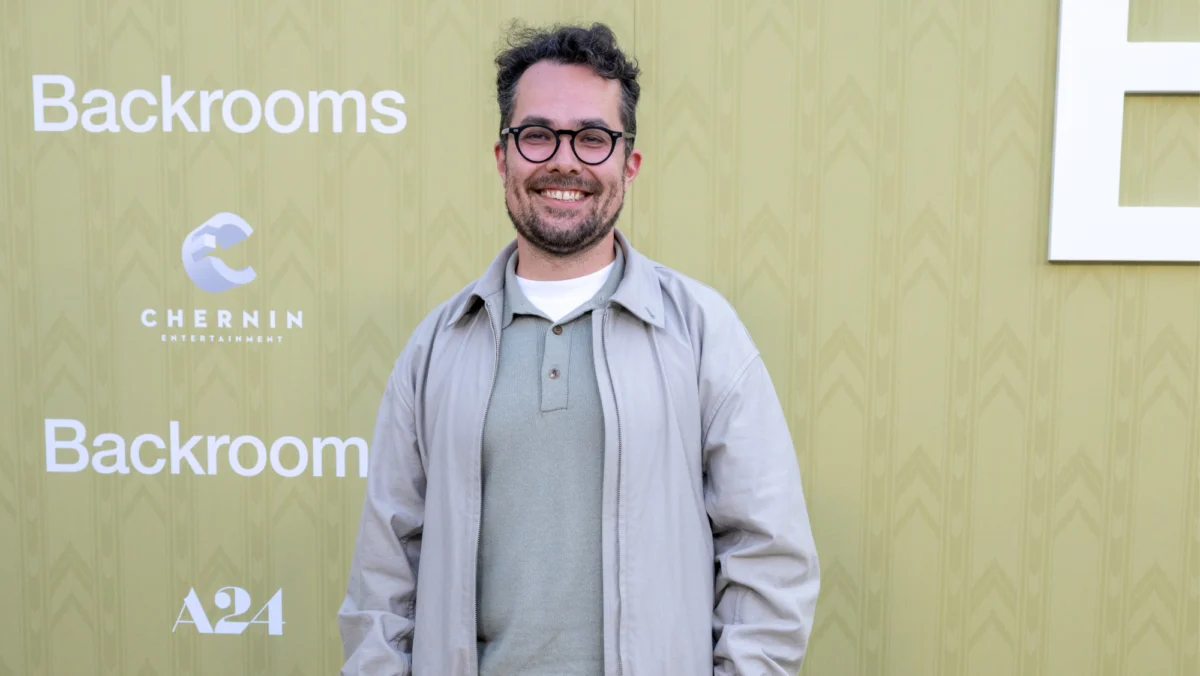
The global film industry is currently recalibrating its understanding of digital-to-theatrical pipelines following the unprecedented opening weekend of Backrooms, a $10 million horror feature that secured a staggering $118 million in worldwide ticket sales during its debut window. Produced by Vancouver-based Chris Ferguson of Oddfellows Pictures and directed by 20-year-old viral sensation Kane Parsons, the film’s success represents a watershed moment for independent cinema and the horror genre. For Ferguson, the financial windfall has translated into an immediate and relentless surge in industry attention, as major Hollywood players scramble to align themselves with the creative team behind the year’s most profitable ROI project.
The Monday following the release was anything but typical for Ferguson. Speaking with industry reporters, the producer noted that his phone has not stopped ringing since the first Friday matinee numbers began trickling in. Ferguson, known for his habit of pacing while conducting business, reportedly walked 25,000 steps within a three-block radius of his home on the Saturday of the opening weekend alone—a physical manifestation of the high-stakes energy surrounding the film’s release. The interest in his production banner, Oddfellows Pictures, has reached a fever pitch, with collaborators and competitors alike taking bets not only on the film’s final box office tally but also on Ferguson’s daily step count as he fields an endless stream of offers.
The Genesis of a Digital Phenomenon
The journey of Backrooms from a niche internet subculture to a global box office leader began on YouTube. Kane Parsons, who was only 16 when he began uploading his "The Backrooms (Found Footage)" series, tapped into the "liminal space" aesthetic—a psychological phenomenon involving empty or transitional spaces that evoke a sense of unease and nostalgia. His short films, characterized by their grainy, VHS-style cinematography and masterful use of tension, amassed hundreds of millions of views, eventually catching the eye of James Wan’s Atomic Monster.
When Atomic Monster flagged the young creator to Ferguson, the producer was initially struck by the novelty of Parsons’ age. However, Ferguson admits that the "young prodigy" narrative quickly gave way to a deeper respect for Parsons’ intellectual maturity. According to Ferguson, the 24-hour window of being impressed by Parsons’ youth was replaced by a "mind-meld" with a creator he describes as "wildly intelligent and curious." Ferguson has frequently compared Parsons to a "wise old man" trapped in a young person’s body, noting that the director possesses a technical and narrative grasp of the medium that far exceeds his years.
Strategic Production and the Vancouver Connection
The production of Backrooms was a calculated risk that relied heavily on the infrastructure Ferguson had built in Vancouver. Rather than treating Parsons as a novice who needed to "pay his dues," Ferguson integrated him into the highly specialized crew he had previously assembled for the horror hit Longlegs, directed by Osgood Perkins. This crew served as a physical extension of Parsons’ digital skillset.

In his YouTube series, Parsons was a one-man studio: he hand-animated the environments, selected every camera angle, designed the 3D models for production elements, and composed the entire musical score. Transitioning this holistic creative process to a physical film set required a delicate touch. Ferguson recognized that the healthiest environment for Parsons would be a "tight crew" that could translate his digital vision into a large-scale theatrical format. While the scale and timeframe of a feature film differ significantly from a digital web series, the goal was to ensure that Parsons maintained the same level of granular control he enjoyed while working solo in his bedroom.
The choice of Vancouver as the primary shooting location further solidified the city’s reputation as a burgeoning hub for elevated horror. Ferguson attributes this "winning streak" to a passionate, young local crew that has been meticulously curated over the last several years. The synergy between the Vancouver production scene and Ferguson’s Phobos banner—a joint venture with Osgood Perkins—has created a reliable engine for high-quality, cost-effective genre filmmaking.
Financial Breakdown and Market Impact
The financial performance of Backrooms is being studied by studio executives as a blueprint for modern genre distribution. With a production budget of $10 million, the film’s $118 million opening weekend represents an 11.8x return on investment in just three days. When accounting for marketing costs and theater splits, the film is already deeply into the profit margin, a rare feat in a post-pandemic theatrical landscape.
This success follows in the footsteps of Longlegs, which grossed $128 million worldwide on a similarly modest budget under the Neon banner. The marketing strategy for Backrooms, much like Longlegs, utilized a "mystery-first" approach, leveraging the existing online lore while maintaining an air of cinematic prestige. The involvement of A24, Chernin Entertainment, 21 Laps Entertainment, and Atomic Monster provided a multi-layered support system that ensured the film reached both the core "creepypasta" fanbase and broader prestige-horror audiences.
The casting also played a pivotal role in bridging the gap between internet viral sensation and serious cinema. The inclusion of Academy Award nominee Chiwetel Ejiofor, alongside rising stars like Finn Bennett and Renate Reinsve, signaled to audiences and critics that Backrooms was more than just a "YouTube movie." It was a sophisticated psychological thriller that happened to have digital roots.
Navigating the YouTube-to-Film Pipeline
The massive success of Backrooms has inevitably led to questions about whether Hollywood will now pivot toward social media platforms to find its next generation of directors. Ferguson, however, offers a cautionary perspective. While he acknowledges that platforms like YouTube and TikTok are excellent for discovery, he warns against an "over-correction" where studios option every viral short film without considering whether the creator is capable of longform execution.

Ferguson points out that both Kane Parsons and Curry Barker (director of Obsession) were essentially producing longform video content on YouTube before their jump to features. They had trained themselves in the rigors of narrative structure, pacing, and visual storytelling. Ferguson argues that the mistake many will make is attempting to turn short-form TikTok snippets—which rely on instant gratification—into 90-minute theatrical experiences. The success of Backrooms, he insists, is rooted in Parsons’ ability to sustain tension over time, a skill that is not universal among digital creators.
Future Implications for the Horror Genre
As the dust settles on the opening weekend, the implications for the future of horror are clear. The genre remains the most reliable sector for independent film profitability, particularly when paired with visionary directors who understand digital-native aesthetics. The partnership between Ferguson’s Phobos and Neon is expected to continue this trend, with a Longlegs sequel already in development featuring the return of Nicolas Cage.
Furthermore, the "Vancouver model" of production—leveraging local talent and maintaining tight budgets while delivering high-concept visuals—is likely to be emulated. Ferguson’s ability to foster a "creative extension" for digital artists suggests a new role for the modern producer: one who acts less as a gatekeeper and more as a facilitator for non-traditional talent.
For Kane Parsons, the transition from a high school student making videos in his spare time to a director with a $100 million-plus opening weekend is complete. For Chris Ferguson, the phone calls will likely continue as the industry seeks to bottle the lightning that struck with Backrooms. While the producer remains tight-lipped about the specific details of upcoming projects, the trajectory of Oddfellows Pictures suggests that the intersection of internet-born lore and high-end theatrical production is only just beginning to be explored.
The success of Backrooms is not merely a win for the box office; it is a validation of a new creative economy where the barriers between "online creator" and "filmmaker" have finally dissolved, provided the talent is backed by the right structural support. As Ferguson continues his 25,000-step walks around Vancouver, the rest of Hollywood is now walking in his footsteps, looking for the next doorway into a billion-dollar digital mythos.