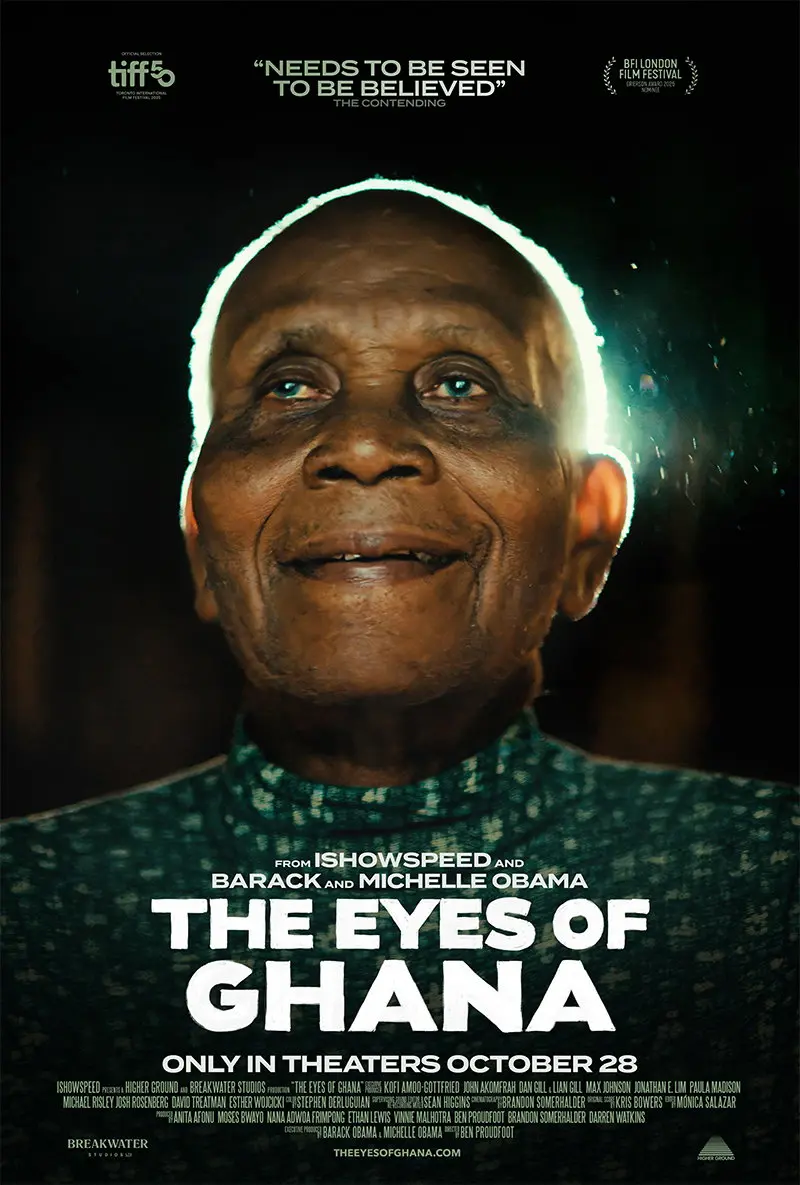
Breakwater Studios, Higher Ground, and collaborating production entities have officially released the trailer for The Eyes of Ghana, an upcoming feature-length documentary directed by Academy Award-winning filmmaker Ben Proudfoot. The film explores the extraordinary life and clandestine preservation efforts of Chris Hesse, the personal cinematographer to Dr. Kwame Nkrumah, Ghana’s founding father and first post-independence president. Having initially premiered to critical acclaim within the TIFF Docs section at the Toronto International Film Festival, the documentary is scheduled for a targeted theatrical rollout this autumn, followed by a wider streaming distribution.
The documentary brings to light one of the most compelling and heavily guarded cinematic archives in African history. It centers on the turmoil surrounding the 1966 CIA-backed coup d’état that violently ousted Dr. Nkrumah from power. During the immediate aftermath of the political upheaval, a significant portion of the historical footage that Hesse had spent an entire decade capturing was ordered destroyed. While contemporary authorities believed the visual record of Ghana’s tumultuous birth as an independent republic had been permanently erased, Hesse secretly safeguarded over a thousand reels of film. This hidden trove now constitutes the single largest existing archive detailing the nation’s liberation movement—materials that have remained largely unseen by the global public until now.

The Journey of Chris Hesse and the Dawn of Ghanaian Sovereignty
During the waning years of British colonial rule, a young and ambitious Chris Hesse was assigned a monumental task: to serve as the personal cameraman and documentarian to Dr. Kwame Nkrumah. As Ghana transitioned from the Gold Coast into a beacon of anti-colonial resistance on the African continent, Hesse stood at the forefront, recording the complex socio-political landscape, the fervent optimism of the populace, and the sweeping modernization projects spearheaded by the administration.
Dr. Nkrumah envisioned a unified, self-reliant Africa free from the lingering grips of Western imperialism, a political philosophy that frequently placed him at odds with foreign intelligence agencies during the height of the Cold War. When the 1966 coup dismantled the government while Nkrumah was traveling abroad, the cultural and political shockwaves were immense. The new military regime, operating in alignment with Western interests, sought to purge the country of Nkrumah’s political legacy. For Hesse, this meant watching years of irreplaceable historical documentation become the target of systematic destruction.
Risking his safety and livelihood, Hesse managed to preserve more than 1,000 reels of historical footage. Now 93 years old, the veteran filmmaker faces the final chapter of his life with a singular mission: passing down his invaluable legacy and the hidden archive to a new generation of historians, filmmakers, and citizens.

Behind the Lens: Ben Proudfoot and Production Collaboration
The feature is directed by Canadian documentary filmmaker Ben Proudfoot, who has built a distinguished career amplifying overlooked historical figures and marginalized voices. Proudfoot’s cinematic portfolio includes acclaimed works such as Rwanda & Juliet, alongside multiple New York Times Op-Docs and critically lauded short subjects, two of which have secured Academy Awards.
According to festival disclosures from the Toronto International Film Festival, Proudfoot crossed paths with Hesse by happenstance. The two men immediately recognized a shared dedication to visual preservation and historical truth, sparking a multi-year collaborative effort to bring Hesse’s story to the screen.
The production scale of The Eyes of Ghana is further elevated by a high-profile team of producers and executive backers. Higher Ground, the production company founded by former U.S. President Barack Obama and Michelle Obama, serves as an executive producer on the project, lending significant cultural and institutional weight to the film’s release. Additional production credits are shared by Ben Proudfoot, Nana Adwoa Frimpong, Anita Afonu, Moses Bwayo, Brandon Somerhalder, and Darren Watkins, uniting a diverse coalition of African and international cinematic talents to ensure the authenticity and reverence of the narrative.

Chronology of Production and Distribution
- The Historical Era (1956–1966): Chris Hesse serves as Kwame Nkrumah’s personal cinematographer, recording the march to independence and the subsequent political fallout.
- The 1966 Coup: A CIA-backed coup removes Nkrumah from power; a directive is issued to destroy the historical record, prompting Hesse to hide over 1,000 reels of film.
- Decades of Preservation (1966–2024): Hesse quietly preserves the liberation archive, shielding it from public view while awaiting an opportunity for safe restoration and disclosure.
- TIFF Premiere (September 2025): The Eyes of Ghana makes its world premiere to strong critical reviews within the TIFF Docs program at the Toronto International Film Festival.
- Trailer Release (October 18, 2026): Breakwater Studios and Higher Ground release the official theatrical trailer and promotional posters to widespread media attention.
- Theatrical and Streaming Debut (October 28, 2026): The documentary opens in select North American theaters before transitioning to a dedicated streaming platform release.
Cultural Significance and Historical Implications
Film historians and cultural analysts suggest that the unearthing of Hesse’s archive has the potential to fundamentally reshape how the mid-century decolonization of Africa is understood globally. Traditional historiography surrounding the era has frequently relied upon Western journalistic accounts, diplomatic cables, and sanitized foreign broadcast media. In contrast, Hesse’s footage offers an internal, unfiltered perspective of the African liberation struggle, captured by an artist embedded directly within the leadership of the movement.
Furthermore, the documentary serves as both a historical investigation and a love letter to Ghanaian cinema. Cultural institutions such as DOC NYC have emphasized the film’s dual role in recovering lost heritage and celebrating the indigenous artistic vision that flourished during the dawn of the nation’s independence. By illuminating the systematic suppression of revolutionary ideals in 1960s Africa, the film provides crucial context for contemporary discussions surrounding post-colonial sovereignty, geopolitical interference, and the ownership of historical narratives.
With its theatrical release slated for late October 2026, The Eyes of Ghana stands poised to spark vital international conversations regarding the fragility of historical records and the moral obligation to protect the visual memory of marginalized nations. As the global community gains access to the trailer and anticipates the full feature, the legacy of Chris Hesse—and the lost revolution he refused to let die—finally steps out of the shadows.