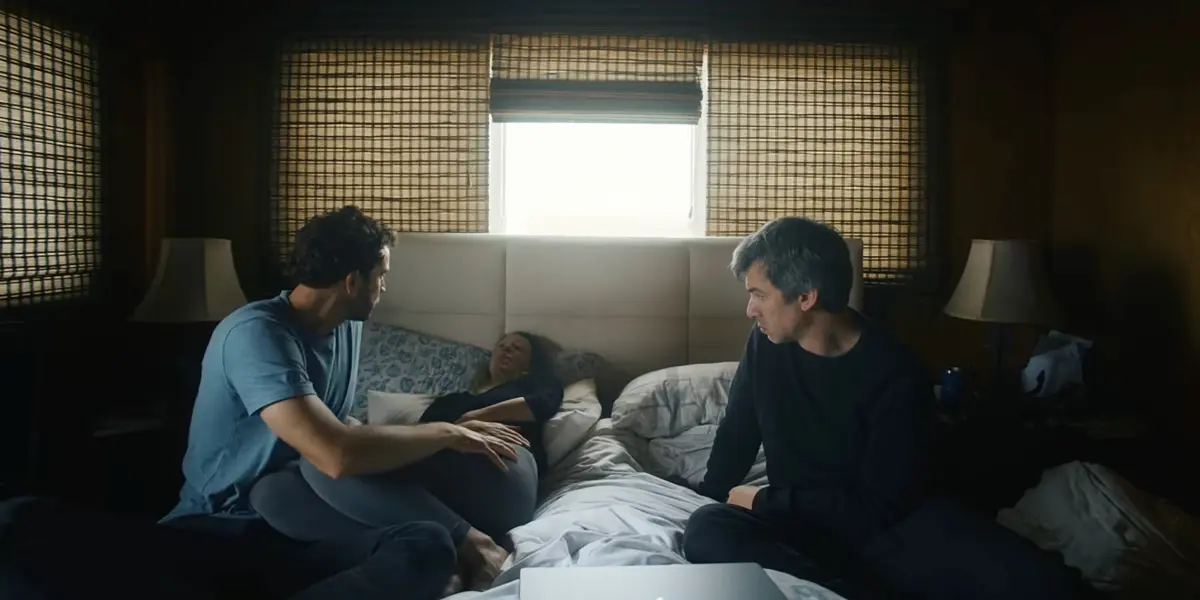
Following its widely publicized world premiere at the Telluride Film Festival, the genre-bending non-fiction film You Can See Everything, directed by Nathan Fielder and Lance Oppenheim, has emerged as one of the most talked-about cinematic releases of the year. Distributed by A24, the documentary explores the psychology of disgraced biotechnology entrepreneur Elizabeth Holmes, blending traditional investigative documentary techniques with surreal reenactments and meta-commentary. Beyond the standard critical praise and commercial sell-outs nationwide, the film has sparked a complex debate within the entertainment industry regarding awards eligibility, specifically concerning whether an actor appearing in a hybrid documentary can qualify for Academy Award consideration in traditional performance categories.
A24 has officially confirmed plans to mount an aggressive For Your Consideration (FYC) campaign for the project, targeting not only traditional documentary accolades but also major categories including Best Picture, Best Director for Fielder and Oppenheim, below-the-line crafts, and a dark-horse bid for Best Supporting Actress for Amanda Seyfried. While the prospect of a documentary securing a Best Picture nomination would shatter a nearly century-old Oscar precedent, the inclusion of an acting campaign for a non-fiction film has introduced unprecedented regulatory questions for the Academy of Motion Picture Arts and Sciences.
Background Context and the Genesis of You Can See Everything
The conceptual framework of You Can See Everything relies heavily on the public fixation surrounding Elizabeth Holmes, the founder of the failed blood-testing startup Theranos, who was convicted of wire fraud in 2022. The cultural footprint of the scandal has previously inspired scripted dramatizations, most notably Hulu’s critically acclaimed limited series The Dropout (2022), in which Amanda Seyfried starred as Holmes, a performance that earned her a Primetime Emmy Award.
In You Can See Everything, Fielder and Oppenheim enlist Seyfried not merely as an interview subject, but as a dual participant in the cinematic experiment. Seyfried appears primarily as herself, engaging in meta-conversations with Fielder—who also plays a dramatized version of his own memories—to dissect the psychological toll of inhabiting the disgraced executive. Simultaneously, the film features newly staged reenactments wherein Seyfried physically steps back into the role of Holmes, recreating specific scenarios drawn from Fielder’s investigative memories. Actor Christopher Abbott similarly participates, portraying a version of Holmes’s husband, Billy Evans.
This multi-layered approach blurs the boundary between documentary observation and theatrical fiction, raising fundamental questions about the nature of truth, performance, and authorship in modern non-fiction filmmaking. The film’s interrogation of identity has resonated deeply with audiences, but it has simultaneously created a labyrinthine challenge for awards strategists navigating the rigid categorization rules of major Hollywood guilds and academies.
Chronology of the Awards Campaign and Guild Responses
The trajectory of the film’s awards campaign began with its high-profile festival debut, which immediately established it as a major player in the autumn film festival circuit. Following the enthusiastic reception, A24 evaluated the film’s potential across various branches of the Academy. While the documentary branch is expected to evaluate the film for standard non-fiction recognition, the studio’s decision to push for above-the-line categories has forced other branches to review their governing bylaws.
According to the official Rules & Eligibility for the 99th Academy Awards, acting nominations require that the performers be "credited in the film’s legal billing and demonstrably performed by humans with their consent." Because Seyfried is explicitly credited for playing Elizabeth Holmes within the reenactment segments, she technically meets the baseline lexical requirements outlined by the Academy. Furthermore, no explicit clause within the general acting rules categorically bans performers from hybrid or documentary-style features.

However, the primary hurdle lies within Rule 6 of the Acting categories, which dictates that the Actors Branch Executive Committee holds the final authority and responsibility to resolve all questions of eligibility, rule interpretation, and nominee designation. Industry analysts note that the committee may scrutinize whether Seyfried’s runtime as a scripted character outweighs her presence as a documentary subject. Much of the critical acclaim surrounding her performance stems from unscripted or semi-improvised conversational sequences—such as a tense dinner table scene alongside Abbott and Fielder, or a reflective late-film exchange by a fireside—where she appears strictly as herself rather than a distinct dramatic character.
Precedents and Comparative Analysis
Industry observers have frequently drawn parallels between You Can See Everything and the 2020 satirical comedy Borat Subsequent Moviefilm, which earned Maria Bakalova an Academy Award nomination for Best Supporting Actress. That film famously integrated hidden-camera, documentary-style interactions with real, un-notified individuals while maintaining a structured, scripted narrative framework. The Academy ultimately recognized Borat Subsequent Moviefilm in both the acting category and the Best Adapted Screenplay category, signaling an institutional willingness to honor performances executed within improvisational or hybrid environments.
Despite these surface-level similarities, critical distinctions separate the two projects. Bakalova maintained her character, Tutar Sagdiyev, consistently throughout the entirety of Borat Subsequent Moviefilm, never once appearing on screen as herself. Conversely, You Can See Everything explicitly oscillates between documentary reality and dramatic reenactment, positioning Seyfried both as an actress portraying a historical figure and as a public personality analyzing her own past creative choices. Consequently, legal and awards analysts suggest that the Actors Branch may view Seyfried’s case as distinct from traditional narrative supporting performances.
Beyond the Academy Awards, the project faces immediate roadblocks from other major precursor bodies. The Golden Globe Awards, governed by the Hollywood Foreign Press Association and various industry voting bodies, have established rules rendering participants in documentary films ineligible for dramatic or comedic acting prizes. Similar restrictions are anticipated at the Actor Awards. Nevertheless, Seyfried remains viable for consideration by major critics’ associations—such as the New York Film Critics Circle, the Los Angeles Film Critics Association, and the National Society of Film Critics—as well as select industry-voted bodies like the Critics Choice Association and the British Academy of Film and Television Arts (BAFTA).
Broader Implications for Oscar Strategy and Industry Standards
The pursuit of major Academy recognition for You Can See Everything highlights a broader trend of formal experimentation within contemporary cinema. As traditional boundaries separating fiction, documentary, and reality television continue to dissolve, governing bodies face mounting pressure to modernize decades-old definitions of cinematic storytelling.
Should the Actors Branch Executive Committee greenlight Seyfried’s eligibility, it could establish a new precedent for performers in hybrid, docudrama, and participatory non-fiction formats. Conversely, a rejection would reinforce the historical silo separating documentary subjects and nonfiction participants from traditional dramatic actors.
From an institutional perspective, A24’s dual campaign serves a strategic purpose. Even if an acting nomination remains a long-shot probability within a highly competitive Supporting Actress field that includes contenders from major studio epics and historical dramas, the mere discussion surrounding Seyfried’s eligibility elevates the profile of the film as a whole. By amplifying the conversation around the picture’s formal audacity, the studio strengthens its historic push to position a feature-length documentary as a viable contender for the Academy Award for Best Picture—a feat that has eluded the medium throughout the 99-year history of the Academy.
As the voting window approaches, industry analysts will monitor official announcements from the Academy’s various branch committees to determine how administrative guidelines will adapt to the evolving landscape of hybrid cinema. Whether You Can See Everything ultimately redefines the scope of acting accolades or remains a fascinating outlier in awards history, its mere presence in the conversation underscores the enduring power of bold, unconventional filmmaking.