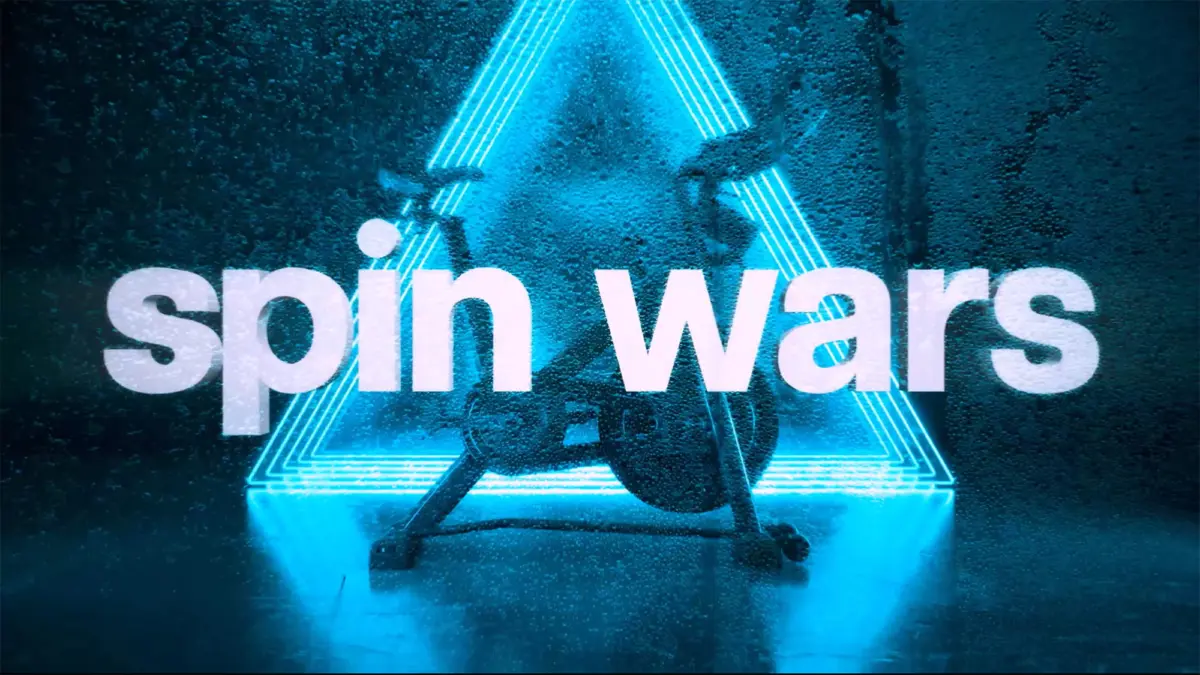
Greenwich Entertainment has officially released the trailer and promotional poster for Spin Wars, a high-energy feature documentary directed by filmmaker and producer Philip Byron. The film, which explores the cutthroat corporate rivalries, ambition, betrayal, and intense psychological environments underpinning the billion-dollar indoor cycling industry, is slated for a direct-to-VOD release on December 22, 2026. Spin Wars originally made its world premiere earlier this year at the 2026 Tribeca Film Festival, where it garnered critical acclaim for its brisk pacing, colorful insider perspectives, and unfiltered look at the multi-billion-dollar wellness phenomenon.
At the center of Byron’s directorial debut are the pioneers who built the modern boutique fitness movement. The documentary features extensive contributions from industry heavyweights, notably Ruth Zukerman, the co-founder of both SoulCycle and Flywheel Sports, and Marion Roaman, co-founder of Peloton. Often referred to as the godmothers of New York City’s indoor cycling scene, these figures provide foundational context regarding how a niche, dimly lit exercise format transformed into a cultural and economic juggernaut. Alongside its corporate architects, the film features a dynamic ensemble of cultural commentators, comedians, and media personalities, including Katie Couric, Heather McMahan, Mary Beth Barone, Jill Kargman, Anna Roisman, and Brandon Kyle Goodman, who contextualize the intersection of consumer culture, wellness capitalism, and modern spirituality.
The Evolution and Chronology of the Boutique Fitness Boom
To understand the stakes of Spin Wars, one must examine the historical trajectory of the indoor cycling industry over the past three decades. Long before home-connected fitness equipment dominated living rooms, indoor cycling was largely confined to standard health clubs, where stationary bikes were relegated to fluorescent-lit aerobic studios. That landscape shifted dramatically in the late 1990s and early 2000s, driven largely by the innovation of instructors and entrepreneurs who recognized that exercise could be packaged as an emotional and spiritual experience.

In 2006, Ruth Zukerman, along with partners Elizabeth Cutler and Julie Rice, opened the first SoulCycle studio in a defunct TriBeCa subterranean boiler room in New York City. The concept rejected traditional metrics of weight loss and cardiovascular endurance in favor of a holistic, cult-like atmosphere emphasizing community, mental release, and rhythmic movement synchronized to curated pop playlists. The model was an immediate hit with urban professionals, setting off a wave of imitation and commercial expansion.
However, the rapid commodification of boutique fitness soon bred intense corporate conflict. In 2011, after internal disputes and a shifting partnership dynamic, Ruth Zukerman parted ways with SoulCycle. Shortly thereafter, she teamed up with entrepreneurs Jay Galluzzo and Eric Robison to launch Flywheel Sports, a direct and aggressive competitor designed to challenge SoulCycle’s dominance through data-driven performance tracking via proprietary tech known as the "Torq" board. This rivalry escalated from friendly competition into corporate warfare, characterized by aggressive real estate acquisitions, poaching of star instructors, and intellectual property litigation.
Concurrently, the emergence of technology-driven home fitness platforms like Peloton in 2012 disrupted the brick-and-mortar studio model entirely. By combining high-end stationary hardware with subscription-based digital streaming, Peloton scaled the charismatic instructor-led fitness model into a global consumer electronics and media empire. This growth accelerated exponentially during the COVID-19 pandemic, cementing indoor cycling as a permanent fixture of modern consumer culture while simultaneously exposing the fragility, burnout, and toxic corporate cultures lurking behind the facade of wellness.
Production and Creative Team Behind Spin Wars
Spin Wars represents Philip Byron’s feature-length directorial debut. Byron previously built a reputation as a prolific producer, having worked on notable nonfiction and unscripted television projects including Next Gen Chef and On the Rise: Juju Watkins. Co-written by Byron and James Thayer, and produced by Byron alongside Jillian A. Goldstein, the documentary was designed to mirror the breathless, pulsating tempo of the very exercise classes it scrutinizes.

Critical reception out of the Tribeca Film Festival emphasized the film’s distinctive editing style and access to key players. Reviewers noted that the documentary succeeds by avoiding dry corporate history, opting instead for a propulsive narrative driven by individuals with significant personal and professional grievances. The incorporation of archival footage, confidential internal communications, and candid interviews allows the film to dissect the psychological toll exacted upon both instructors and riders within an ecosystem that monetizes emotional vulnerability.
Industry Reactions and Critical Response
While major fitness conglomerates such as Peloton, SoulCycle (subsidiary of Equinox Group), and Flywheel (which wound down its physical studio operations following bankruptcy filings) have not issued formal corporate statements addressing the specific allegations in the documentary, industry analysts anticipate that the film will reignite conversations regarding labor practices and corporate ethics within the wellness sector.
Independent cultural critics have praised the documentary for challenging the uncritical reverence often afforded to the wellness industry. In an era where lifestyle brands frequently market themselves as arbiters of mental health and self-care, Spin Wars pulls back the curtain to reveal the cutthroat capitalist mechanisms operating beneath the surface. Tribeca Film Festival promotional materials underscored this tension, describing the film as a project that captures "the dark side of ‘mind, body, soul’ culture" while maintaining an entertaining, fast-moving cinematic cadence that keeps audiences engaged.
Broader Economic and Cultural Implications
The release of Spin Wars arrives at a pivotal moment for the fitness industry at large. Following the post-pandemic correction in home fitness valuations and the shifting hybrid work models altering urban commercial real estate, boutique fitness studios have had to reinvent their value propositions.

From an economic perspective, the documentary highlights the inherent volatility of businesses built around personality cults and lifestyle branding. When companies scale rapidly on the backs of charismatic founders and star instructors, operational friction, intellectual property disputes, and brand dilution frequently follow. Spin Wars serves as a cautionary case study in modern corporate history, demonstrating how ambition and innovation can curdle into toxic competition when multi-million-dollar stakes intersect with deeply personal brands.
As Greenwich Entertainment prepares to distribute the film to a wider audience via video-on-demand this winter, the documentary is expected to prompt broader public discourse concerning the commercialization of mental health, the pressures placed upon gig-economy fitness instructors, and the true cost of participating in hyper-commercialized communal wellness spaces.
Spin Wars is scheduled for release across digital VOD platforms on December 22, 2026.