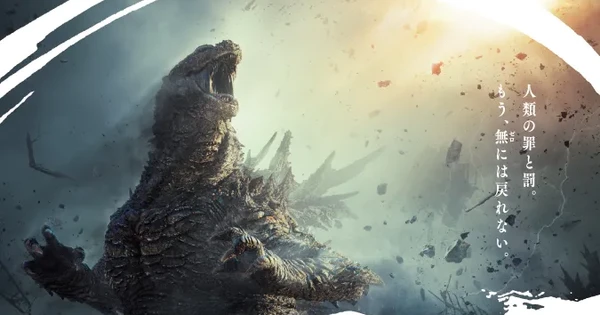
The Japanese box office witnessed a seismic shift during the November 6-8 weekend as the latest entry in the world’s most iconic monster franchise, Godzilla Minus Zero, stormed to the top of the charts. Directed by Takashi Yamazaki, the sequel to the critically acclaimed 2023 hit Godzilla Minus One has not only captured the number one spot but has also shattered historical records, signaling a robust era for Toho’s premier kaiju property. The film secured its lead by selling 699,000 tickets, accumulating a staggering 1,130,171,300 yen (approximately US$7.11 million) over the course of its first standard weekend.
A Historic Opening Strategy
The success of Godzilla Minus Zero is underscored by a unique release strategy that capitalized on cultural heritage. Departing from the industry-standard Friday premiere, the film debuted on Tuesday, November 3—a date synonymous with "Godzilla Day" in Japan. This date commemorates the original release of Ishiro Honda’s 1954 masterpiece, which first introduced the world to the King of the Monsters. By aligning the premiere with this anniversary and the Japanese national holiday of Culture Day, Toho effectively maximized opening-day attendance.

The results were unprecedented. On its opening day alone, the film sold 590,000 tickets, generating 910 million yen (roughly US$5.75 million). This performance established a new benchmark for the highest opening-day earnings for any live-action film—domestic or foreign—in Japanese cinema history. When compared to its predecessor, Godzilla Minus Zero demonstrated a 201% increase in opening-day revenue, highlighting a significant escalation in audience anticipation and brand momentum. Within its first six days of release, the film successfully sold 1.61 million tickets for a cumulative total of 2,539,531,100 yen (about US$15.98 million).
Continuity and Creative Direction
Set in 1949, just two years after the conclusion of the events depicted in Godzilla Minus One, the sequel maintains narrative consistency by retaining the core creative team that steered the franchise toward its recent critical and commercial zenith. Takashi Yamazaki returns in a triple capacity as director, screenwriter, and visual effects supervisor, ensuring a visual and tonal continuity that resonates with the previous film’s audience. The score is once again composed by Naoki Sato, and the visual effects work is handled by the Tokyo-based studio Shirogumi Inc.
The cast features a blend of returning favorites and new additions. Ryunosuke Kamiki reprises his role as Koichi Shikishima, alongside Minami Hamabe as Noriko Oishi and Hidetaka Yoshioka as Noda. The production also sees the return of Yuki Yamada, Kuranosuke Sasaki, Sakura Ando, and Mio Tanaka. Notably, veteran actor Min Tanaka has joined the production as the biologist Kanji Murakami, a character expected to provide a new scientific perspective on the recurring kaiju threat.

The Broader Japanese Box Office Landscape
While Godzilla dominates the conversation, the remainder of the top five reflects a diverse range of cinematic interests in Japan, from live-action literary adaptations to animated sensations.
The live-action adaptation of Yuu Nagira’s novel Nanji, Hoshi no Gotoku (You Are Akin to the Stars), directed by Michihito Fujii, has shown resilience in its fifth week. Although it slipped from the second position to third, it continues to draw consistent crowds. Over the November 6-8 weekend, it earned 107,330,000 yen (approx. US$675,700) from 72,000 tickets, bringing its cumulative total to 1,937,022,200 yen (approx. US$12.19 million). The film, which explores the complex, 15-year relationship between characters Kai Aono and Akimi Inoue, remains a staple of the current domestic slate.
Meanwhile, the Kamen Rider franchise continues to hold its ground. The film Kamen Rider Kabuto Tuentausu Ten o Tsugu Mono debuted at number four, earning 88,085,058 yen (approx. US$554,500) during its first three days, reinforcing the enduring popularity of the long-running tokusatsu series.

The Phenomenon of Chiikawa
Perhaps the most notable long-term performer is Eiga Chiikawa: Ningyo no Shima no Himitsu (Chiikawa the Movie: The Secret of Mermaid Island). Holding the fifth spot in its 16th weekend, the film has achieved a status that few animated features reach. With a cumulative earning of 18,793,145,700 yen (approx. US$118 million) and 12.86 million tickets sold, it stands as the highest-grossing film of the year in Japan and currently sits at 12th on the list of Japan’s all-time box office earners. Directed by Kei Oikawa at Cygames Pictures, the film represents the massive success of the Chiikawa property, which transitioned from a web-based manga to a cultural juggernaut.
International and Genre Perspectives
The landscape also includes international genre fare, specifically the reboot of the Resident Evil live-action film. Now in its fifth week, the film dropped from third to seventh, earning 60,618,750 yen (approx. US$381,600) over the weekend. While its domestic performance in Japan has been solid—reaching a cumulative 2,153,054,600 yen (approx. US$13.55 million)—the film has already enjoyed significant success elsewhere. It opened at number one in the United States on September 18 with an estimated US$60 million weekend, signaling a strong global reach for the survival-horror adaptation directed by Zach Cregger and starring Austin Abrams.
Further down the charts, the omnibus anime film Grotesqqque, directed by Atsushi Nishigori, opened at number eight. Earning 47,185,800 yen (approx. US$297,000) in its first three days, the film represents a unique collaborative project under the JOEN banner—a joint venture between Aniplex, CloverWorks, Wit Studio, and Shueisha. Having premiered at the Fantasia International Film Festival, the film’s release is a strategic move for the studio collective, aiming to diversify their portfolio beyond traditional series-based feature films.

Implications and Future Outlook
The massive opening of Godzilla Minus Zero confirms that the audience appetite for high-quality, emotionally resonant kaiju cinema is not only intact but growing. By grounding the spectacle in the post-war trauma and survival themes established in the 2023 film, Toho has successfully elevated the franchise from a niche monster movie series into a sophisticated dramatic property.
Industry analysts observe that the success of these films suggests a return to form for Japanese cinema, where both domestic prestige projects and long-running intellectual properties can coexist profitably. As Godzilla Minus Zero continues its theatrical run, its performance in the coming weeks will likely serve as a barometer for how far the franchise can expand its global reach. With high production values, a stellar returning cast, and the creative vision of Takashi Yamazaki, Toho appears to have secured a future for Godzilla that is as bright as it is destructive.
As the theatrical calendar moves toward the end of the year, the performance of these films will be instrumental in finalizing the annual revenue tallies for the Japanese exhibition industry. While animation continues to be a pillar of the market, the resurgence of high-concept live-action films like the Godzilla series suggests a shifting trend toward more diverse theatrical experiences, balancing the whimsy of Chiikawa with the high-stakes, VFX-heavy spectacle of Toho’s monster legacy.