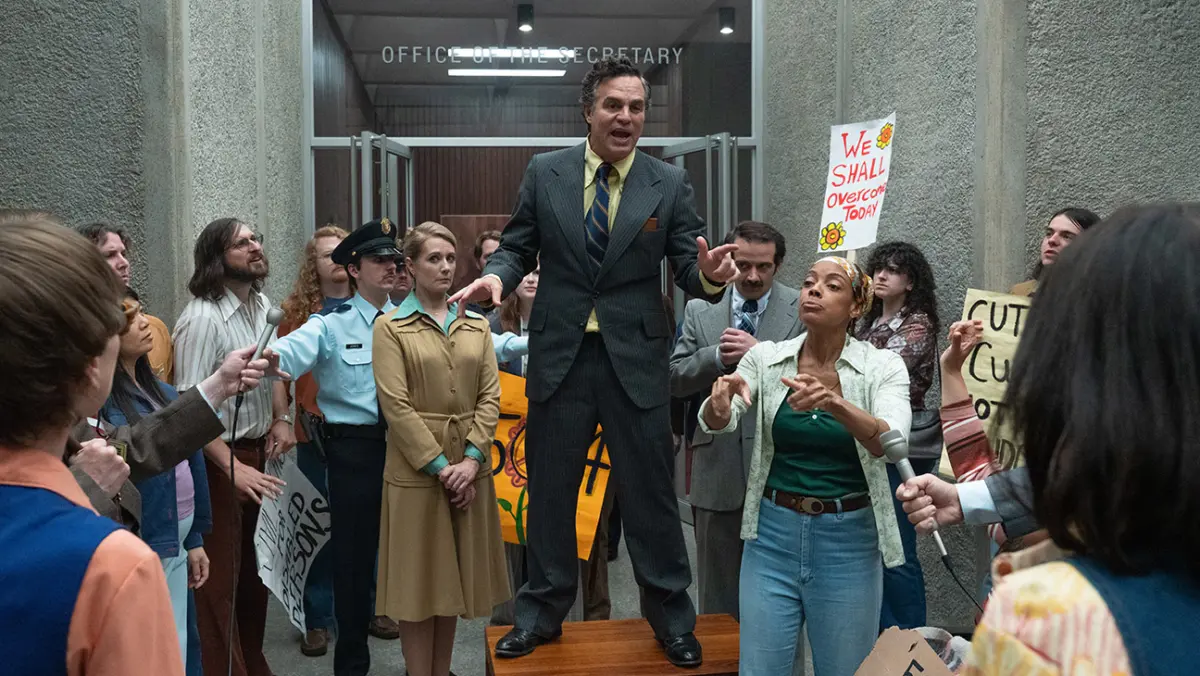
Producer Kevin J. Walsh, a veteran of high-stakes Hollywood productions, is accustomed to navigating the complex logistical demands of major studio filmmaking. Throughout a career that includes collaborations with legendary directors like Ridley Scott, Steven Spielberg, and Scott Rudin, Walsh has overseen ambitious projects such as Napoleon, House of Gucci, and The Last Duel. However, his latest venture, the Apple TV feature Being Heumann, presented a challenge that was fundamentally different from the historical epics of his past: the task of creating a film that prioritized radical accessibility as much as its narrative content.
The film, directed by Sian Heder and released on November 13, chronicles the life and activism of Judith "Judy" Heumann, a seminal figure in the disability rights movement. The narrative centers on the 1977 Section 504 Sit-in, a pivotal moment in American civil rights history that remains a cornerstone of the movement to institutionalize equality for disabled citizens.
The Historical Significance of the 1977 Section 504 Sit-in
To understand the weight of the film, one must examine the state of American infrastructure and law in the 1970s. Section 504 of the Rehabilitation Act of 1973 was designed to prohibit discrimination against individuals with disabilities in programs receiving federal financial assistance. Despite its passage, the law remained largely toothless for four years as government officials delayed signing the necessary implementing regulations.

In April 1977, activists led by Judy Heumann initiated a series of coordinated protests. The most significant action occurred in San Francisco, where more than 150 demonstrators occupied the Department of Health, Education, and Welfare (HEW) regional offices. This occupation lasted 25 days, making it the longest sit-in at a federal building in U.S. history. The protest was a display of cross-disability solidarity, involving individuals with diverse physical, sensory, and cognitive disabilities.
Their persistence forced HEW Secretary Joseph Califano to sign the regulations without modification. This victory was not merely symbolic; it mandated architectural changes that are now ubiquitous, including the installation of curb cuts, the expansion of public restrooms, and the integration of wheelchair-accessible features in federally funded buildings. These mandates served as the essential precursor to the Americans with Disabilities Act (ADA) of 1990.
Redefining Production Standards: A Blueprint for Equity
For Walsh and Heder, portraying this history required a commitment to the same principles of accessibility that the activists fought for. The production faced an immediate hurdle: the industry was not equipped to support a set populated by a large ensemble of disabled actors and crew members.
"The movie fucking terrifies me," Walsh remarked, explaining his initial reaction to the project. This fear was not grounded in the subject matter alone, but in the realization that there was no existing framework in Hollywood for such an inclusive set. With only one wheelchair-accessible trailer reported available in North America at the time, the production team was forced to innovate.

The team established a dedicated 10-person accessibility unit, tasked with retrofitting trailers, constructing bespoke ramps, and ensuring that every technical station was reachable for all cast and crew. This necessitated a shift in traditional filmmaking logistics. Actors like Michael Patrick Thornton, who portrays disability rights leader Ed Roberts, noted the profound emotional impact of these accommodations. For many performers, the provision of basic necessities—such as a functional hair and makeup trailer—was an unprecedented experience, highlighting the systemic exclusion that has long plagued the industry.
The Evolution of the Project
The development of Being Heumann began in 2020 when director Sian Heder, buoyed by the success of her Oscar-winning film CODA, was introduced to the story by a colleague who had worked on the documentary Crip Camp. Heumann, who was then in the process of evaluating potential projects, engaged in a swift vetting process. Heder’s ability to secure the rights was a testament to the urgency and alignment of vision between the filmmaker and the subject.
Following the initial development phase, Apple TV became the primary benefactor, green-lighting the project and allowing for a rigorous, research-driven production cycle. The film’s release in late 2026 marks the culmination of a multi-year effort to translate historical civil rights advocacy into a narrative format that is both accurate and cinematic.
Impact and Contemporary Implications
The release of Being Heumann arrives at a time when the protections established by Section 504 are under renewed scrutiny. Recent legal and political debates in various U.S. states have seen efforts to challenge funding for accessibility mandates, often by conflating disability rights with other civil rights issues. Walsh emphasizes that the film serves as a reminder of the fragility of these protections.

"If you’re against the idea of a person in a wheelchair being able to access a federal building, a post office, or a place to get their passport renewed, you’re on the wrong side of history," Walsh stated. The film aims to educate audiences on the reality that disability is a universal experience; as life expectancy increases, the need for accessible infrastructure becomes a near-inevitability for the broader population.
Future Outlook and Industry Shifts
Walsh, through his company, The Walsh Company, continues to expand his influence across both film and television. His upcoming slate includes a diverse array of projects, ranging from sci-fi thrillers to collaborative efforts with rising voices in screenwriting. The production company has maintained a consistent output despite the significant industry disruptions caused by the 2023 labor strikes, keeping projects in development in both the United States and Europe.
A central theme in Walsh’s recent work is the pursuit of "originality"—a rejection of the iterative, algorithm-driven content models that have dominated streaming services for the past decade. He argues that the future of the industry lies in supporting younger, diverse voices who are not merely rehashing established tropes.
Regarding the integration of Artificial Intelligence in filmmaking, Walsh maintains a pragmatic but guarded stance. While acknowledging that AI serves as a powerful tool for pre-visualization and complex visual effects, he contends that it cannot replace the "human spirit" required for authentic storytelling. He points to the intricate, handcrafted production design of Being Heumann as evidence that human artistry—informed by education, architectural knowledge, and lived experience—remains the heartbeat of cinema.

Conclusion
Being Heumann is more than a biopic; it is a case study in how the film industry can adapt to represent the reality of the world it depicts. By challenging the status quo of production standards, Walsh, Heder, and their team have set a new benchmark for accessibility. As the film reaches global audiences on Apple TV, it leaves behind a legacy that extends beyond the screen, challenging the industry to look at "curb cuts" not just as infrastructure, but as an essential philosophy for inclusive storytelling. Through its rigorous attention to both historical detail and on-set equity, the project serves as a testament to the enduring power of the movement that Judy Heumann dedicated her life to building.