Pawel Pawlikowski’s German-language period drama Fatherland, a monochromatic exploration of the intellectual and personal life of Nobel laureate Thomas Mann, has secured 11 nominations. Closely trailing with 10 nods is La Bola Negra, a sprawling, ambitious gay epic directed by Spanish filmmakers Javier Ambrossi and Javier Calvo. Both films have secured top-tier recognition in the primary categories, including Best European Film, Best Director, Best Screenwriter, and Best Cinematographer.

A Snapshot of the Competitive Landscape
The nominations reflect a diverse array of storytelling from across the continent. Beyond the two primary frontrunners, the field of contenders highlights a resurgence in high-concept drama and poignant character studies. The Best European Film category, often seen as the ultimate barometer of the industry’s health and focus, includes not only the two leaders but also Cristian Mungiu’s Palme d’Or winner Fjord, May el-Toukhy’s acclaimed Venice Festival standout Woman Unknown, and Marine Atlan’s directorial debut, the French coming-of-age feature La Gradiva.

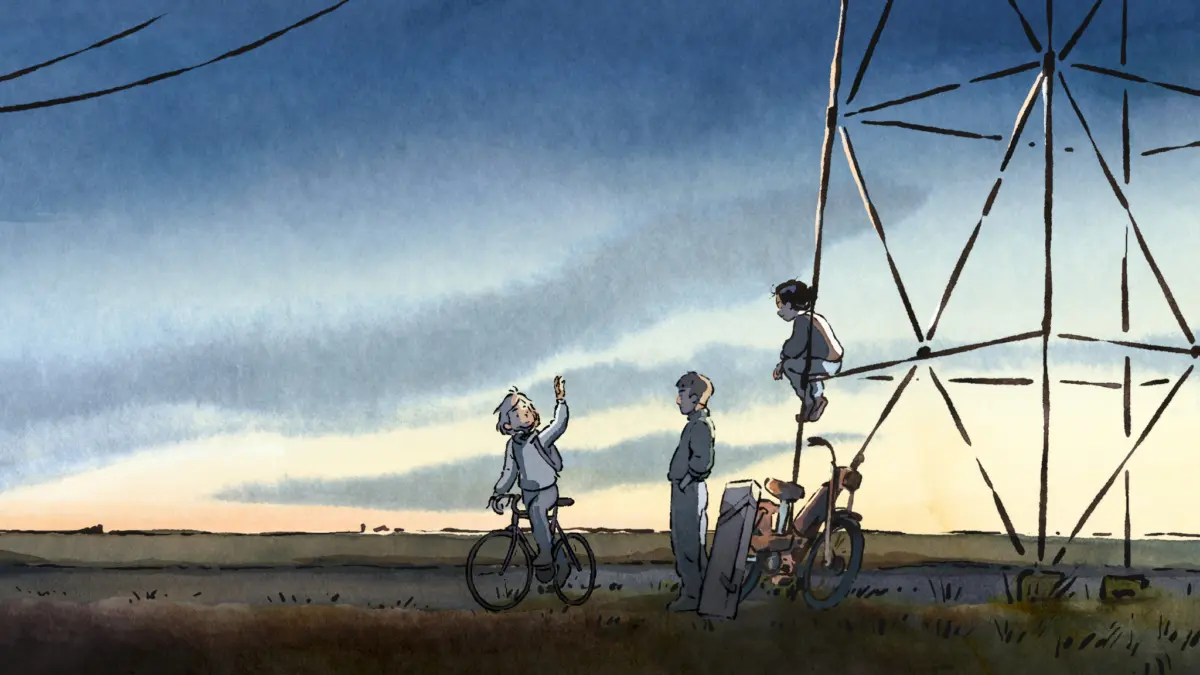
The inclusion of documentary and animation projects within the Best European Film category—specifically works like the Gaza war exposé Naza and the animated feature In Waves—underscores a shift in the Academy’s voting patterns. By elevating these genres to the top category, the EFA is acknowledging that the boundary between traditional narrative filmmaking and factual or animated storytelling has become increasingly porous in the current cinematic climate.

The Dominance of Sandra Hüller
Perhaps the most significant individual narrative emerging from this year’s nomination list is the dual recognition of German actress Sandra Hüller. Hüller has received two separate nominations in the Best European Actress category: one for her role as Erika Mann in Pawlikowski’s Fatherland, and another for her transformative performance as a 17th-century woman masquerading as a man in Markus Schleinzer’s Rose.

Hüller’s double nomination places her in direct competition with a formidable group of international stars. She is vying for the top honor against Penelope Cruz, who is recognized for her performance in Florian Zeller’s Bunker; Léa Seydoux, lauded for her work in Marie Kreutzer’s Gentle Monster; Mathilde Arcel for her role in Woman Unknown; and Renate Reinsve for her performance in Fjord. The presence of multiple international heavyweights in this category suggests that the 2027 awards will be one of the most closely contested in recent history.

Performance and Characterization in the Actor Category
The Best European Actor category is similarly packed with prestige performances. Hanns Zischler’s portrayal of Thomas Mann in Fatherland anchors that film’s critical success, but he faces stiff competition from Sebastian Stan, who delivered a powerful, complex performance as a fundamentalist husband in Fjord.

The category also honors Javier Bardem for his work in Rodrigo Sorogoyen’s The Beloved, Swann Arlaud for his performance in A Man of His Time, and Andrew Scott for his role as the late British actor Ian Charleson in Simon Stone’s Elsinore. The nomination for Scott is particularly notable; his portrayal of a man battling AIDS while attempting to mount a final, triumphant performance of Hamlet is being cited by critics as a career-defining turn that captures the intersection of professional dedication and personal tragedy.

The Broader Context of the 2027 EFA Cycle
The 39th European Film Awards, to be held in Athens, marks a return to a major cultural hub that has increasingly sought to position itself as a central node in the European film industry. The selection of Athens as the host city follows a multi-year strategy by the EFA to rotate its ceremony across various European capitals, thereby decentralizing the industry’s focus and encouraging cross-border collaboration.

The statistical breakdown of the nominations reveals a heavy emphasis on technical craftsmanship. In categories like Best Cinematographer, Best Editor, and Best Production Designer, the films Fatherland and La Bola Negra continue to trade blows. For instance, while Lukasz Zal is nominated for his cinematography on Fatherland, Gris Jordana’s work on La Bola Negra has been highlighted as a masterclass in visual storytelling. Similarly, the production design teams for both films—Katarzyna Sobanska and Marcel Slawinski for Fatherland, and Roger Bellés for La Bola Negra—have been acknowledged for their ability to construct immersive, historically resonant environments.

Analytical Perspective: What These Nominations Imply
Market analysts and film historians suggest that the 2027 nominations reflect a "return to history." With Fatherland, Rose, and Elsinore all dealing with period settings or historical figures, there is a clear trend toward examining the past to inform contemporary anxieties. The prominence of films like Naza and Rehearsals for a Revolution, which focus on current global conflicts and political unrest in the Middle East and Iran, suggests that the EFA is also fulfilling its role as a platform for socio-political discourse.

The decision to include first-time feature directors like Marine Atlan (La Gradiva) alongside seasoned veterans like Andrey Zvyagintsev (Minotaur) indicates a healthy pipeline of talent. The EFA’s "Discovery" category, which highlights emerging filmmakers, serves as a crucial incubator for this talent. This year’s nominees for the Prix Fipresci include Kosara Mitic, Beatrice Gibson, and Marlene Emilie Lyngstad, among others, suggesting that the future of European cinema remains as experimental and diverse as its established traditions.

Industry Reaction and Future Outlook
While official comments from the nominee camps remain guarded in the spirit of professional sportsmanship, the consensus among trade observers is that the 2027 EFA ceremony will be defined by the rivalry between the stylistic precision of Pawlikowski and the thematic boldness of the Ambrossi-Calvo duo.

"The 2027 slate is a testament to the resilience of European independent cinema," noted one industry commentator. "We are seeing a move away from safe, commercial storytelling toward works that challenge the viewer’s perception of history, gender, and political truth."

As the industry prepares for the gala in Athens, the focus will likely shift to the lobbying efforts of the production companies behind these films. For a title like Fatherland, the 11 nominations provide significant leverage in the global distribution market, potentially ensuring that the film reaches a wider international audience ahead of the January ceremony. For smaller, independent projects that managed to break into the nominations, such as the documentary slate, the EFA recognition is a vital lifeline that often leads to acquisition by major streaming platforms or international festival circuits.

Conclusion
The 39th European Film Awards represent a landmark moment for the continent’s cinematic output. By honoring a mix of historical epics, intimate character studies, and hard-hitting documentaries, the Academy is reinforcing the idea that European cinema remains the world’s most versatile engine for complex storytelling. As the industry descends upon Athens in January, all eyes will be on whether the Academy rewards the meticulous craftsmanship of Pawel Pawlikowski’s Fatherland or the vibrant, modern energy of La Bola Negra. Regardless of the outcome, the 2027 awards have already succeeded in highlighting a robust and intellectually ambitious year for European film. The ceremony itself promises to be a celebration of both established icons and the next generation of directors, writers, and performers who continue to define the cultural identity of the region on the global stage.