Nine episodes into its current broadcast run, David Production’s anime adaptation of Hirohiko Araki’s Steel Ball Run has cemented its reputation as one of the most unpredictable narratives currently airing on television. Shifting abruptly
from an 1890s cross-country equestrian endurance competition into a high-stakes supernatural conspiracy centered on the mummified remains of Jesus Christ, the series continues to challenge conventional storytelling norms. Based on the acclaimed manga arc of the same name from the long-running JoJo’s Bizarre Adventure franchise, this season has elevated the property’s signature surrealism to unprecedented heights, introducing theological artifacts and prehistoric transformations that have captivated both longtime fans and contemporary viewers.
Background and Narrative Foundation
First serialized in Shueisha’s Weekly Shōnen Jump and later transitioning to Ultra Jump, Hirohiko Araki’s JoJo’s Bizarre Adventure has maintained a continuous publication record since December 1987. Comprising multiple distinct parts with independent protagonists linked by familial lineage, the franchise established a defining mechanic in its third installment with the introduction of "Stands"—manifestations of the user’s vital life energy that possess unique supernatural abilities.
Steel Ball Run represents the seventh major story arc of the franchise, originally serialized between 2004 and 2011. Set in an alternate continuity distinct from the first six parts, the narrative takes place in the United States in the year 1890. The primary plot revolves around the Steel Ball Run, a grueling transcontinental horse race spanning thousands of miles from San Diego to New York City, boasting a grand prize of fifty million dollars.
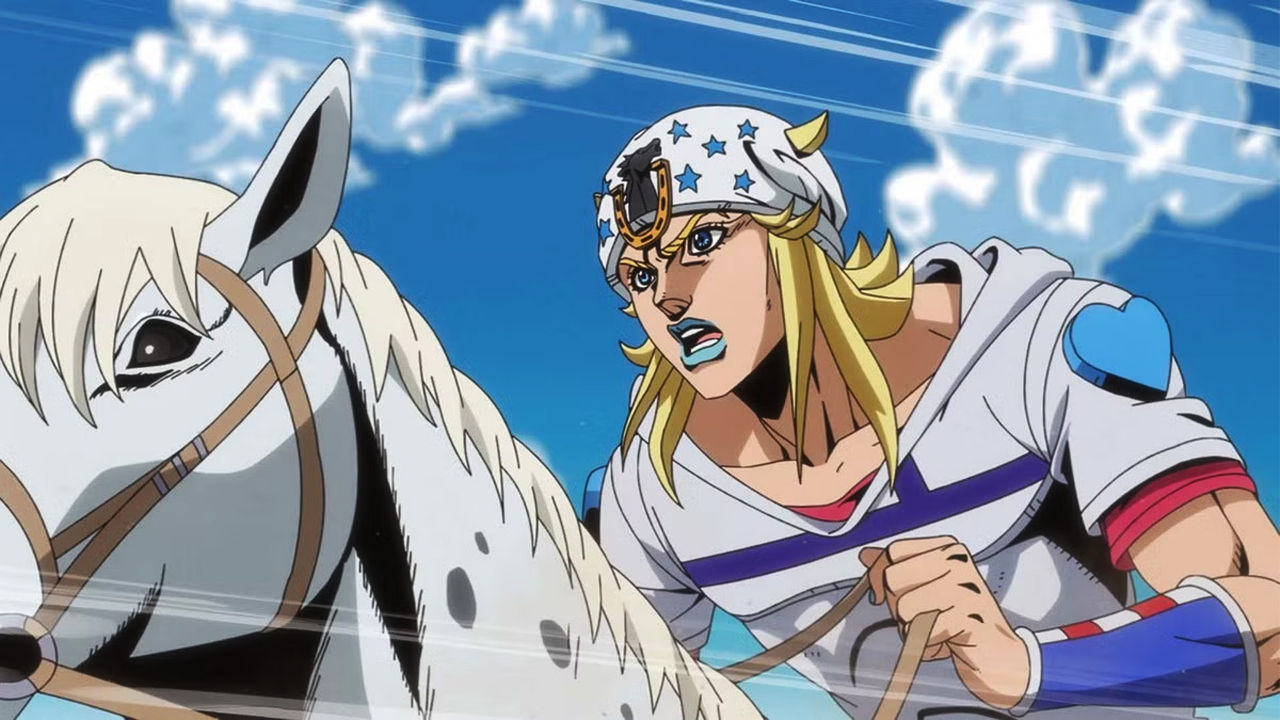
The story centers on Johnny Joestar, a former prodigy horse jockey who was paralyzed from the waist down following an incident prior to the narrative’s start. Upon encountering Gyro Zeppeli, a mysterious executioner from the Kingdom of Naples competing in the race, Johnny witnesses the power of the "Spin"—a mystical rotational energy channeled through steel spheres. When Johnny inadvertently touches Gyro’s steel ball, he experiences a momentary restoration of movement in his legs, prompting him to enter the race to uncover the secrets of the technique.
Chronology of Escalation: From Equestrian Sport to Theological Conspiracy
While the early episodes of the adaptation established a relatively grounded—albeit eccentric—historical adventure, the narrative trajectory shifted dramatically around the seventh episode. The broadcast introduced a prologue detailing the crucifixion of Jesus Christ, integrating historical apocrypha into the fabric of the JoJo universe. According to the internal mythology established in this arc, Joseph of Arimathea embarked on a pilgrimage that led him to the North American continent centuries before European colonization, burying the sacred remains across the land.
This historical divergence serves as the catalyst for the modern narrative. The protagonist, Johnny Joestar, discovers that a mummified human arm has spontaneously integrated into his own anatomy. This relic awakens a latent ability, manifesting a localized power that causes Johnny’s fingernails to rotate at high speeds and project forward as lethal, bullet-like projectiles.
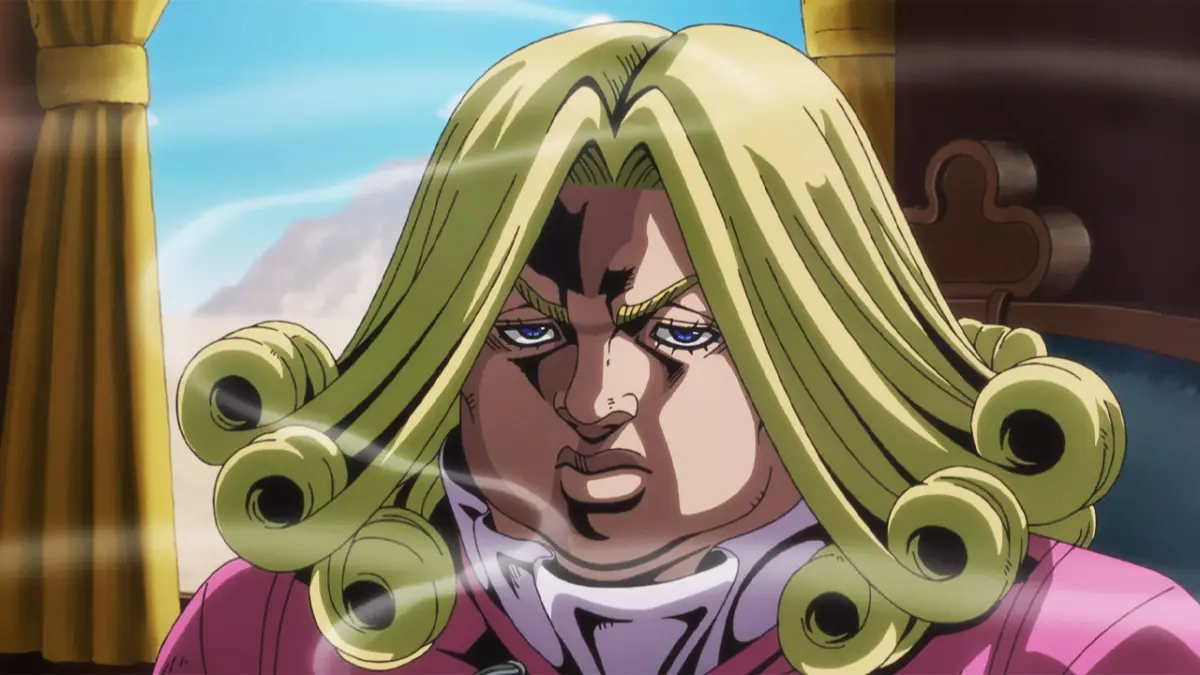
Subsequent episodes reveal that the Steel Ball Run race was not merely a commercial sporting event promoted by the private sector, but a geopolitical maneuver engineered by United States President Funny Valentine. The overarching objective of the race’s route is to guide competitors across the country in a manner that facilitates the systematic collection of the scattered holy corpse parts. President Valentine seeks to consolidate these sacred relics to secure divine supremacy for the United States, having already fused the heart of Jesus Christ to his own chest.
Character Evolution and Stand Mechanics
The adaptation’s ninth episode further expanded the boundaries of the series’ combat system by reintroducing a reimagined version of one of the franchise’s most iconic figures: Diego Brando, historically known within the series as "Dio." Throughout the decades-long publication history of JoJo’s Bizarre Adventure, characters and concepts have undergone radical reinventions across alternate timelines.
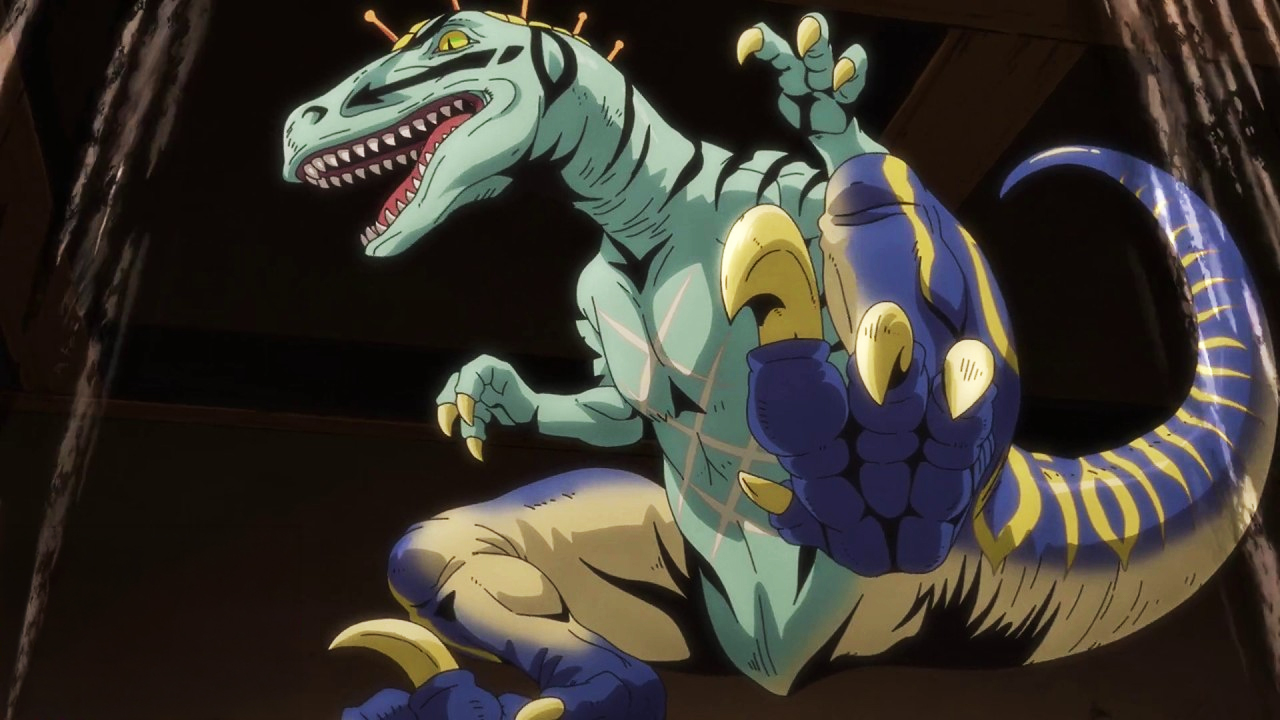
In Steel Ball Run, Diego Brando operates as a prominent rival jockey within the cross-country race. The latest narrative arc reveals that his acquired Stand grants him the biological capacity to transform his physical body into a dinosaur. The morphological characteristics mirror cinematic representations of dromaeosaurids, such as velociraptors, complete with specialized physiological adaptations and distinctive markings. This transformation extends beyond human combatants, as the supernatural phenomenon exhibits the capacity to affect local fauna and inanimate organic matter, such as wildlife carcasses encountered along the trail.
Industry Analysis and Audience Reception
The audacity of combining 19th-century American expansionism, theological relic hunting, and prehistoric transformations has generated considerable discourse among television critics and animation analysts. Studio David Production, which has animated the franchise since its 2012 television debut, has received praise for its faithful yet dynamic adaptation of Araki’s intricate panel layouts and unconventional color palettes.
Media analysts note that the longevity of JoJo’s Bizarre Adventure stems from Araki’s willingness to subvert genre conventions. By shifting the central conflict from localized urban turf wars or multi-generational family feuds to a sprawling cross-country treasure hunt laden with historical and religious allegory, Steel Ball Run avoids narrative fatigue.
Broader Implications for the Franchise
The success of the Steel Ball Run adaptation underscores the viability of long-form, multi-part anime adaptations that embrace source material without commercial dilution. As the season progresses past its ninth episode, the convergence of President Valentine’s political ambitions, the supernatural properties of the holy corpse, and the evolving abilities of Johnny Joestar and Gyro Zeppeli establishes a complex framework for the remainder of the broadcast.
Industry observers suggest that the heightened visibility of Steel Ball Run on international streaming platforms has broadened the demographic reach of the franchise, attracting viewers interested in avant-garde narrative structures within mainstream shōnen animation. With multiple story arcs remaining unadapted in the broader literary catalog of the series, the current broadcast serves as a benchmark for how historical fantasy can be successfully integrated into contemporary serial television.