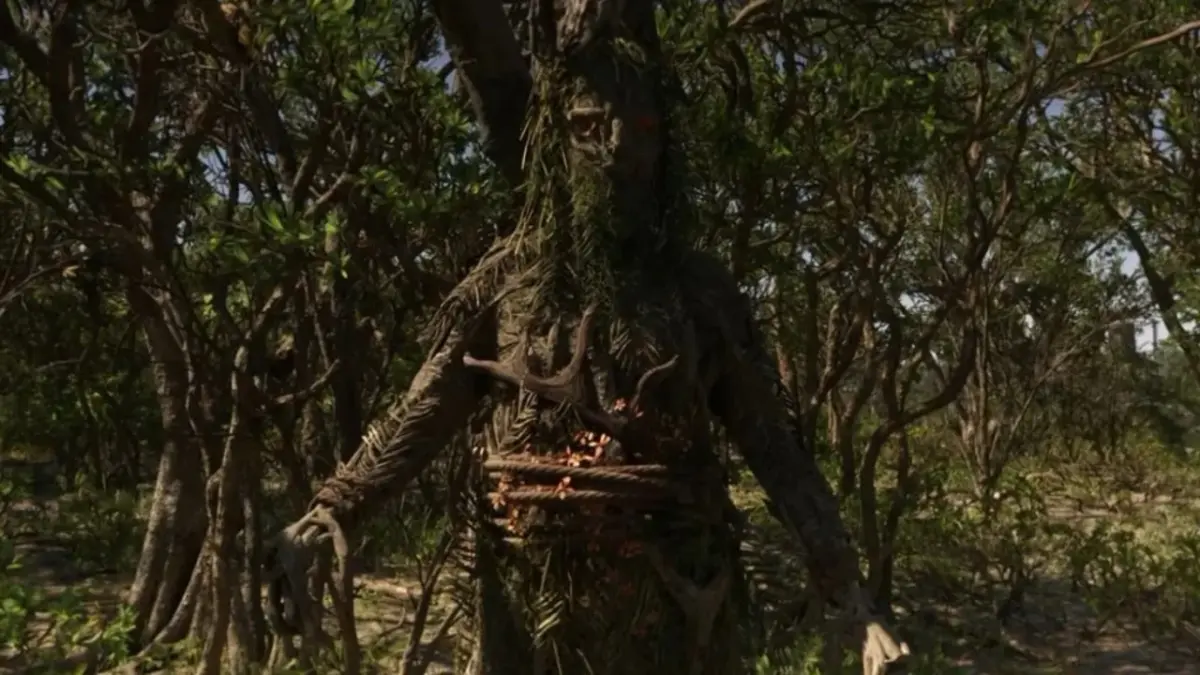
The highly anticipated launch of Rockstar Games’ Grand Theft Auto VI has brought more than just a massive open-world experience to players; it has introduced a complex, multi-layered narrative involving one of North American folklore’s most enduring cryptids. Reports confirmed upon the title’s release indicate that Bigfoot—referred to within the game’s lore as "Mister Mangrove" or the "Skunk Ape"—is a central figure in a dedicated, horror-themed side mission chain. This discovery highlights the studio’s continued commitment to embedding elaborate urban legends and hidden content into its virtual environments, a tradition that has spanned over two decades of franchise development.
The History of Cryptids in the Grand Theft Auto Franchise
The inclusion of Bigfoot in Grand Theft Auto VI is not an isolated creative decision, but rather the culmination of a long-standing "mythos" surrounding the franchise. The legend began in 2004 with the release of Grand Theft Auto: San Andreas. At that time, rumors circulated extensively on early gaming forums and fan sites, alleging that a Sasquatch-like creature could be found in the game’s wooded regions. Despite Rockstar Games officially debunking these claims at the time, the persistent nature of the fan-driven search created a cultural phenomenon that became synonymous with the franchise’s identity.
By the time Grand Theft Auto V was released in 2013, Rockstar had fully leaned into the community’s obsession. The developer included a legitimate, albeit elusive, Bigfoot encounter as part of the "Predator" mission and a subsequent, more complex questline that allowed players to track and eventually play as the creature under specific, limited conditions in the game’s online multiplayer component. The integration of the Skunk Ape into GTA VI represents an evolution of this concept, shifting from a simple "Easter egg" to a structured, investigative mission chain.
Mechanics of the Mister Mangrove Investigation
The investigative storyline surrounding Mister Mangrove is designed to challenge players through environmental storytelling and traditional detective-style gameplay. According to documentation provided by early adopters and gaming analysts, the mission is triggered by interacting with a non-playable character (NPC) identified as Kirk, a dedicated cryptid investigator residing within the game’s version of Florida, known as Leonida.
The sequence involves several distinct stages:
- Environmental Cues: Players must traverse specific, swampy, or dense forest regions of Leonida during late-night in-game hours, utilizing audio cues and visual markers to track the creature’s movement.
- Data Collection: The mission requires the utilization of various in-game tools, such as thermal imaging cameras or audio recording devices, to gather evidence of the Skunk Ape’s presence, distinguishing it from the game’s standard wildlife.
- The Confrontation: The culmination of the quest is reported to be an intense encounter that blends psychological horror with the game’s signature action-adventure mechanics. Unlike previous iterations, this encounter provides players with a narrative conclusion regarding the identity and origin of the creature within the game’s universe.
Geographical Context: The Skunk Ape of Florida
The decision to categorize this cryptid as the "Skunk Ape" rather than the traditional "Bigfoot" is a nod to regional Florida folklore. In cryptozoology, the Skunk Ape is a hominid cryptid said to inhabit the southeastern United States, specifically the Everglades. Named for the pungent odor often attributed to its sightings, the Skunk Ape is a staple of Florida’s regional identity. By selecting this specific moniker, Rockstar Games demonstrates a rigorous attention to local cultural details, aligning the game’s internal geography with the myths of the real-world state that inspired Leonida.
Broader Implications for Rockstar Games’ Design Philosophy
The presence of such elaborate hidden content serves several strategic functions for a project as high-profile as Grand Theft Auto VI. First, it fosters community engagement. By creating mysteries that require collective effort to solve, Rockstar ensures that the game remains relevant long after the initial launch window. In the era of streaming and social media, these "treasure hunts" provide content creators with hours of engagement, which in turn acts as organic marketing for the game.

Second, the inclusion of horror elements within a crime-simulating sandbox allows Rockstar to demonstrate the technical capabilities of its updated RAGE (Rockstar Advanced Game Engine). The lighting, atmospheric fog, and AI pathfinding required to make a cryptid encounter feel genuine showcase the engine’s ability to handle diverse genres within a single, cohesive game world. Analysts have noted that this type of "emergent gameplay"—where the game provides the tools and the player provides the investigation—is a cornerstone of the modern "live service" model, even within a single-player campaign framework.
Industry Reception and Community Response
Initial reports from early players suggest that the Mister Mangrove storyline is among the most well-received "Easter eggs" in the company’s history. Gaming critics have praised the integration of the storyline, noting that it does not feel tacked on but rather serves as a rewarding diversion from the main criminal narrative.
While Rockstar Games has historically remained tight-lipped regarding specific secrets in their titles—often preferring to let the community discover them naturally—the reaction from the player base has been overwhelmingly positive. Within hours of the game’s official release, social media platforms and gaming forums were flooded with documentation of the quest, including high-definition video captures of the encounters. This viral response is consistent with the release patterns of previous Rockstar titles, where the "myth-hunting" community often rivals the competitive community in terms of sheer hours invested.
Technical Limitations and Expectations
Despite the excitement, technical analysts have pointed out that the encounter is highly sensitive to the game’s internal time-of-day clock and weather systems. This "gatekeeping" of content—where specific events only occur under precise, simulated conditions—increases the difficulty of the mission, ensuring that it remains an exclusive experience for players who commit to the investigation.
The complexity of these sequences also hints at the scale of GTA VI. If a single, optional side mission contains this level of detailed scripting, asset creation, and voice acting, it suggests that the remainder of the open world is populated with a significant density of similar, non-linear content. For a development team that has spent years refining its virtual landscapes, the Skunk Ape serves as a benchmark for the level of detail players can expect across the entire Leonida map.
Looking Ahead
As the player base continues to explore the expansive map of Leonida, it is widely anticipated that further discoveries will be made. The inclusion of other cultural references, such as the Dexter-inspired apartment complex, suggests that Rockstar is aiming to create a dense, layered world that rewards observation. The Bigfoot/Skunk Ape mission is likely only the beginning of a long-term discovery cycle that will keep the community active for years to come.
For those attempting to track the creature, the consensus among experienced players is that patience and environmental awareness are key. Unlike standard mission markers that guide the player through every step, the cryptid hunt requires an appreciation for the game’s slower, more atmospheric moments.
Ultimately, the successful integration of this legend into the Grand Theft Auto VI ecosystem reaffirms the developer’s status as a leader in creating immersive, narrative-rich environments. By turning a long-standing community rumor into a tangible, playable reality, Rockstar Games has once again bridged the gap between its developers and its audience, ensuring that the legacy of the Sasquatch continues to grow alongside the franchise itself. As the game enters its first week of public availability, the hunt for the Skunk Ape will undoubtedly remain a primary point of discussion, cementing its place as a landmark feature in one of the most anticipated media releases of the decade.