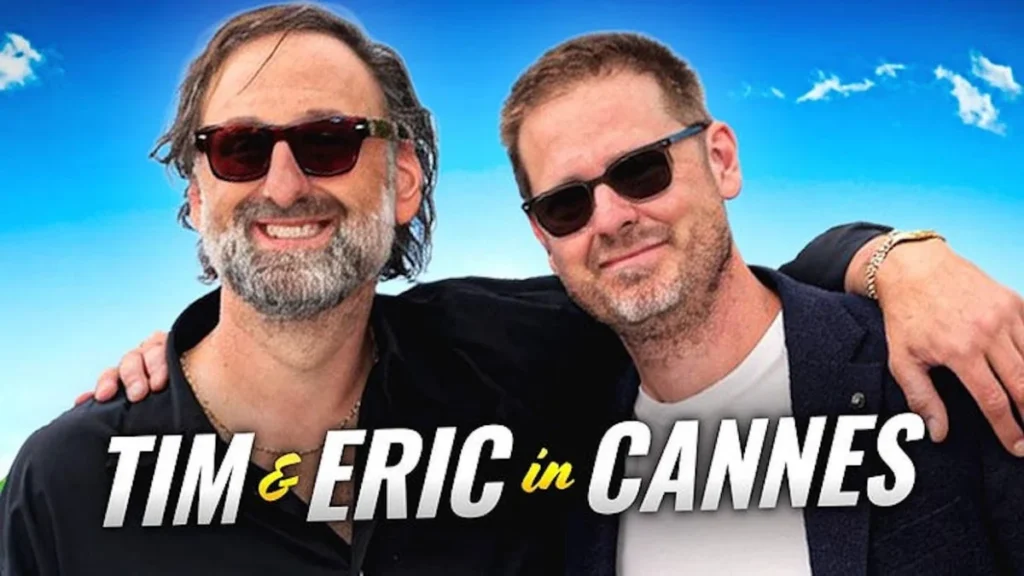
The 2026 Cannes Film Festival has played host to an eclectic array of cinematic achievements, yet few delegations have generated as much cultural friction as the arrival of surrealist comedy pioneers Tim Heidecker and Eric Wareheim. Best known for their seismic influence on American alternative comedy through Adult Swim’s Tim and Eric Awesome Show, Great Job! (2007–2010) and their foundational role in the digital creator economy via production banner Abso Lutely, the duo traveled to the French Riviera to celebrate a theatrical reunion. Heidecker and Wareheim star in French auteur Quentin Dupieux’s latest feature, Full Phil, a dark meta-comedy debuting at the world-renowned festival. Their presence at Cannes bridges decades of anti-comedy, independent media production, and an evolving industry landscape that increasingly favors direct-to-consumer independence over traditional Hollywood studio pipelines.
Main Facts and the Cannes Premiere of Full Phil
Full Phil serves as one of two high-profile releases from the prolific French filmmaker Quentin Dupieux—who also records electronic music under the moniker Mr. Oizo—at the 2026 Cannes Film Festival. Described by the director as an existential satire akin to "Emily in Paris in hell," the narrative follows a wealthy American patriarch, played by Woody Harrelson, attempting a futile reconciliation with his indifferent daughter, portrayed by Kristen Stewart. Rather than engaging with her father, Stewart’s character retreats into a private world of culinary indulgence and vintage horror consumption, viewing a retro portable DVD player displaying black-and-white monster features.
Within this overarching narrative, Heidecker and Wareheim appear in a stylized film-within-the-film. Drawing explicit inspiration from classic Universal monster titles such as James Whale’s Frankenstein (1931) and The Creature from the Black Lagoon (1954), the duo portrays eccentric, Victorian-styled scientists locked in pursuit of a reptilian creature. The roles allowed the comedians to lean into theatrical, scenery-chewing performances characterized by deliberate mispronunciations, heightened mid-Atlantic accents, and physical comedy.
For Wareheim, the collaboration marks his third project within Dupieux’s cinematic universe, having previously appeared in Wrong Cops (2013) and Reality (2014). For Heidecker, the brief four-day shoot in Paris represented a rare venture into someone else’s tightly controlled creative ecosystem, contrasting sharply with their own historically improvisational production styles.
Chronology of a Creative Partnership and Divergent Paths
The professional trajectory of Heidecker and Wareheim spans more than two decades, beginning as students at Temple University in Philadelphia before ascending to cult-classic status in the mid-2000s. Their early work established a distinct aesthetic of low-fidelity, public-access pastiche that anticipated the chaotic democratization of modern internet video culture. In the years following the conclusion of their flagship Adult Swim program, the collaborators forged divergent career paths while periodically reuniting for specialized multimedia projects.
Chronologically, the key milestones of their post-sketch careers include:
- 2007: Founding of Abso Lutely Productions, serving as an incubator for alternative television and digital content.
- 2011: Launch of On Cinema at the Cinema, an ongoing multimedia psychodrama co-created by Heidecker and Gregg Turkington, which eventually spawned the dedicated streaming platform HEI Network.
- 2013–2014: Wareheim’s early collaborations with Quentin Dupieux in Wrong Cops and Reality.
- 2020–2024: Industry shifts driven by the COVID-19 pandemic, leading to the sale of Abso Lutely to producer Jimmy Miller’s management apparatus and the duo’s withdrawal from traditional cable development hell.
- April 2026: Heidecker’s appointment as creative director of InfoWars, coinciding with satirical acquisition efforts by The Onion.
- May 2026: The dual debut of Heidecker and Wareheim in Full Phil at the Cannes Film Festival, alongside Wareheim’s supporting role in Adam Wingard’s upcoming indie-horror feature Onslaught.
Supporting Data and Industry Context
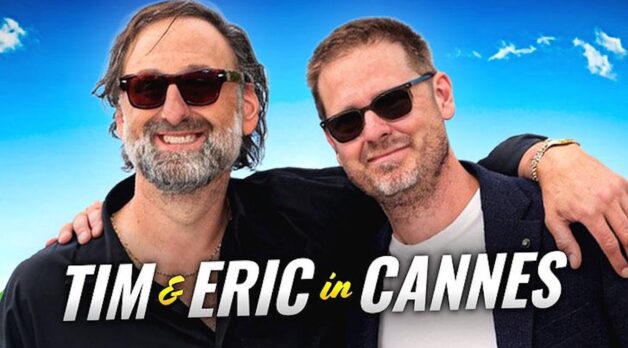
The duo’s arrival in Cannes followed an invitation to deliver a keynote address at the American Pavilion, hosted by IndieWire, focusing on the "Future of Filmmaking." Industry analysts at the festival praised Heidecker and Wareheim as early progenitors of the creator economy, highlighting their foresight in establishing independent production channels long before short-form digital platforms dominated entertainment consumption.
However, both performers expressed candid ambivalence toward the ultra-luxurious, celebrity-obsessed architecture of Cannes. Comparing the festival grounds to a magnified version of the upscale Los Angeles retail destination The Grove, the comedians noted the stark contrast between their foundational roots in low-budget alternative media and the ultra-formal, high-capital ecosystem of European cinema’s premier showcase.
Furthermore, the economic realities of modern television production heavily influenced their recent career pivots. Both creators detailed frustration with traditional studio development cycles, citing prolonged stagnation within networks like FX. These institutional roadblocks ultimately motivated their transitions toward alternative distribution models. While Wareheim has successfully established a parallel career as a plant importer and bonsai specialist—managing international shipments of botanical specimens—Heidecker has expanded his satirical footprint through the HEI Network and his recent involvement with satirical media acquisitions.
Official Responses and Industry Implications
The intersection of independent comedy aesthetics and high-prestige European film festivals highlights a broader shift in how auteur-driven projects are financed and distributed. While mainstream studios increasingly consolidate intellectual property into risk-averse franchises, independent creators are leveraging direct-to-consumer platforms to retain artistic autonomy.
Quentin Dupieux’s approach to casting Heidecker and Wareheim underscores an international appreciation for American alternative comedy’s capacity to subvert traditional narrative conventions. By casting the duo in rigidly structured, foreign-translated scripts, Dupieux deliberately weaponized their lack of conventional dramatic training to generate a disorienting comedic atmosphere.
Broader Impact and Analysis of the Creator Economy
The critical and commercial implications of Heidecker and Wareheim’s current output point toward a sustainable blueprint for legacy internet creators. By transitioning away from standard television network overheads and embracing self-contained distribution networks—such as the HEI Network and satirical web-incubators—artists can bypass the development gridlock that frequently plagues traditional studio systems.
The reception of Full Phil at Cannes signals that institutional gatekeepers are increasingly willing to accommodate transgressive, low-brow comedic sensibilities within elite cinematic contexts. As traditional financing models continue to contract under inflationary pressures and streaming market corrections, the autonomous, multi-hyphenate career models demonstrated by Heidecker and Wareheim offer a viable roadmap for the next generation of independent filmmakers and digital creators. Whether through international horticultural imports, surrealist horror-comedies, or satirical digital takeovers, the enduring legacy of Temple University’s most infamous alumni proves that lasting cultural influence often stems from a steadfast refusal to play by conventional rules.