The American Cinematheque’s "Bleak Week: Cinema of Despair," a cinematic series initially conceived as audacious counter-programming, has burgeoned from a local Los Angeles phenomenon into a formidable international event. Now in its fifth iteration, the festival is embarking on an unprecedented global expansion, reaching 73 cities and nearly 100 theaters worldwide starting in June, inviting programmers to interpret its broad definition of "bleakness" for diverse audiences. This remarkable growth not only underscores a significant appetite for challenging, thought-provoking cinema but also redefines the scope and impact of repertory film programming in the 21st century.
The Genesis of a Stark Vision
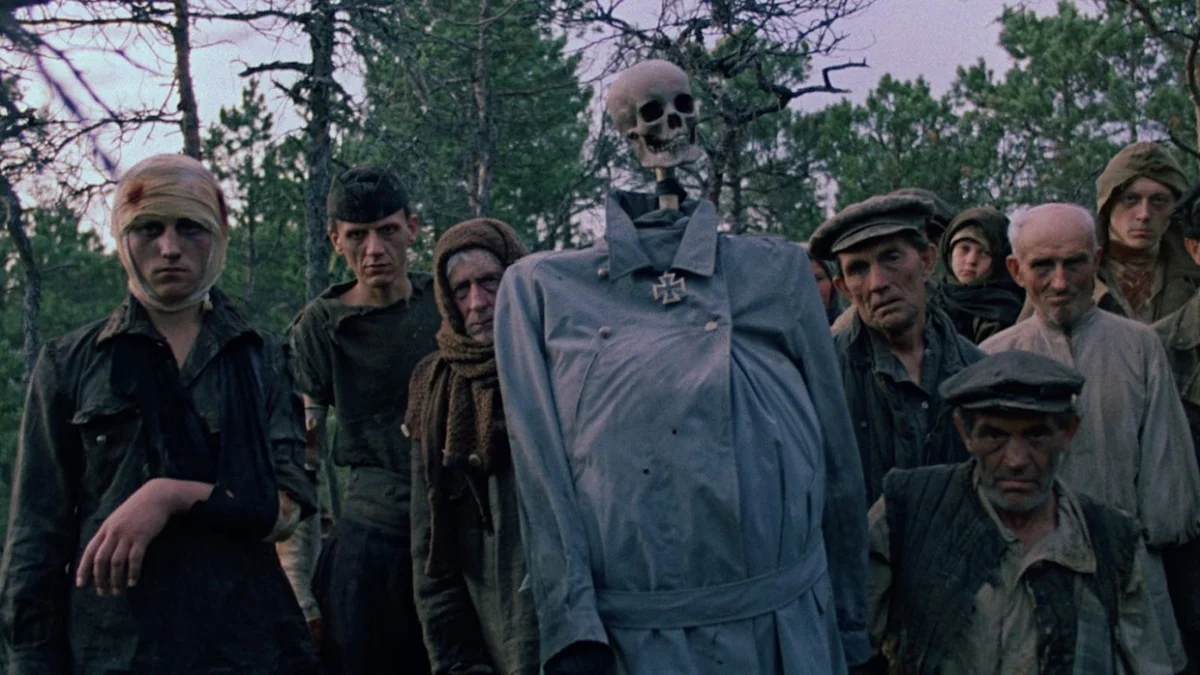
The inaugural season of Bleak Week debuted in 2022, a deliberate and somewhat cheeky strategic move by the American Cinematheque to offer a stark alternative to typical summer entertainment. The organization, renowned for its commitment to preserving and exhibiting a wide spectrum of cinematic history, sought to spotlight "filmmakers who wholly embrace a cinema of despair in pursuit of unpleasant truths and raw empathy." This mission statement guided the festival’s initial 33-film lineup, which featured a diverse array of repertory classics that, while varied in their aesthetic approaches, were united by a palpable sense of visceral dreariness and undeniable arthouse pedigree. Among the seminal selections were Pier Paolo Pasolini’s harrowing Salò, or the 120 Days of Sodom (1975), Elem Klimov’s brutal war epic Come and See (1985), Ingmar Bergman’s existential Winter Light (1963), Michael Haneke’s disturbing Funny Games (1997), Lars von Trier’s emotionally pulverizing Breaking the Waves (1996), and Béla Tarr’s monumental Sátántangó (1994). These films, each in its own way, plunged audiences into difficult narratives and explored the darker facets of the human condition, establishing Bleak Week’s uncompromising artistic identity from its very beginning.
The driving force behind this audacious programming was Chris LeMaire, Director of Programming at the American Cinematheque, who has long championed films often categorized as heavy or depressing. Prior to the pandemic, LeMaire spearheaded initiatives that brought rare Andrei Tarkovsky prints to audiences and successfully enticed the acclaimed Filipino director Lav Diaz to visit the U.S. for the first time. The austere, often durational works of Tarkovsky and Diaz, though distinct in their cinematic language, share a profound engagement with national history, political atrocity, and fundamental existential concerns. This philosophical underpinning is central to Bleak Week, which, despite its seemingly blunt branding, actively encourages audiences to confront and engage with humanity’s most foundational, albeit often uncomfortable, qualities. LeMaire’s dedication to fostering patience and humanism in viewing, pushing past initial intimidation, forms the very heart and soul of the festival.
From Local Anomaly to Global Movement: A Chronological Expansion
The concept for Bleak Week emerged from a desire to elevate LeMaire’s distinctive programming and bring broader recognition to essential art house films and auteur cinema, as articulated by American Cinematheque Artistic Director Grant Moninger. A pivotal decision in the festival’s early strategy involved subverting the Cinematheque’s usual programming rules. Rather than offering Bleak Week as one thematic choice among many, the first edition monopolized the schedules of all three of their Los Angeles venues, presenting audiences with an inescapable, wall-to-wall immersion in despair. This bold move, while a predicament for those seeking lighter fare, created a unique opportunity for concentrated engagement.
This "no choice" approach prompted LeMaire to ponder the multifaceted nature of cinematic bleakness, leading to the question, "What if there are different types of bleaks?" While the inaugural year featured few truly left-field selections beyond Arthur Penn’s black comedy Penn & Teller Get Killed (1989), subsequent iterations have seen a more diverse curatorial evolution. The current, fifth edition seamlessly integrates repertory staples—including the return of Bleak Week favorite Béla Tarr, Jane Campion’s The Piano (1993), and Ingmar Bergman’s war apologia Shame (1968)—with an array of genre films not typically programmed alongside them, such as Richard Kelly’s enigmatic Southland Tales (2006) and Mick Jackson’s chilling post-apocalyptic nightmare Threads (1984). This expansion of definition reflects a sophisticated understanding that bleakness can manifest across various cinematic forms and styles.
The festival’s geographical expansion began gradually, moving from Los Angeles to other major cinematic hubs like New York City, Chicago, Dallas, and London. The current year marks a significant leap, with programming slated for 73 cities worldwide. This widespread embrace suggests a powerful, almost universal desire among audiences to engage with films that unflinchingly reflect reality, "warts and all," as Moninger aptly puts it. Far from being a niche interest, the growing global footprint of Bleak Week implies a shared human need to process difficult truths through collective artistic experience.
Curatorial Collaboration and Local Interpretations
A cornerstone of Bleak Week’s global expansion is its collaborative ethos. Kerstin Larson, programming director at Milwaukee’s Oriental Theater, shared insights into this process. LeMaire’s team proactively reached out to potential participating venues, providing extensive resources, including a "giant spreadsheet" detailing past programs and distributors’ upcoming restorations. Crucially, the American Cinematheque does not impose a rigid lineup or even a fixed duration. "We don’t even say it has to be seven days," LeMaire explained. "What is a ‘week’ to you? What would that look like in your programming?" This flexible approach empowers local programmers to interpret the series’ theme in ways most relevant to their audiences and available screens.
The diversity born from this collaborative model is evident in the programming across different cities. For instance, the Oriental Theater in Milwaukee, limited by screen availability, will feature a focused lineup of seven films, with only one overlap (William Friedkin’s heist thriller Sorcerer (1977)) with the American Cinematheque’s primary program. Larson deliberately honed in on a local theme for Milwaukee, centering on Chris Smith’s American Job (1996), a film deeply resonant in a city where Smith’s American Movie (1999) is highly regarded. This led to a thematic strand exploring "how work and labor continues to be bleak," even including Béla Tarr’s The Turin Horse (2011) screened ironically on Father’s Day in sunny June. This localized curation demonstrates the adaptability and richness that the decentralized approach brings to the festival.

Industry Validation and Audience Engagement
The growing stature of Bleak Week is also significantly bolstered by the participation of renowned filmmakers and actors. A turning point occurred when Chris LeMaire successfully convinced Béla Tarr, who had previously declared he would never return to the United States, to attend Bleak Week. Tarr’s presence, as one of the festival’s "heroes," instantly elevated its profile. In subsequent years, other cinematic luminaries have joined, including a rare retrospective for independent maverick Jon Jost in 2025 and tributes to Kenneth Lonergan, Lynne Ramsay, and Charlie Kaufman in 2024.
"It’s cool we can even call Bleak Week a film festival," LeMaire remarked, highlighting its unique identity as primarily a repertory program rather than a showcase for premieres. Yet, the audience response has been akin to major film festivals, with tickets for events like Ari Aster’s retrospective selling out "in just a few minutes." This fervent demand for classic and challenging cinema is a testament to the festival’s carefully curated offerings and its growing cultural cachet.
Distributors have also played a crucial role in the festival’s excitement. LeMaire noted that companies like Janus Films and American Genre Film Archive are "willing to hold some restorations they have for the year for Bleak Week," indicating the festival’s prestige within the industry. This year’s edition boasts world premieres of restorations, including the Coen Brothers’ The Man Who Wasn’t There (2001) and Daniel Petrie’s rarely seen Buster and Billie (1974), adding exclusive value to the programming.
The involvement of major cinematic figures like Isabelle Huppert further simplifies the programming process and broadens appeal. "This is the easiest year we’ve ever programmed," LeMaire stated, explaining that Huppert’s commitment creates a ripple effect, making it easier to secure other talent and garner audience interest. This strategic inclusion of high-profile names allows the festival to encourage audiences to "take a chance on some of the rarer things in the lineup," banking on the implicit trust that if a film is part of a festival featuring Huppert and Aster, it must be inherently interesting.
Navigating Thematic Boundaries: The Omission of Nonfiction
A notable characteristic of Bleak Week’s programming is the deliberate omission of nonfiction filmmaking. The curators have made a conscious choice to focus exclusively on narrative cinema. Moninger explained the rationale: "We don’t actually want to show the suffering. Bleak Week is really triumphant. It’s saying that no matter what people have been through, what they’re going through now, or who they are, you can make art about it." The underlying concern appears to be that presenting documentaries about real-world atrocities under a banner as specific as "Bleak Week" might inadvertently trivialize or exploit genuine suffering, contrasting with the artistic interpretation offered by narrative fiction.
While this approach safeguards against potential misinterpretation, it also presents a thematic limitation for a program otherwise so open-ended in its exploration of human struggle. Documentaries, particularly those that offer unflinching but deeply humanistic perspectives on difficult realities, could be framed thoughtfully to align with the festival’s core values of empathy and confronting truth. The challenge lies in curating such films in a manner that emphasizes their artistic merit and contextualizes their content appropriately for an audience seeking profound engagement rather than sensationalism. This boundary suggests an area for potential future evolution, perhaps requiring a dedicated programming strand to thoughtfully integrate the raw power of documentary storytelling.
Challenging "Hopecore" and Affirming Communal Empathy
The success and global expansion of Bleak Week stand in stark contrast to recent industry discussions, such as The Hollywood Reporter’s article by Carly Thomas on "Hopecore"—a perceived trend toward uncynical storytelling celebrating collaboration and the indomitable human spirit, exemplified by films like Project Hail Mary. While Hollywood has historically oscillated between optimistic and downbeat narratives, Moninger dismisses the notion of a rigid cultural shift: "There’s never been a time on this earth that wasn’t bleak. It may not be bleak in your house, but I guarantee that next door it’s kind of bleak. And I guarantee you across the ocean it’s kind of bleak. So to say it’s really all about ‘now’ is limiting." This perspective grounds Bleak Week not in a transient trend, but in a timeless, universal aspect of the human condition.
The widespread audience appetite for Bleak Week’s challenging content directly counters the idea that audiences are solely seeking escapist, "hopeful" narratives. Instead, it suggests a profound desire for cinema that reflects the complexities of human experience, even its darker aspects. The festival offers a unique communal space for engagement with these difficult themes. Moninger articulates this beautifully: "To me, the greater hope is that places are uniting. These are films made by humans, programmed by humans, for humans, about the human condition. There’s nothing more hopeful than that." He further emphasizes, "Being able to experience sorrow and grief together—there’s something more hopeful about that than people watching entertainment at home."
In an era increasingly defined by individualized digital consumption, Bleak Week reaffirms the enduring power of collective cinematic experience. It provides a vital platform for art that doesn’t shy away from discomfort but instead harnesses it to foster empathy, understanding, and a shared acknowledgment of the human struggle. Its global reach signifies that challenging cinema is not merely surviving but thriving, proving that audiences worldwide are ready and willing to confront "unpleasant truths" when presented with artistic integrity and a spirit of communal engagement. The festival’s continued growth is a beacon for the enduring relevance of curated, thought-provoking film programming in a rapidly evolving cultural landscape.