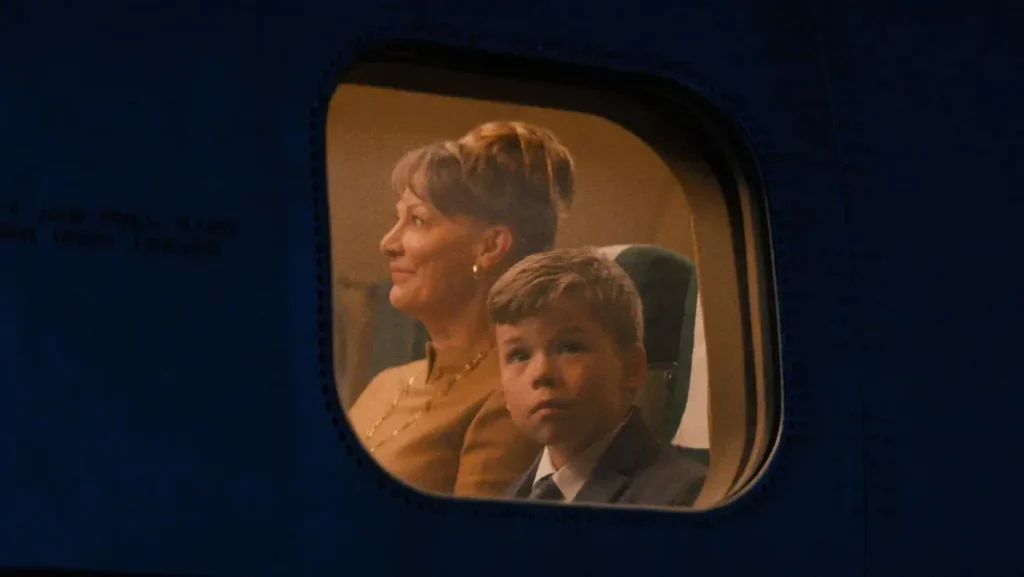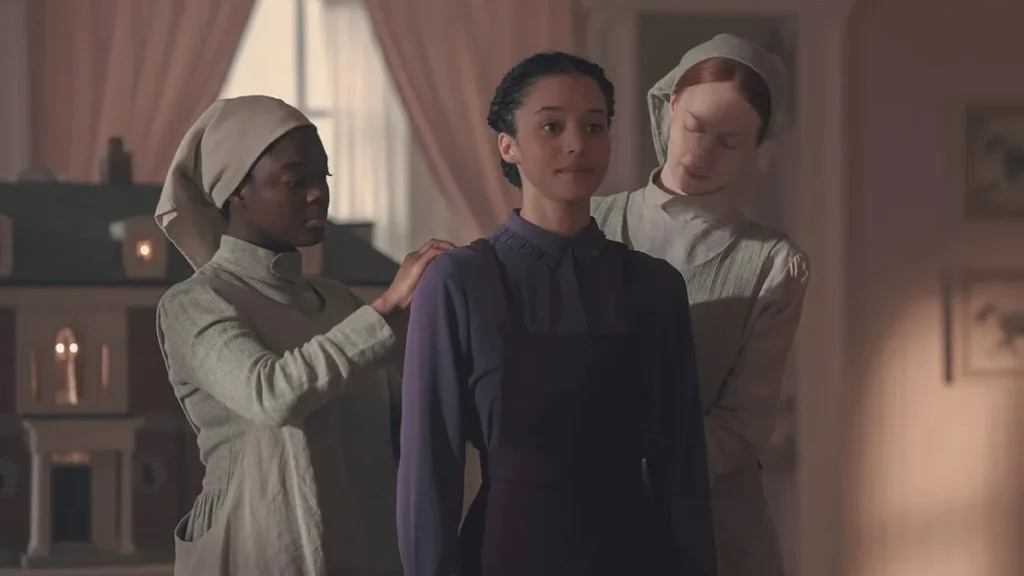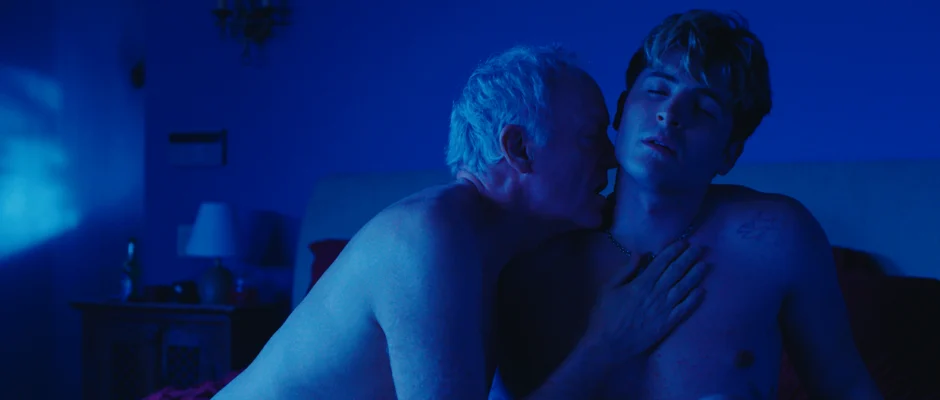
Elliot Tuttle’s debut feature, Blue Film, emerges as a bold exploration of complex human psychology, identity, and the transactional nature of relationships, all framed through the prism of the color blue’s rich and often controversial history in cinema. The film delves into an unsettling encounter between a gay FinDom camboy and a former middle school teacher, leveraging its titular hue to signify everything from historical censorship to profound emotional interiority. This article examines the film’s intricate thematic layers, its artistic lineage, and the challenging questions it poses to audiences regarding morality, trauma, and the construction of self.
The Multivalent History of "Blue" in Cinema and Culture
The color blue holds a storied and often ambiguous place within the annals of film history and broader cultural discourse. Its associations range from legend and conjecture to direct links with obscenity and political subversion. During the stringent moral panic and puritanical oversight of Hollywood’s Hays Code era, which formally enforced censorship from 1934 to 1968, blue grease pencils were infamously employed by censors. These marks on film stock designated sequences deemed "obscene," "ethically dubious," or otherwise offensive, compelling directors to undertake costly eleventh-hour cuts and reshoots, often at the expense of artistic integrity and narrative coherence. This system profoundly shaped American filmmaking for decades, pushing potentially transgressive content into euphemism or outright excision, impacting everything from dialogue to plotlines and character portrayals. The Code, officially known as "The Motion Picture Production Code," dictated moral guidelines for film content, reflecting conservative societal values and religious sensibilities of the time, thereby creating a pervasive culture of self-censorship within studios.
Concurrently, in Portugal under the authoritarian Estado Novo dictatorship (1933-1974), the lápis azul (blue pencil) served a similar function, but with a broader scope. It was used by state censors to redact words, phrases, or entire passages from texts considered politically subversive, thereby controlling public thought and suppressing dissent. Its reach extended to international films, which were meticulously censored before ever reaching Portuguese audiences, ensuring alignment with the regime’s ideological strictures. This systematic control of information and artistic expression aimed to maintain political stability and propagate the regime’s nationalist and traditionalist agenda, effectively creating a censored reality for its citizens. This parallel use of "blue" in both entertainment and political control highlights a shared global impulse to regulate information and artistic expression, underscoring the power attributed to visual and written media.
Beyond these institutional applications, the word "blue" has been linked to ribaldry and profanity since at least the 1860s. The phrase "Blue Movie" itself likely solidified its association with early pornographic content due to practical filmmaking constraints. Early stag films, often produced illicitly and on meager budgets, were typically shot on low-grade film stock. This inferior material frequently imparted a distinct bluish pallor to the resulting footage, inadvertently cementing the visual and linguistic connection between the color and illicit carnal proceedings. These films, often screened in private gatherings, were clandestine operations that bypassed official distribution channels, further solidifying their "blue" — meaning illicit or taboo — status. Elliot Tuttle’s Blue Film intentionally embraces these diverse historical and etymological affiliations, using them as a foundational layer for its narrative and aesthetic framework. As Tuttle explains, "That color was used to signify anything that was culturally taboo, especially at the time. There’s the obvious pornographic reference, but it was important to me that these different uses of the term felt linked." This deep historical resonance provides a crucial backdrop for the film’s challenging themes, transforming the color from a mere descriptor into a loaded symbol of societal boundaries and hidden desires.

Elliot Tuttle’s Artistic Vision and Influences
Tuttle, described as a "young provocateur," positions Blue Film not merely as a narrative, but as a conceptual project deeply informed by a lineage of transgressive and psychologically complex cinema. His approach to the titular color extends beyond its political and historical connotations, mirroring the visceral red fades employed by Ingmar Bergman in his seminal 1972 film, Cries and Whispers. In Bergman’s work, these crimson interludes function as liminal spaces, externalizing the raw, often agonizing, emotional interiority of his characters. Cries and Whispers, a stark exploration of death, faith, and the isolation within a family, resonated deeply with critics for its unflinching portrayal of female suffering and its audacious use of color symbolism, earning it an Academy Award for Best Cinematography. Tuttle adopts a similar strategy with blue, using it to visually articulate the inner turmoil and psychological states of his protagonists. "Bergman’s filmography is predicated on the dissonance between our assumed self and our true self, which is so much of what the narrative engine of Blue Film is sustained by," Tuttle notes, highlighting a profound thematic alignment. This deliberate aesthetic choice establishes a direct dialogue with a master filmmaker renowned for probing the human psyche, signaling Tuttle’s intent to explore similar depths of psychological realism and emotional raw-ness within his own narrative.
Beyond Bergman, Tuttle draws inspiration from a pantheon of filmmakers known for their uncompromising examinations of desire, trauma, and societal taboos. Catherine Breillat, a French director celebrated (and often controversial) for her unflinching depictions of adolescent sexual awakening and female desire, serves as a significant touchstone. Films like A Real Young Girl (1976) and 36 Fillette (1988) are renowned for their radical honesty regarding nascent sexuality, often presenting it with a raw, almost documentary-like frankness that challenges conventional notions of purity and innocence. Breillat’s work frequently blurs the lines between desire, power, and vulnerability, themes that are central to Blue Film. Her films often depict characters, particularly young women, grappling with the complexities of their burgeoning sexuality in ways that are both explicit and intellectually rigorous, earning her a reputation as a challenging but essential voice in feminist cinema. Tuttle reveals that the development of his debut began "as part pubescent smut fantasy, part existential treatise on the nature of desire," echoing Breillat’s early work which often intertwined personal exploration with broader philosophical questions about sexuality.
Another key influence is Agustí Villaronga’s 1986 Spanish horror-drama In a Glass Cage (Tras el cristal), a film notorious for its portrayal of "frigid traumatophilia" and its chilling depiction of a former Nazi doctor’s psychological torment and his relationship with a young boy. Villaronga’s film delves into the darkest corners of human depravity and the lasting scars of abuse, creating an atmosphere of profound disquiet and moral ambiguity. Set in a secluded house, the film uses its claustrophobic environment to amplify the psychological horror, exploring themes of power, sadism, and the enduring nature of trauma. This influence underscores Blue Film‘s commitment to exploring uncomfortable truths and the lingering effects of trauma, situating it firmly within a tradition of transgressive cinema that seeks to provoke thought rather than offer easy answers. Tuttle’s synthesis of these diverse influences suggests a film that is both intellectually rigorous and emotionally confrontational, aiming to dissect the intricate ways "sex informs so much of how we live our life… It’s actually really rife with danger or potential or possibility." This deliberate positioning within a lineage of challenging cinema signifies Tuttle’s intent to engage with profound, often unsettling, aspects of the human condition.
The Narrative Core: A Transactional Encounter in the Digital Age
Blue Film unfolds primarily within the claustrophobic confines of a rented AirBnB in Hancock Park, Los Angeles, a setting that initially promises anonymity and discretion but ultimately becomes a crucible for psychosexual revelation. Hancock Park, known for its historic mansions and affluent residents, provides an ironic backdrop for a narrative steeped in moral decay and hidden desires, hinting at the veneers of respectability that often conceal darker truths. The narrative centers on two damaged men whose lives intersect in a pre-arranged, transactional encounter that quickly spirals beyond its initial parameters.
One is Aaron Eagle (portrayed by Kieron Moore), a young gay FinDom (Financial Dominatrix) camboy. The film opens in the "buffering depths of cyberspace," immersing the audience in Aaron’s online persona: a rugged, tattooed "alpha-male" who barks commands at an unseen "throng of worthless paypigs," compelling them to "drain their digital wallets" while he performs a calculated routine of hypermasculine toxicity. This introduction