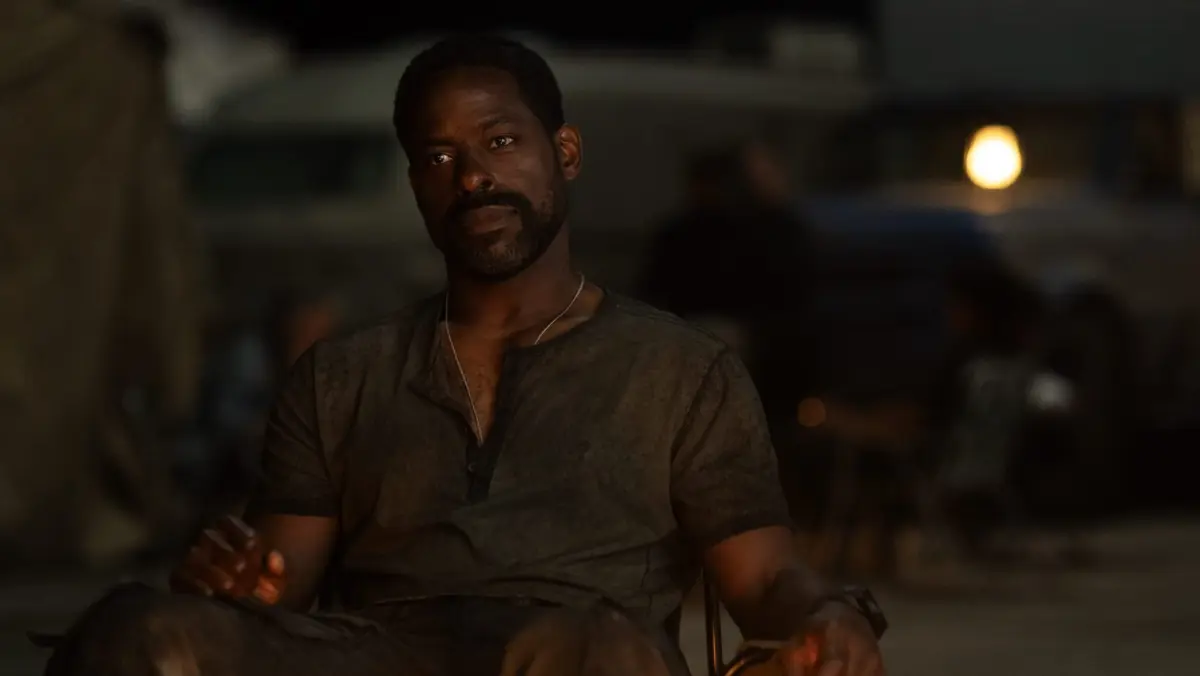
The cinematic landscape of psychological horror is set for a significant expansion as Paramount Pictures moves forward with a follow-up to the 2024 breakout hit Longlegs. Industry reports confirm that Emmy Award-winning actor Sterling K. Brown, known for his compelling performances in This Is Us and Paradise, is currently in advanced negotiations to join the production. This addition bolsters an already formidable creative team, headlined by the return of Nicolas Cage, who will reprise his transformative role as the titular antagonist. Osgood Perkins, the visionary director behind the original’s atmospheric success, has been tapped to write, produce, and direct this new installment, marking the first time in his directorial career that he has revisited a previous cinematic universe.
The Evolution of the Longlegs Universe
The announcement of a sequel arrives on the heels of the original film’s massive cultural and financial impact. Released in 2024, the first Longlegs became a focal point of horror cinema, lauded for its oppressive atmosphere, unconventional narrative structure, and Nicolas Cage’s haunting portrayal of a Satanic serial killer. By prioritizing dread over traditional jump scares, the film established a unique aesthetic that resonated with both critics and audiences, eventually becoming one of the most profitable independent horror titles of its decade.
The decision to expand the property into a franchise suggests that Paramount Pictures views the Longlegs mythos as a cornerstone for its future horror slate. While specific plot details remain strictly guarded by the studio, representatives have described the project as a film set within the established universe. This framing leaves the door open for a variety of narrative directions—whether the story serves as a direct continuation, a prequel detailing the earlier crimes of the character, or an anthology-style exploration of the occult forces introduced in the initial installment.
Cast Dynamics and the Absence of Lee Harker
A significant point of discussion following the announcement involves the notable absence of Maika Monroe. The original film centered on Monroe’s character, FBI Special Agent Lee Harker, whose investigation into the Longlegs case served as the audience’s entry point into the film’s nightmare. In a recent interview conducted during the promotion of her upcoming project Victorian Psycho, Monroe confirmed that her character would not be appearing in the sequel.
"Lee Harker will not be in this one," Monroe stated, while simultaneously expressing a sincere interest in returning to the role if the opportunity were to arise in future iterations. The departure of the protagonist signals a pivot for the franchise, suggesting that the upcoming film will shift its focus toward new investigators, victims, or perhaps an entirely different timeline. The inclusion of Sterling K. Brown, an actor noted for his intense dramatic range, implies that the new installment may lean further into the procedural and psychological dimensions of the franchise’s investigative elements.
Chronology of Development
The trajectory of the Longlegs franchise has been characterized by rapid momentum. Following the critical acclaim and box office performance of the 2024 film, stakeholders began evaluating the potential for a larger cinematic footprint.
- July 2024: Longlegs debuts in theaters to significant commercial success, quickly establishing itself as a top-tier horror entry.
- Late 2024–2025: Discussions regarding a potential sequel gain traction behind the scenes at Paramount and the production banners involved.
- November 2026: Official reports emerge confirming that Osgood Perkins has been signed to helm the sequel, with Nicolas Cage confirmed to return.
- November 2026: Casting news surfaces regarding Sterling K. Brown’s entry into negotiations, signaling the project’s shift from development into active pre-production.
- January 14, 2028: The currently scheduled theatrical release date for the film.
Production and Creative Leadership
The creative structure behind the sequel reflects a collaborative effort between seasoned producers and the director himself. Alongside Osgood Perkins, the project is backed by a coalition of industry veterans. Nicolas Cage is participating not only as a performer but also as a producer, underscoring his personal investment in the longevity of the character.

The production team also includes Brian Kavanaugh-Jones, representing Range Media Partners, and Chris Ferguson, who works alongside Perkins under their shared Phobo banner. Dave Caplan, whose C2 banner originally secured the rights to the property, remains a pivotal figure in overseeing the franchise’s development. This concentration of producers, many of whom were instrumental in the success of the first film, suggests a commitment to maintaining the specific tonal and stylistic integrity that defined the original.
Fact-Based Analysis of Market Implications
The horror genre has historically thrived on the "franchise model," where atmospheric hits are transformed into series. However, the success of a sequel in this specific sub-genre—the occult psychological thriller—often depends on the director’s ability to evolve without losing the source material’s core identity.
Osgood Perkins’ return is arguably the most critical factor for the project’s long-term viability. By taking on the writing and directing duties once more, he ensures a stylistic continuity that is often missing in horror sequels. Furthermore, the casting of Sterling K. Brown suggests a strategy of elevating the film’s profile. By pairing an actor of Brown’s caliber with the established, surreal intensity of Nicolas Cage, the studio is signaling a desire to maintain a high level of acting prestige, which could help differentiate the sequel from standard slasher or supernatural fare.
From a business perspective, the January 2028 release date positions the film during a period that has historically been friendly to horror titles, which often utilize the early-year window to capture audiences looking for counter-programming against the high-budget awards contenders and holiday-season blockbusters.
Broader Impact on the Horror Landscape
The Longlegs franchise stands at the intersection of modern "elevated" horror and traditional genre tropes. Its success has paved the way for more experimental storytelling in mainstream horror, proving that audiences are willing to engage with complex, non-linear, and disturbing narratives.
As production progresses, the industry will be watching closely to see how the story navigates the loss of its original lead. The pivot to a new protagonist, potentially supported by a performer of Brown’s stature, suggests that the "universe" approach—where the setting and the antagonist are the primary constants—is the preferred path for Paramount. If the sequel succeeds, it could solidify Longlegs as a foundational horror brand, potentially leading to further spin-offs, deeper lore explorations, or a broader anthology series.
The involvement of Sterling K. Brown, a performer known for his meticulous preparation and emotional depth, promises to bring a new layer of complexity to the narrative. Whether he steps into the role of a seasoned investigator, a rival to the titular killer, or an innocent caught in the crosshairs, his presence provides a strong anchor for a story that, by its very nature, demands high-stakes drama.
As the industry moves toward the January 2028 release, the primary objective for the production team remains clear: to honor the legacy of the 2024 original while forging a new path that feels both fresh and terrifying. With a solid creative team in place and a clear vision for the expansion of the universe, the untitled Longlegs sequel stands as one of the most anticipated horror projects in the current development pipeline.