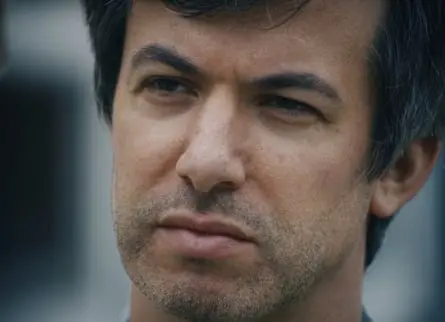
The intersection of entertainment, documentary filmmaking, and high-profile criminal justice has long been a fertile ground for ethical debate, but rare is the cinematic project that challenges the very foundation of objective reality quite as aggressively as A24’s latest release. In the documentary hybrid You Can See Everything, filmmaker and comedian Nathan Fielder embeds himself in the home of disgraced Theranos founder Elizabeth Holmes just weeks before she begins serving an 11-year federal prison sentence for fraud. Rather than engaging with the mountain of forensic evidence, financial records, and victim testimonies that led to a unanimous federal conviction, Fielder adopts a stance of radical, artful naivety. He bypasses the judicial record in favor of an intimate, psychological "vibes check," sparking a broader cultural conversation about the erosion of shared facts, the weaponization of emotional truth, and the societal implications of post-truth media consumption.
The Rise and Fall of Theranos: A Chronological Overview
To understand the unsettling nature of Fielder’s cinematic experiment, one must revisit the extraordinary trajectory of Elizabeth Holmes and the company she founded in 2003. Holmes dropped out of Stanford University at the age of 19 to establish Theranos, a privately held health technology corporation that promised to revolutionize blood testing. The core premise was deceptively simple: revolutionize diagnostic medicine by performing comprehensive blood tests using only a few drops of blood obtained from a fingerprick, rather than traditional venipuncture.
For over a decade, Holmes successfully cultivated an aura of visionary genius, drawing direct comparisons to Steve Jobs. She secured monumental financial backing from prominent investors, including media mogul Rupert Murdoch, the Walton family, and educational institutions like the DeVos family, ultimately valuing the company at approximately $9 billion at its peak. Theranos formed high-profile partnerships with retail giants like Walgreens to deploy its proprietary testing devices, known as the Edison machines, directly to consumers.
The facade began to crumble in October 2015, following an explosive investigative report by Wall Street Journal journalist John Carreyrou. The reporting revealed that Theranos was not utilizing its proprietary technology for the vast majority of its tests; instead, the company was secretly running samples on conventional, commercially available machines manufactured by established companies like Siemens, often yielding inaccurate or erratic results.
Regulatory audits by the Centers for Medicare & Medicaid Services (CMS) subsequently uncovered severe deficiencies, leading to the revocation of Theranos’s laboratory operating licenses. In 2018, the Securities and Exchange Commission (SEC) charged Holmes and former Theranos president Ramesh "Sunny" Balwani with massive fraud, alleging they had engaged in a multi-million-dollar scheme to deceive investors regarding the technological capabilities and financial standing of the company.
Following the collapse of the enterprise, a federal grand jury indicted Holmes on multiple counts of wire fraud and conspiracy to commit wire fraud. Her landmark trial began in September 2021, and in January 2022, a federal jury found her guilty on four counts of defrauding investors. In November 2022, U.S. District Judge Edward Davila sentenced Holmes to 135 months—equivalent to 11 years and 3 months—in federal prison, a sentence she began serving in May 2023 at the Federal Prison Camp in Bryan, Texas.
The Premise and Mechanics of You Can See Everything
It is against this backdrop of documented corporate malfeasance, judicial scrutiny, and tangible human suffering that Nathan Fielder constructs You Can See Everything. Granted unprecedented access to Holmes’s domestic life shortly before her incarceration, Fielder positions himself not as an investigative journalist or a legal historian, but as a passive observer untethered from the constraints of verifiable facts.
In the film, Fielder moves into the annex of Holmes’s residence. Rather than challenging her narrative of victimhood or questioning the validity of her claims regarding a miscarriage of justice, Fielder intentionally blinds himself to the legal apparatus that convicted her. The documentary sidesteps the reams of evidence presented during the federal trial, opting instead for prolonged close-ups, intense eye contact, and philosophical inquiries into the nature of human sincerity.
Critics and cultural analysts have noted that the film’s methodology mirrors a broader societal shift toward prioritizing emotional validation over factual consensus. By focusing intensely on personal affect, facial expressions, and the subjective experience of the disgraced executive, the film effectively brackets off the objective reality of the crimes committed. The cinematic framing invites viewers to sympathize with Holmes as a domestic figure—juggling family life and personal relationships—while systematically obscuring the devastating collateral damage of her actions.

The Human Toll and Judicial Implications
The lighthearted, atmospheric tone of You Can See Everything has drawn sharp criticism from legal experts, consumer advocates, and victims’ rights groups, who argue that the project minimizes the profound gravity of white-collar crime. The Theranos scandal was not merely a financial dispute among ultra-wealthy venture capitalists; it had direct, potentially life-altering consequences for everyday patients.
During the height of Theranos’s operations, thousands of patients relied on the company’s blood-testing services through retail partnerships. Faulty blood panels generated inaccurate results for serious medical conditions, including cancer diagnoses, miscarriages, and chronic illnesses. Patients received false positives or false negatives that led to unnecessary anxiety, inappropriate medical treatments, or delayed diagnoses.
Legal scholars emphasize that trivializing or aestheticizing these events through a post-modern, deadpan documentary lens undermines the integrity of the judicial system. When a federal court reviews millions of pages of evidence, hears testimony from dozens of witnesses, and issues a unanimous verdict based on statutory law, the deliberate sidelining of that process in favor of artistic ambiguity sets a dangerous precedent. It suggests that charismatic storytelling and personal charm can successfully supersede objective truth in the public consciousness.
The Zeitgeist of "My Truth" and the Crisis of Objectivity
The success and cultural resonance of You Can See Everything point to a deeper, systemic vulnerability in contemporary media consumption. In an era defined by polarized echo chambers, algorithmically driven information silos, and the widespread colloquial use of phrases like "my truth," the boundary between verifiable fact and subjective feeling has become increasingly porous.
Fielder’s film acts as a cultural mirror, reflecting a society that is increasingly fatigued by objective reality and more receptive to emotional narratives. By reducing a complex, multi-million-dollar fraud case into an existential meditation on whether anyone can ever truly know another person’s internal state, the documentary aligns itself with the prevailing zeitgeist. It asks existential questions—such as "Are you for real?" and "Can you ever tell if someone is being authentic?"—that are inherently unanswerable, thereby displacing accountability with ambiguity.
This stylistic choice, while undeniably compelling from a formalist perspective, represents a profound philosophical challenge. When documentaries abandon the pursuit of factual truth in favor of mood, vibes, and meta-narrative ambiguity, they risk becoming accomplices to the very disinformation they purport to examine.
Broader Analytical Takeaways for Modern Journalism and Film
The release of You Can See Everything has ignited rigorous debate within academic and journalistic circles regarding the ethical responsibilities of documentary filmmakers. Unlike fiction cinema, which operates explicitly within the realm of imagination, documentary hybrids carry an implicit social contract with the audience: an expectation of engagement with historical reality.
When that contract is subverted for artistic provocation, the implications extend far beyond the box office. Media analysts warn that normalizing the rehabilitation of convicted fraudsters through aestheticized intimacy can desensitize the public to the very real harms inflicted by corporate corruption. Furthermore, it reinforces a cynical worldview wherein truth is merely a matter of personal branding and persuasive performance.
As media platforms continue to evolve and audiences grow increasingly skeptical of institutional authorities, the temptation to retreat into subjective emotional realities will remain strong. However, the critical backlash against You Can See Everything serves as a vital reminder that the distinction between a white lie and a systemic fraud—between objective evidence and manufactured narrative—remains essential to the preservation of a functioning society.