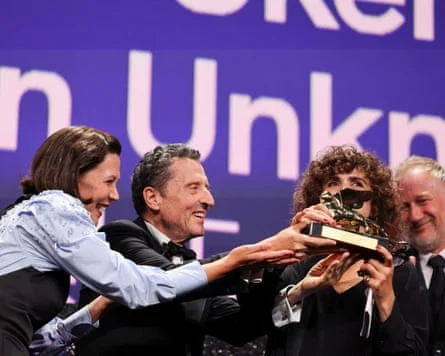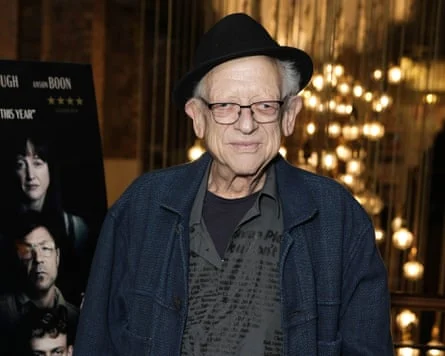
The global film community is mourning the loss of Jeremy Thomas, a towering figure in independent cinema who operated with a rare combination of old-school studio authority and the passionate soul of a dedicated cineaste. Thomas, whose career spanned more than five decades, passed away at the age of 77. Revered as British cinema royalty, his contributions defied conventional categorization. He was at once a shrewd entrepreneur, a champion of avant-garde and international talent, and a quietly spoken, self-effacing mentor who nurtured some of the most daring cinematic visions of the late 20th and early 21st centuries.
Born into a prominent filmmaking dynasty—his father was director Ralph Thomas and his uncle was director Gerald Thomas, renowned for the classic Doctor in the House and Carry On franchises—Jeremy Thomas chose a path less conventional than studio filmmaking sequels. Instead, he forged a legendary career as an independent producer, backing his own instincts, cultivating lifelong friendships with global auteurs, and doggedly keeping complex, challenging projects alive over many years. His passing marks the end of an era for European independent film production and leaves a vast void in the landscape of risk-taking global art-house cinema.
Main Facts and Career Defining Achievements
Jeremy Thomas’s filmography is a masterclass in international co-production, intellectual curiosity, and aesthetic bravery. His most celebrated commercial and critical triumph came in 1988, when he won the Academy Award for Best Picture as the producer of Bernardo Bertolucci’s monumental epic, The Last Emperor. The production was historic not only for its sweeping visual scale and nine Oscar sweeps but also because Thomas successfully negotiated unprecedented Western access to Beijing’s Forbidden City. This achievement reflected his core worldview: pioneering, ambitious, globally minded, and profoundly internationalist.
Throughout his prolific career, Thomas partnered with some of the most singular and uncompromising directors in film history. In the late 1970s and 1980s, he produced Jerzy Skolimowski’s eerie psychological drama The Shout (1978), Nicolas Roeg’s unsettling explorations Bad Timing (1980) and Eureka (1983), Nagisa Oshima’s powerful wartime drama Merry Christmas Mr. Lawrence (1983), and Stephen Frears’s taut thriller The Hit (1984).
His willingness to court controversy and champion provocative material never waned. In the 1990s, he reteamed with Bertolucci for The Sheltering Sky (1990) and produced David Cronenberg’s highly controversial adaptation of J.G. Ballard’s Crash (1996), famously brushing off moral outrage and tabloid condemnation with characteristic amiability and dry humor. Entering the 21st century, Thomas proved equally adept at spotting fresh cinematic pulses, bringing Jonathan Glazer’s razor-sharp British gangster debut Sexy Beast (2000) to the screen, alongside Jim Jarmusch’s atmospheric vampire romance Only Lovers Left Alive (2013), Ben Wheatley’s dystopian architectural allegory High-Rise (2015), and Takashi Miike’s frantic samurai epic 13 Assassins (2010). Beyond production, Thomas also stepped behind the camera to direct the well-received drama All the Little Animals in 1998, which starred John Hurt and Christian Bale.
Chronology of a Legendary Independent Career
The timeline of Jeremy Thomas’s career illustrates a steadfast commitment to artistic independence, longevity, and international collaboration:
- 1949: Born into a British film industry family in London, deeply immersing him in the mechanics of motion picture production from an early age.
- 1978: Produces Jerzy Skolimowski’s Cannes Jury Grand Prix-winning film The Shout, marking a major breakthrough in his early independent producing career.
- 1983: Backs Nagisa Oshima’s Merry Christmas Mr. Lawrence, starring David Bowie and Ryuichi Sakamoto, cementing his commitment to cross-cultural storytelling.
- 1988: Reaches the pinnacle of global cinematic recognition, winning the Academy Award for Best Picture for Bernardo Bertolucci’s The Last Emperor.
- 1996: Produces David Cronenberg’s Crash, navigating intense media scrutiny and censorship debates with characteristic calm and intellectual resilience.
- 1998: Directs his own feature film, All the Little Animals, showcasing his versatility within the dramatic medium.
- 2000: Introduces audiences to Jonathan Glazer’s critically acclaimed feature directorial debut, Sexy Beast.
- 2010–2015: Continues bridging Eastern and Western cinema through collaborations with directors like Takashi Miike, Jim Jarmusch, and Ben Wheatley, alongside supporting Matteo Garrone’s fantasy film Tale of Tales (2015).
- 2025: Co-produces the black comic satire Good Boy alongside longtime collaborator Jerzy Skolimowski, proving his creative energy remained undiminished late into life.
- 2026: Passes away at the age of 77, leaving behind a profound legacy across generations of filmmakers.
Supporting Data and Industry Presence
Operating primarily through his London-based production banner, Recorded Picture Company (RPC), Jeremy Thomas built a corporate entity that functioned as an artistic sanctuary rather than a standard commercial factory. RPC was responsible for financing and shepherding dozens of films that mainstream Hollywood studios would have deemed commercially unviable or too artistically risky.

For decades, Thomas was an institutional fixture at major international film festivals, most notably the Cannes Film Festival. Rather than hiding behind corporate publicists or retreating to luxury VIP enclaves, Thomas was famously approachable, holding court at legendary establishments along the Croisette—from the Carlton and Majestic beaches to the Grand Hotel (later the Mondrian). Observers frequently likened his festival presence to that of a benevolent intellectual or a master angler. He famously referred to his relaxed, rosé-fueled lunches and cafe meetings as "fishing," casting wide conversational lines to reel in kindred spirits, young auteurs, and future artistic collaborators.
Industry Reactions and Tributes
Following the announcement of his death, an outpouring of grief, admiration, and fond remembrance swept through the global film community. Directors, actors, critics, and fellow producers rushed to pay homage to a man who had enabled many of their most cherished cinematic works.
Colleagues and collaborators highlighted not merely his exceptional executive skills, but his profound personal decency, his fierce protection of artistic freedom, and his soft-spoken yet authoritative demeanor. In an industry notoriously dominated by loudmouths, self-promoters, and volatile egos, Thomas was a striking anomaly: a quiet gentleman whose word was his bond.
Directors whom he championed during their formative years noted that Thomas possessed a rare psychological equilibrium. He absorbed the financial pressures and high-stakes anxieties of independent film financing so that his directors could remain focused entirely on their creative vision. Unlike many producers who meddle in the editing room or pressure artists to compromise for commercial box-office appeal, Thomas acted as an intellectual shield and a steadfast creative partner.
Broader Impact and Implications for Modern Cinema
The passing of Jeremy Thomas serves as a poignant reminder of an endangered species within the modern entertainment ecosystem: the independent auteur producer. As the global film industry becomes increasingly dominated by corporate conglomeration, algorithmic content curation, risk-averse intellectual property management, and immediate streaming metrics, the traditional model of independent art-house financing is under severe threat.
Figures like Thomas proved that commercial viability and uncompromising artistic integrity are not mutually exclusive. By maintaining complete creative control over his slates and leveraging international co-production treaties, he demonstrated how European cinema could engage in global conversations without succumbing to homogenized storytelling.
His legacy challenges contemporary producers to recapture his fearless ethos—to back visions that unsettle, provoke, and elevate human consciousness rather than merely pacify audiences. As the credits roll on the extraordinary life of Jeremy Thomas, the international film community is left to reckon with the loss of a rare giant, whose quiet voice, sharp eye, and unwavering courage permanently expanded the boundaries of what motion pictures could achieve.