The landscape of American television is undergoing a profound structural and political transformation, and nowhere is this more evident than in the fiercely competitive race for the Primetime Emmy Awards. As the Television Academy prepares for its upcoming ceremonies, a series of sweeping rule changes has merged previously segregated categories, setting the stage for an unprecedented clash among the industry’s most prominent late-night hosts, satirical news programs, and sketch comedy staples. Scheduled against a backdrop of intense regulatory pressure, corporate restructuring, and heightened political polarization, this year’s Emmy competition transcends traditional entertainment industry mechanics, evolving into a cultural barometer for the state of free expression, broadcast censorship, and network television.
Evolution of the Variety Series Categories
To understand the magnitude of the upcoming September 14 Primetime Emmys, one must examine the turbulent history of the variety series category. Established in 1951, the category has repeatedly undergone restructuring as the television industry adapted to changing formats. Throughout the mid-1970s and up to 2014, the category functioned as a single entity, forcing traditional late-night talk shows, musical revues, and sketch comedy programs to compete directly against one another. This era was defined by prolonged dominance from late-night fixtures, culminating in Jon Stewart and The Daily Show setting an unprecedented record with ten consecutive wins.
In 2015, the Television Academy attempted to address the inherent mismatch by splitting the field into two distinct categories: Outstanding Variety Talk Series and Outstanding Variety Sketch Series. This division allowed sketch-heavy programs like Inside Amy Schumer, Key & Peele, and eventually Saturday Night Live to dominate the sketch category, while talk shows competed separately. A subsequent realignment in 2023 shifted HBO’s Last Week Tonight with John Oliver into the scripted variety series tier due to its specialized format, clearing the path for other talk programs to claim victories.
However, for the current awards cycle, the Television Academy has merged the variety series categories once again. This consolidation forces John Oliver’s critically acclaimed weekly news-satire program back into direct competition with traditional late-night network talk shows, including Stephen Colbert’s The Late Show, Jimmy Kimmel Live!, and NBC’s long-running institution Saturday Night Live. Industry analysts note that this reintegration creates an exceptionally unpredictable ballot, as voters must now weigh weekly satirical deep dives against daily topical monologues and sketch comedy.
Regulatory Pressures and Corporate Upheaval in Late Night
The intensity of this year’s Emmy race is further amplified by external pressures that have directly impacted the careers of several nominated figures. The intersection of broadcast media, corporate mergers, and federal regulatory oversight has placed late-night television at the center of a national debate regarding political speech.
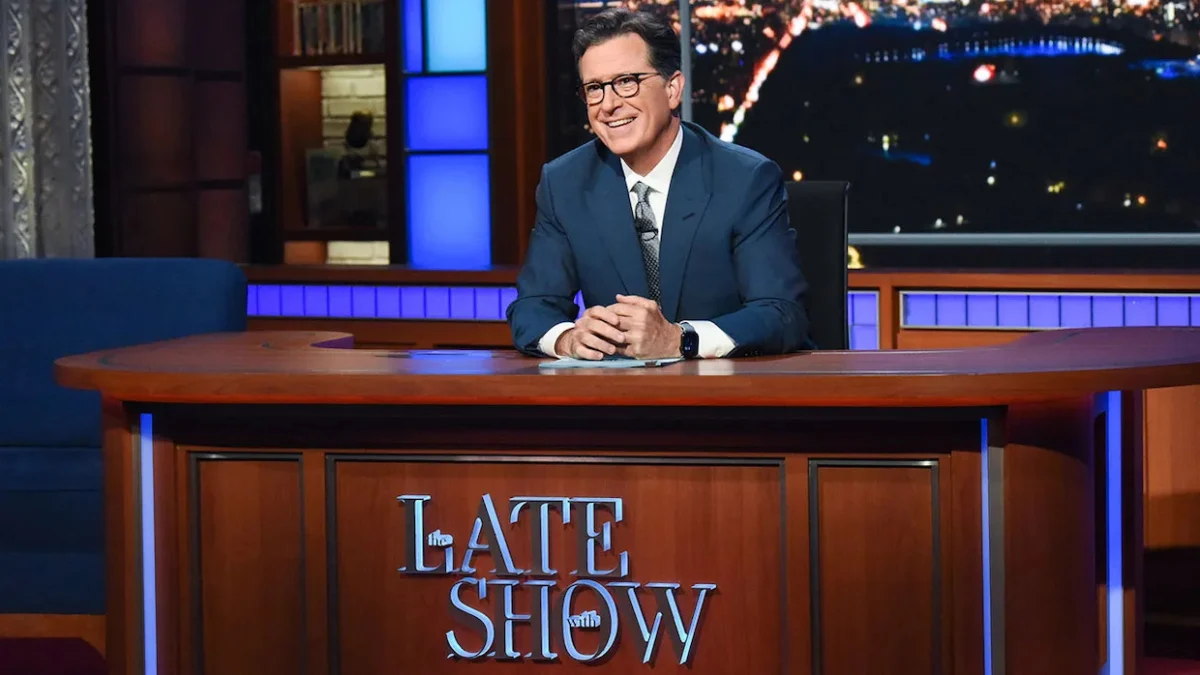
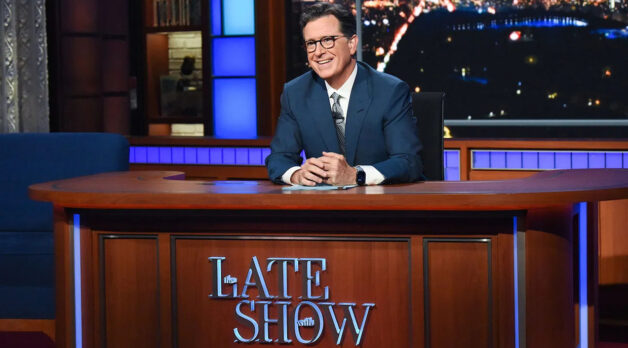
The turbulence was underscored by the high-profile cancellation of CBS’s The Late Show with Stephen Colbert. Following the acquisition of parent company Paramount by Skydance Media—led by David Ellison—CBS announced the termination of the 33-year-old franchise, with its final broadcast airing on May 21 after an 11-season run under Colbert. While corporate executives attributed the decision to operational losses amounting to approximately $40 million annually, media critics and industry observers immediately questioned the financial rationale. Many pointed to Colbert’s frequent, sharp critiques of conservative political figures and the perceived alignment between the new corporate leadership and the federal administration. Despite the abrupt termination, Colbert concluded his tenure on a high note, having secured his first talk series Emmy the previous September.
A similarly volatile situation unfolded at ABC regarding Jimmy Kimmel Live!. On September 17, the program was temporarily pulled from the air following remarks made by host Jimmy Kimmel during an opening monologue concerning conservative media personality Charlie Kirk. The suspension occurred amid intense pressure from the Federal Communications Commission (FCC), led by Chairman Brendan Carr, alongside threats from major broadcast affiliates including Nexstar Media Group and Sinclair Broadcast Group to preempt the program.
The suspension triggered immediate, widespread public backlash, resulting in coordinated audience boycotts and intense defense of broadcast speech from civil liberties organizations. Recognizing the escalating public relations crisis, ABC reversed its decision within a week. Kimmel returned to the airwaves on September 23 to a record-breaking audience of 6.26 million viewers, while his return monologue generated upwards of 26 million views across various digital and social media platforms.
Impact of Academy Rule Changes on Acting and Series Fields
Beyond the structural shifts in the variety categories, the Television Academy implemented strict new regulations regarding performer eligibility. A notable rule change enacted for this awards cycle explicitly disqualifies performers from receiving guest actor nominations for roles in which they have previously been nominated in lead or supporting categories.
This regulatory adjustment immediately impacted high-profile contenders, most notably Jon Hamm. Apple’s The Morning Show submitted Hamm in the guest actor category for his recurring role, overlooking the fact that he had previously received a supporting actor nomination for the exact same character in 2024. Consequently, the submission was rejected, resulting in Hamm’s disqualification from the guest acting race, though he remains eligible for recognition in other categories. Television analysts view this regulatory tightening as an effort by the Academy to prevent category fraud and ensure broader representation across guest-star pools.
The Contenders: Analyzing the Emmy Field
As voting gets underway for the Primetime Emmy Awards, the convergence of these narrative threads has transformed the primary categories into a complex handicap race.
- The Late Show with Stephen Colbert (CBS): Operating as a posthumous entry of sorts following its cancellation, Colbert’s program carries significant emotional and political weight. Academy voters sympathetic to the host’s abrupt departure and his antagonistic relationship with the current administration may view a vote for the show as both a final career acknowledgment and a symbolic statement on artistic independence.
- Jimmy Kimmel Live! (ABC): Having maintained a consistent presence in the category for over a decade without securing a win, Kimmel’s program benefits from the heightened visibility resulting from its brief suspension and subsequent ratings triumph. The show’s engagement with contemporary political discourse places it squarely in contention for top honors.
- Last Week Tonight with John Oliver (HBO): As a perennial powerhouse that secured multiple consecutive victories in its previous category, Oliver’s structured, investigative approach to satirical news remains a formidable favorite, provided voters opt for analytical depth over daily topicality.
- Saturday Night Live (NBC): Fresh off its milestone 50th-anniversary celebrations and managing a transitional 51st season—marked by the departure of fan-favorite cast member Bowen Yang and the continued international expansion of the franchise via SNL UK—Lorne Michaels’ sketch institution provides a reliable baseline of comedy that frequently captures Academy support.
- The Daily Show (Comedy Central): Featuring a hybrid hosting model anchored by Jon Stewart on Mondays alongside a rotating cast of correspondents for the remainder of the week, the program continues the satirical legacy that once defined the genre, positioning itself as a reliable top-tier nominee.
Broader Implications for the Television Industry
The outcome of the upcoming Emmy ceremonies will serve as more than a tally of golden statuettes; it will offer a definitive indicator of how the creative community assesses the current socio-political climate. With a substantial portion of the Television Academy’s voting membership leaning progressive, the ballot provides a mechanism for institutional validation of artists who have weathered direct government scrutiny and corporate restructuring.
Furthermore, the consolidation of the variety categories reestablishes a direct competitive baseline that will influence programming and development strategies across networks and streaming platforms for years to come. Regardless of which production ultimately secures the trophy on September 14, the race has already solidified its place in television history as one of the most politically charged and structurally transformative cycles the medium has ever experienced.