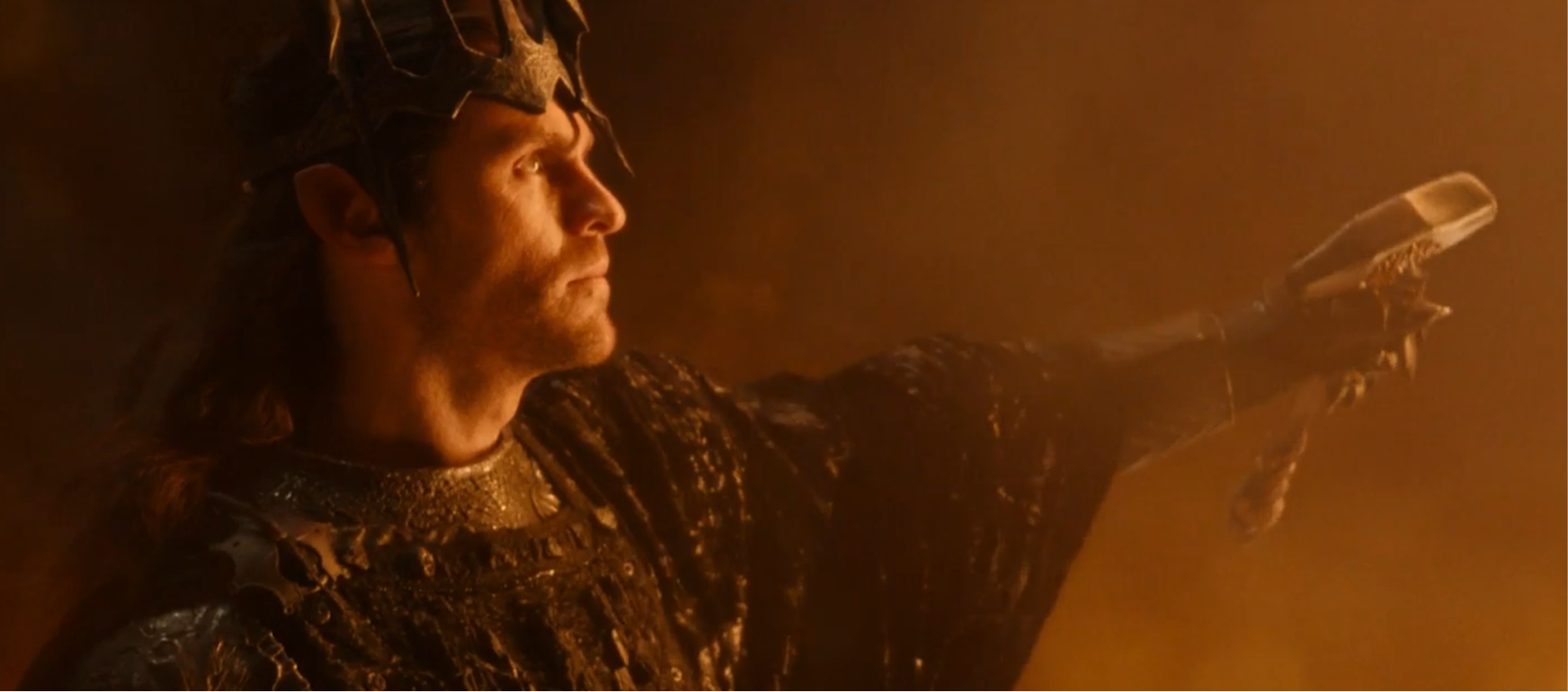
The genesis of the One Ring in Amazon Prime Video’s monumental fantasy epic, The Lord of the Rings: The Rings of Power, represents far more than a standard tactical maneuver in the grand geopolitical chess match for Middle-earth. According to co-creator and showrunner J.D. Payne, alongside actor Charlie Vickers—who portrays the Dark Lord in his deceptive guise as Annatar and his true persona as Sauron—the creation of the ultimate instrument of dominion is fundamentally rooted in personal obsession. While traditional adaptations of J.R.R. Tolkien’s legendarium have frequently categorized Sauron’s early motivations as cold, mechanical quests for absolute control, the streaming series actively humanizes the adversary. Specifically, the narrative frames the forging of the One Ring as an intimate, psychologically driven attempt to conquer not only the peoples of Middle-earth, but the Elven warrior Galadriel herself.
Main Facts and the Creative Vision Behind the Forge
During a recent awards-season screening event covered extensively by entertainment outlets like GamesRadar, J.D. Payne elaborated on the intricate narrative choices driving the second and third seasons of the fantasy drama. Payne emphasized that while the expansion of Sauron’s power involves tangible political conquest—most notably subverting the Elven rings forged by Celebrimbor to protect Middle-earth—the emotional core of the arc relies heavily on interpersonal dynamics.
The relationship between Sauron and Galadriel, painstakingly developed across two seasons of tension, psychological warfare, and ideological clashes, serves as the primary catalyst for the Dark Lord’s manufacturing ambitions. As Payne noted during the screening, early narrative taunts from Celebrimbor suggest that without the creation of the One Ring, Sauron will remain forever incapable of truly mastering Galadriel. This dynamic transforms a canonical act of manufacturing dark magic into a deeply personal quest driven by ego, pride, and the desperate need for psychological subjugation.
Chronology and Narrative Evolution of Sauron and Galadriel
To understand the weight of this creative decision, it is necessary to examine the chronological progression of Sauron’s deception across the series. Following the cataclysmic events of the first season’s finale, where Galadriel (played by Morfydd Clark) unmasked Halbrand as the resurrected Dark Lord, Sauron was forced to adapt his strategy.
Denied a straightforward path to dominance through brute force or open manipulation in the Southlands, Sauron pivoted toward the immortal realm of Eregion. Disguised as the angelic emissary Annatar, he successfully manipulated the Elven smith Celebrimbor into crafting the Rings of Power. This phase of the narrative, spanning the entirety of Season 2, established a tense triangle of intellect between the deceiver, the master smith, and the ever-suspicious Galadriel.
By the time the narrative progresses toward the forging of the One Ring in the fiery depths of Mount Doom—a focal point leading into the upcoming third season—the psychological groundwork has been meticulously laid. The tension is no longer confined to territorial expansion; it is an ideological battle for dominance between two ancient, opposing wills.
Actor Perspectives: Ego, Jealousy, and Insecurity
In an in-depth interview with TheWrap, actor Charlie Vickers expanded on the psychological underpinnings of his character, offering a nuanced perspective on Sauron’s internal landscape. Vickers noted that his character’s fixation on Galadriel stems less from romantic affection and more from an overwhelming, fragile ego and a relentless need to establish absolute power dynamics.
"I think there’s an element of, if not jealousy, in the sense of the human part of it, it’s more an ego thing," Vickers explained. "Like a power dynamic, and him trying to assert his dominance, assert himself."
Vickers also highlighted the complexities introduced in the narrative when characters grapple with seemingly human emotions like jealousy. Referencing Episode 5—which features a poignant reunion between Galadriel and her long-absent husband, Celeborn—Vickers questioned whether Sauron has inadvertently occupied a psychological and emotional space traditionally reserved for Galadriel’s closest bonds. Portraying an entity as ancient and primordial as Sauron requires navigating the paradox of divine malice colliding with deeply relatable human flaws, such as insecurity and territorial possessiveness.
Supporting Data and Fan Discourse
The decision by showrunners J.D. Payne and Patrick McKay to depart from monolithic depictions of evil—eschewing the traditional "flaming eye in the sky" shorthand in favor of a psychological character study—has sparked widespread discussion across the global fan community and critical publications like Reactor Mag.
Audience metrics and critical engagement indicators demonstrate that viewers are deeply polarized yet endlessly fascinated by this humanized approach to Middle-earth’s primary antagonist. While purists of Tolkien’s literary works occasionally debate the historical liberties taken with characters like Sauron and Galadriel, mainstream television analysts point out that serialised television requires emotional intimacy to sustain multi-season arcs. By grounding an immortal demigod in tangible insecurities—portraying him as a being with deep-seated aspirations, flaws, and a need for validation through mastery—the showrunners have cultivated a villain who feels dangerously compelling.
As Payne remarked in a previous production interview, "He’s a being with aspirations and insecurities, and the idea that he’s not just a flaming eye in the sky, but he’s a person who wants to make a ring. And what is that going to take out of him?" This philosophical question serves as the narrative engine powering the series through its middle and late stages.
Official Responses and Industry Implications
While Amazon Studios has maintained tight security regarding the exact plot developments of the forthcoming third season, promotional rollouts and creative panels indicate that the fallout from the One Ring’s creation will dominate the geopolitical and personal landscapes of Middle-earth.
The implications of this creative direction extend far beyond individual character arcs. By framing the creation of the One Ring as an extension of Sauron’s personal obsession with Galadriel and his bruised ego, The Rings of Power sets a distinct precedent for high-budget fantasy adaptations. Modern audiences increasingly expect complex, anti-hero-adjacent villains whose motivations are psychologically transparent rather than abstractly evil.
Furthermore, this narrative choice elevates Galadriel’s position in the overarching mythology. Rather than a passive observer or a secondary hero, she is positioned as the psychological mirror and ultimate adversary to the Dark Lord. The ring he forges to bind them all becomes, in this context, a physical manifestation of his inability to conquer her spirit through intellect or charm alone.
Broader Impact and the Road Ahead
As production on the third season continues to generate industry buzz, critics and fans alike are left to ponder whether this deeply personal framing of the One Ring’s creation will permanently redefine popular perception of Tolkien’s lore. While debates will undoubtedly persist regarding the fidelity of adapting dense appendix material into a character-driven television format, the artistic success of humanizing Middle-earth’s greatest threat cannot be understated.
Ultimately, the dialogue surrounding Sauron’s insecurities, his obsession with Galadriel, and the fragile ego driving his divine craftsmanship proves that the creative team is willing to take bold narrative risks. Whether these character-driven stakes will reach a satisfying resolution by the conclusion of the series remains one of the most compelling questions in contemporary television. One thing is certain: when the fires of Mount Doom cool and the One Ring is finally complete, the battle for Middle-earth will have been fought just as fiercely within the minds of its combatants as it was upon the physical battlefield.