The National Film Board of Canada (NFB) stands as a monumental institution in the global landscape of public media production and distribution. Established by an Act of Parliament in 1939 under the recommendation of British film pioneer John Grierson, the agency was originally mandated to interpret Canada to Canadians and to the wider world. Over nearly nine decades of operation, the NFB has cultivated an extraordinary cinematic output, producing more than 43,000 distinct works. This averages an annual production rate of approximately 500 titles, spanning diverse formats including traditional documentaries, avant-garde animation, interactive digital projects, and short fiction films.
Despite operating within a publicly funded model—a structure occasionally scrutinized by economic theorists advocating for free-market minimalism—the NFB has maintained rigorous artistic and technical standards. Archival records and cultural databases indicate that over 5,000 NFB productions have garnered international and domestic accolades, including multiple Academy Awards and nominations. Today, the organization preserves a significant portion of this legacy within its public digital archive, which currently provides free or accessible streaming for approximately 18,000 works. Among these, culturally resonant short films such as The Sweater (1980), The Cat Came Back (1988), Log Driver’s Waltz (1979), and The Big Snit (1985) have become foundational elements of Canadian popular culture.
Chronology and Historical Context of the National Film Board
The operational history of the NFB reflects the evolving socio-political landscape of Canada through the twentieth and twenty-first centuries.
- 1939: The National Film Board is established under the National Film Act, initially functioning as an advisory body to the government on military and civilian film propaganda during the Second World War.
- 1950s: The NFB relocates its headquarters from Ottawa to Montreal, establishing specialized animation and documentary units that foster renowned creators such as Norman McLaren.
- 1960s: The introduction of lightweight 16mm camera equipment and portable sound recording revolutionizes the NFB’s production style, giving rise to the observational documentary movement known as Candid Eye.
- 1980s–1990s: The agency expands its focus to incorporate diverse regional perspectives, Indigenous storytelling initiatives, and the early adaptation of digital media technologies.
- 2009: The NFB launches its online screening room, providing public access to thousands of archival titles and modern independent productions.
Paleoclimatological Revelations in Archival Cinema
Beyond its cultural footprint, NFB programming frequently intersects with historical and scientific education. A prominent example is the 1968 short documentary The Rise and Fall of the Great Lakes, directed by Bill Mason. Running at approximately 16 minutes, the film employs a blend of live-action narrative and canoeing iconography to illustrate the geological evolution of the Great Lakes basin following the retreat of the Laurentide Ice Sheet.
At a specific juncture in the narrative, the protagonist’s chronological journey through the Pleistocene epoch introduces viewers to interglacial climatic shifts. Scientific consensus and paleoclimatological data corroborate that during the Eemian interglacial period—approximately 125,000 years ago—global temperatures were significantly higher than they are at present, and northern latitudes experienced considerably milder conditions. Geological surveys and fossil records indicate that these warm climatic intervals sustained diverse fauna in regions currently characterized by subarctic or temperate climates. Consequently, the presence of crocodilian species in prehistoric Canadian environments, as depicted in educational media of the era, aligns with established scientific reconstructions of ancient ecosystems during periods of thermal maximums.
Cultural Satire and Public Information Campaigns
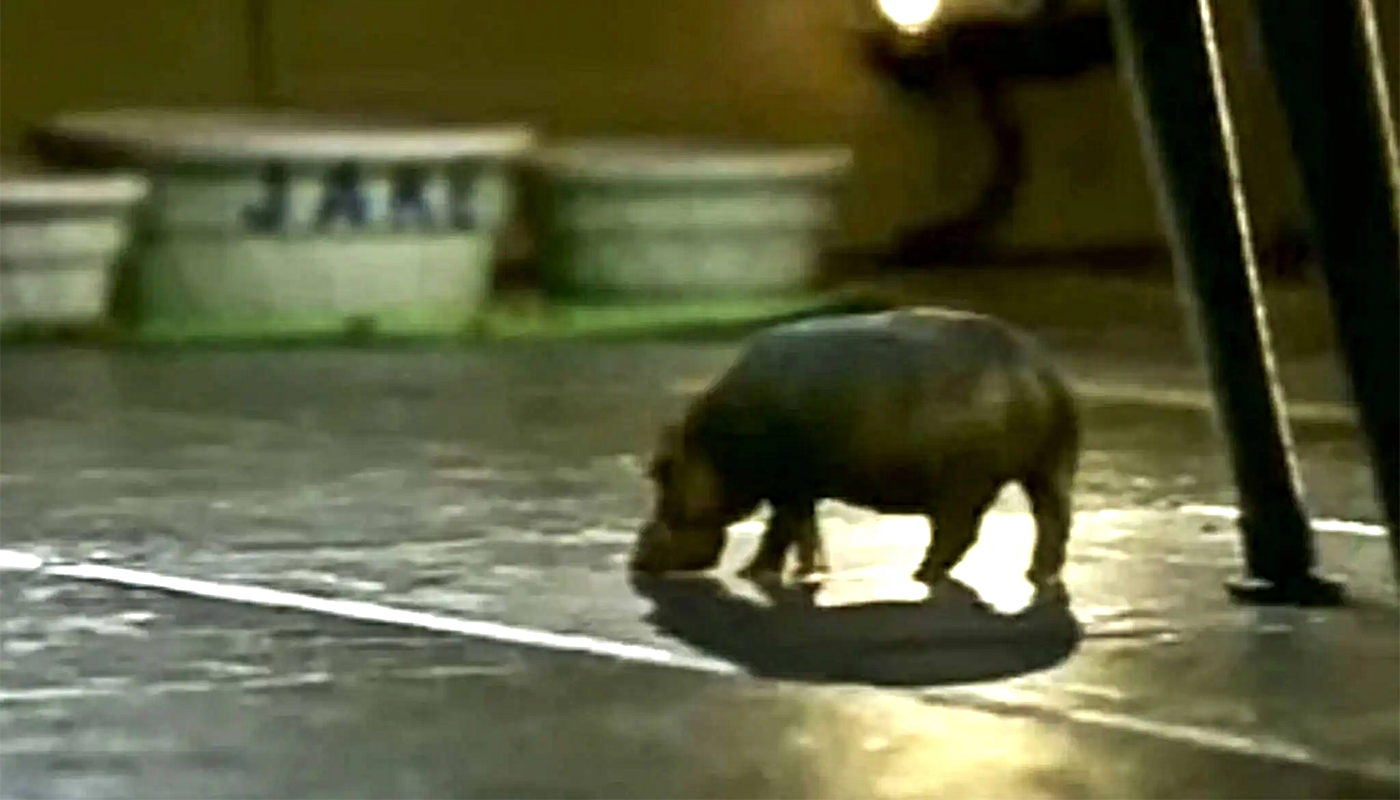
While the NFB chronicled the physical and geological history of the Canadian landscape, other federal and non-governmental bodies utilized similar stylistic frameworks to address public education. A notable cultural artifact of late-twentieth-century Canadian media is the public service announcement (PSA) concerning the mythical "North American House Hippo."
Produced in 1999 by the organization Concerned Children’s Advertisers (CCA) in collaboration with creative agencies, the advertisement was deliberately styled after Hinterland Who’s Who. Originally launched in the 1960s by the Canadian Wildlife Service and the NFB, the Hinterland Who’s Who vignettes were recognized by generations of Canadians for their distinctive narration style, minimalist organ scores, and educational focus on native wildlife.
The House Hippo campaign mimicked this authoritative wildlife documentary format to depict a miniature, nocturnal, household-dwelling mammal that subsisted on peanut butter toast and potato chips. However, the narrative arc of the commercial concluded with a crucial media literacy message: the creature was entirely fictional. The PSA was designed to teach children critical thinking skills regarding the credibility of televised imagery and advertising claims.
Implications for Media Literacy in the Digital Age
The legacy of the House Hippo campaign extends far beyond 1990s television nostalgia. Media analysts and digital literacy organizations emphasize that the principles highlighted in the original PSA remain acutely relevant in contemporary discourse. As digital platforms increasingly contend with sophisticated synthetic media, deepfake technology, and unverified AI-generated content, educational strategies modeled after historical awareness campaigns continue to serve as a baseline for public discernment.
In 2019, organizations such as MediaSmarts revived the concept through updated educational initiatives, demonstrating the persistent need to address misinformation across successive generations of media consumers. While satirical proposals for genetically engineered micro-fauna remain strictly within the realm of speculative humor, the enduring intersection of public broadcasting, environmental documentation, and critical media literacy underscores the vital role structured public media plays in shaping an informed citizenry.