The genre of suburban folk horror offers a chilling descent into the unsettling juxtaposition of idyllic domesticity and primal terror. It’s a realm where manicured lawns and white picket fences serve as a fragile veneer over ancient evils, forbidden woods, and forgotten ruins. Unlike traditional gothic horror, which often focuses on aristocratic decay and supernatural dread, suburban folk horror delves into the lives of the middle and working classes, exploring the anxieties and resentments that fester beneath the surface of seemingly ordinary communities. This subgenre distinguishes itself through its emphasis on folkloric roots, the often-fraught interplay between nature and developed land, and a direct confrontation between archaic malevolence and modern societal norms. Its influence is palpable in cinematic works like Poltergeist and The Wicker Man, and television series such as Severance (which, while not explicitly folk horror, shares thematic elements of societal control and hidden darkness within a seemingly utopian setting) and the more direct Willow Creek, demonstrating a growing appetite for these unsettling narratives. For those seeking a darker, more introspective summer reading experience, several standout works illuminate the sinister depths of suburban folk horror.
The Complexities of Homecoming and Gentrification in The Blade Between
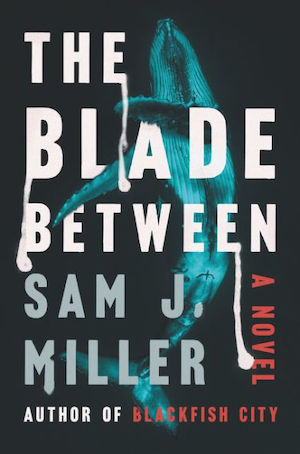
Sam J. Miller’s The Blade Between masterfully explores the disquieting experience of returning to one’s hometown, especially when that homecoming is precipitated by trauma and the town itself has transformed into a rapidly gentrifying landscape. The narrative follows Ronan Szpessy, who is compelled by the ghost of a deceased friend to return to Hudson, New York. His ostensible purpose is to photograph the former whaling town, reconnect with his estranged father, and rekindle relationships with old friends. However, Ronan is quickly drawn into a maelstrom of escalating events that include blackmail schemes, spectral encounters, and a communion with a whale god. The story intricately portrays the violent clashes between a burgeoning whale cult, deeply rooted in the town’s maritime past, and the influx of capitalist hipsters driving the gentrification process.

Miller expertly balances Hudson’s descent into supernatural and social chaos with Ronan’s personal struggle to navigate both mundane pressures and otherworldly threats. The novel builds towards a climactic conflagration, serving as a powerful allegory for the soul of a town grappling with its history, the trauma of its inhabitants, and the festering resentments that can emerge when cherished traditions collide with relentless modernization. The novel’s exploration of class dynamics and the displacement of long-term residents by affluent newcomers adds a layer of contemporary relevance to the folk horror elements.
Stephen King’s Needful Things: The Devil in the Details of Small-Town Life
Stephen King’s Needful Things represents a pinnacle of his unique blend of suburban drama, eerie folk legends, and gothic horror. Originally conceived as a grand send-off for his fictional Castle Rock setting, the novel plunges the town into a vortex of malevolence orchestrated by the enigmatic Leland Gaunt. After the local curiosity shop is destroyed by fire, it is replaced by "Needful Things," a store where Gaunt offers the townsfolk their deepest desires at surprisingly affordable prices. The insidious catch? Each purchase requires the buyer to perform a seemingly innocuous "prank" on a fellow resident.
What begins as petty mischief quickly escalates into widespread animosity and violence. Neighbors turn on each other, culminating in street brawls, and a religious schism erupts between the town’s Protestant and Catholic congregations. Gaunt, embodying a trickster or Satanic figure, expertly exploits the town’s insecurities and the spiritual void left by the perceived uselessness of modern faith. This narrative arc presents a classic American folk horror scenario, reminiscent of Nathaniel Hawthorne’s moral explorations but infused with King’s signature blend of visceral terror and dark humor. The novel powerfully illustrates how deeply ingrained resentments and unmet desires can be weaponized by an external force, unraveling the fabric of a seemingly peaceful community. The story also touches upon the historical economic shifts in small American towns, where the promise of renewal can mask deeper vulnerabilities.
Peter Straub’s Ghost Story: Unearthing Past Sins in a Haunting Landscape
Peter Straub, a contemporary of Stephen King, frequently blurred the lines between gothic and folk horror, a connection evident in his seminal novel Ghost Story. The novel’s intricate narrative centers on the Chowder Society, a clandestine group of elderly men who gather to share ghost stories as a means of avoiding a confession of a terrible deed committed in their youth. This narrative structure, characterized by a slow reveal of their shared transgression and the pervasive influence of a vengeful spirit over the town of Milburn, New York, allows Straub to weave a complex tapestry of folklore, supernatural lore, and contemporary horror sensibilities.
Ghost Story is a chilling testament to the idea that something ancient and horrifying can descend upon a small town, and that the sins of the past, when left unaddressed, will inevitably resurface in the present. The novel meticulously depicts how repressed guilt and trauma can manifest as tangible supernatural threats, infecting the very environment and the minds of those who dwell there. The story’s examination of how collective secrets can poison a community, creating an atmosphere of perpetual dread, is a potent example of folk horror’s thematic power. The novel’s setting in a seemingly idyllic, yet deeply troubled, American town highlights the inherent vulnerabilities that lie beneath the surface of everyday life.
Ellery Adams’s Invasive Species: An Eighties Homage to Eternal Evil
Ellery Adams’s Invasive Species transports readers to the town of Cold Harbor, where the chilling figure of Mrs. Smith, a reptilian entity sustained by consuming nine children every century, resides. However, Mrs. Smith’s ancient ritualistic needs are disrupted by the changing times. As the "Mother of Eels" prepares for her centennial hunt, she finds herself contending with a host of modern forces: a shrewd housekeeper privy to the town’s secrets, an ambitious real estate developer aiming to capitalize on the town’s transformation, and a precocious twelve-year-old girl who sees through Mrs. Smith’s facade.

The novel culminates in a sharp, humorous, and often deeply unnerving narrative that serves as a potent homage to the anxieties and aesthetics of the 1980s. Adams expertly blends elements of classic ’80s horror films with the foundational principles of folk horror. The story’s setting in the upwardly mobile Eighties, a period often characterized by both material progress and underlying social anxieties, provides a fertile ground for the collision of ancient evil and modern ambition. The novel’s exploration of hidden dangers within seemingly desirable suburban landscapes and its commentary on the superficiality of progress resonate strongly with the core themes of suburban folk horror.
Thomas Olde Heuvelt’s HEX: The Terrors of Enforced Isolation
Thomas Olde Heuvelt’s HEX, translated by Nancy Forest-Flier, presents a unique and terrifying vision of folk horror set in the Dutch town of Black Spring. The town is perpetually haunted by the Black Rock Witch, an entity cursed and executed in 1664, whose malevolent presence dictates the lives of its inhabitants. Strict rules govern the residents: the outside world must remain oblivious to the Witch’s existence, and no one is to tamper with her horrific black stitches, a physical manifestation of her curse. The fragile peace is shattered when a group of teenagers decides to create a viral video documenting their defiance of the Witch.
This act of rebellion ignites a firestorm of chaos and violence as the town’s carefully constructed safeguards crumble. HEX distinguishes itself by focusing on the internal dynamics of the community and the devastating consequences of their collective actions. The threat stems not only from the Witch herself but from the townsfolk’s desperate attempts to maintain their isolation and the dark rituals they enact to control her influence. The novel delves into the bleak, yet deeply human, consequences of extreme measures taken to maintain order, exploring the psychological toll of living under perpetual threat and the human capacity for both cruelty and desperation. The story’s exploration of how a community can become complicit in its own terror is a powerful commentary on the dangers of isolation and the suppression of truth.

Catherine Yu’s Direwood: Vampiric Romance Meets Ancient Woodland Horror
Catherine Yu’s Direwood skillfully navigates the familiar tropes of vampire romance while firmly rooting itself in the unsettling landscape of suburban folk horror. The narrative begins on the day Aja’s sister, Fiona, goes missing. This event is accompanied by ominous omens: blood rains from the sky, and parasitic caterpillars begin to devour the trees. For Aja, a teenager more concerned with her sister’s birthday party and her perennial status as the "second daughter," the disappearance rips a hole in her world.
As Fiona vanishes, a wave of grief washes over her parents, other teenagers begin to disappear, and the encroaching caterpillars and blood rain signal a growing supernatural threat. A charismatic, yet terrifying, figure emerges, seeking to "let him in." While Direwood plays with the conventions of vampire fiction, its core resonates with folk horror through the concept of an ancient evil lurking in the woods, a decaying chapel, and the environment itself becoming an active participant in the unfolding horror. The novel also draws explicit visual and thematic parallels to Stephen King’s ‘Salem’s Lot, a foundational text in suburban gothic and folk horror. Yu’s work effectively demonstrates how established genres can be revitalized by infusing them with the primal fears and community-based dread characteristic of folk horror.
Eden Royce’s Hollow Tongue: Nature and Nurture Twisted into Grotesque Horror
Eden Royce’s novella Hollow Tongue offers a potent blend of body horror, gothic dread, and a disquieting touch of folk horror. The story centers on Maxine, who returns to her suburban childhood home following a series of personal misfortunes. She finds herself confronted by a nightmarish landscape: a twisted garden that seems to possess a sentient malevolence, casually racist neighbors, the inexplicable disappearance of her parents, and an overwhelming sense of "wrongness" pervading her former sanctuary.

The ultimate horror, however, lies not merely in these external disturbances but in the deeply buried secret that underpins them all. Royce’s novella masterfully explores the intertwined themes of nature and nurture, depicting a grotesque climax that is as psychologically disturbing as it is viscerally shocking. The story highlights how the familiar comforts of home can become sites of profound terror when corrupted by unseen forces and unresolved traumas. The novella’s exploration of inherited curses and the insidious nature of secrets within family structures aligns strongly with the core tenets of folk horror, demonstrating how deeply personal anxieties can manifest as external, monstrous threats.
The Enduring Appeal of Suburban Folk Horror
The genre of suburban folk horror continues to captivate audiences by tapping into a primal fear: that the seemingly safe and ordered world we construct is merely a thin shell, easily breached by forces that predate our civilization. These narratives often explore the dark undercurrents of community, the weight of history, and the unsettling realization that the most terrifying monsters may not be lurking in distant forests, but in the very neighborhoods we call home. As these seven works demonstrate, the suburban landscape, with its familiar symbols of domestic tranquility, provides a fertile and deeply unsettling ground for the exploration of ancient evils and the enduring power of folklore. The continued success of this subgenre suggests a collective unease with the perceived superficiality of modern life and a longing to confront the deeper, more primal fears that lie just beneath the surface.