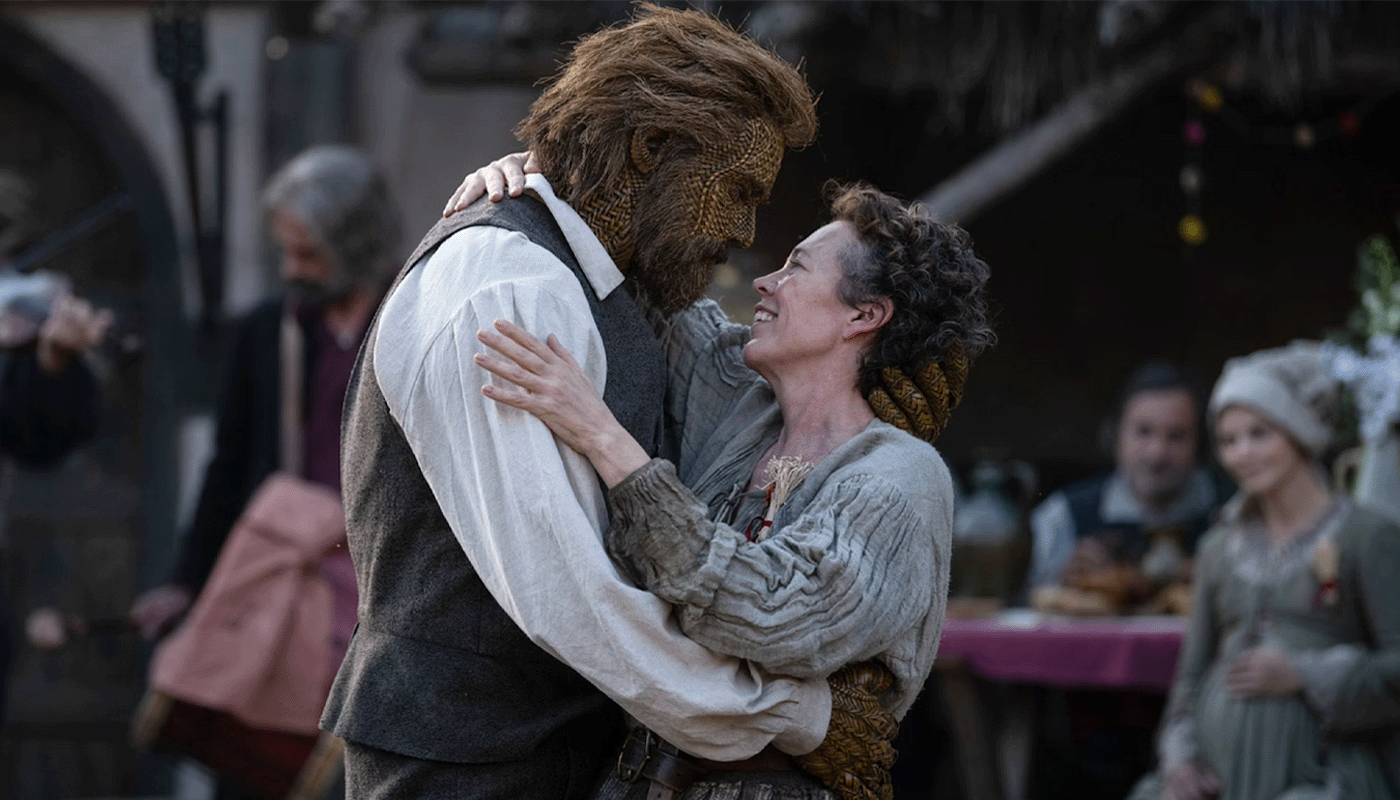
The contemporary cinematic landscape often relies on high-concept premises to capture audiences, but few recent releases have generated as much discourse regarding human relationships as the feature film Wicker. Directed with a distinct eye for fable-like aesthetics and starring Olivia Colman as the Fisherwoman and Peter Dinklage as the Basketmaker, alongside Alexander Skarsgård as the titular Wicker Husband, the production merges dark folk motifs with sharp social commentary. Far from being a mere novelty, the film—adapted from Ursula Wills’s bittersweet short story The Wicker Husband—offers a profound examination of emotional vulnerability, societal transactions, and the true cost of intimacy.
Main Facts and Production Background
Wicker premiered following significant anticipation within independent and arthouse cinema circuits, drawing attention for its unusual casting and thematic depth. The narrative centers on a lonely, orphaned Fisherwoman living in a rigidly structured rural community where human connections are dictated by commerce and conformity. Seeking companionship, she commissions the local Basketmaker to craft a husband from wicker.
What follows is an unconventional union involving Alexander Skarsgård’s anthropomorphic wicker creation. Despite the initial shock and scandal within the village—highlighted by a famously disruptive sequence involving a broken bed—the relationship between the Fisherwoman and her Wicker Husband quickly demonstrates an emotional authenticity lacking in the marriages of their peers.
The film operates on multiple narrative tiers. On the surface, it functions as a dark fairy tale complete with recurring motifs and repetitive structural language borrowed directly from Ursula Wills’s source material. Characters move through rigid social expectations, often identified solely by their relation to men—such as the Tailor’s Wife, formerly known as the Doctor’s Daughter. In stark contrast, the Fisherwoman remains independent, defined neither by family lineage nor marital subjugation until she chooses a partnership rooted in mutual respect.
Chronology and Narrative Arc
The progression of Wicker unfolds in distinct thematic stages, reflecting both the original text and cinematic expansion:
- Establishment of the Status Quo: The film opens by emphasizing the transactional nature of the village. Every interaction is governed by buying and selling, establishing an economic baseline for human engagement.
- The Creation and Public Debut: The Fisherwoman acquires the Wicker Husband from the Basketmaker. Their public introduction at a village wedding reveals the contrast between the graceful, genuine partnership of the main characters and the rigid, combative dances of the townspeople.
- Escalation of Doubt: Influenced by the scheming Tailor’s Wife, skepticism and jealousy take root among the villagers. Rumors of infidelity undermine the Fisherwoman’s trust, culminating in a dramatic climax where she sets fire to her husband.
- Resolution and Aftermath: Unlike the short story, which leaves the characters in a more ambiguous state of lingering trauma, the cinematic adaptation grants a more explicit, albeit complex, resolution. The Wicker Husband, though permanently scarred by fire and rot, embraces the future alongside his wife. Meanwhile, the townspeople face poetic justice when attempting to acquire a "Wicker Woman," resulting in painful consequences that underscore the impossibility of buying genuine affection.
Supporting Data and Thematic Analysis
An examination of the film’s box office and audience reception metrics reveals a broad demographic appeal that bridges arthouse drama enthusiasts with fans of quirky fantasy romance. Industry trackers noted a robust opening weekend for specialized screenings, driven largely by word-of-mouth discussions surrounding the film’s subversion of traditional romantic tropes.
Critics and cultural analysts have pointed to the character of the Basketmaker, played by Peter Dinklage, as the moral anchor of the narrative. Unlike the villagers who view relationships as commodities or instruments of social status, the Basketmaker emphasizes free will during the construction process. His later assertion that he did not craft "a piece of fuckable furniture" serves as a direct rejection of objectification, reinforcing the film’s central thesis: true intimacy cannot be manufactured, nor can it be subjected to economic exchange.
Furthermore, the introduction of the Wicker Child in the film’s third act deepens the exploration of grace versus transaction. When a distressed local woman attempts to acquire a child through the same transactional methods, the experiment fails, and the child languishes. Only when the Fisherwoman freely extends unearned care and grace to the abandoned Wicker Child does the narrative fully articulate the redemptive power of unselfish love.
Implications and Broader Cultural Impact
The release and subsequent reception of Wicker contribute to a growing subgenre of contemporary folk-surrealism that uses fable structures to critique modern societal alienation. By examining how communities react to genuine vulnerability—often projecting their own marital inadequacies onto outsiders—the film transcends its whimsical premise.
Industry observers note that the success of Wicker signals a commercial viability for mid-budget, high-concept dramas that refuse to pander to simplistic narrative resolutions. By retaining the bittersweet ambiguity of Ursula Wills’s original text while amplifying its feminist and anti-transactional themes, the filmmakers have established a benchmark for literary adaptations in modern cinema.
Ultimately, Wicker challenges audiences to reconsider the inherent risks of emotional openness. As demonstrated by the enduring, albeit fragile, bond between the Fisherwoman and her Wicker Husband, the absence of guaranteed security is precisely what elevates love from a routine transaction to a profound human experience.