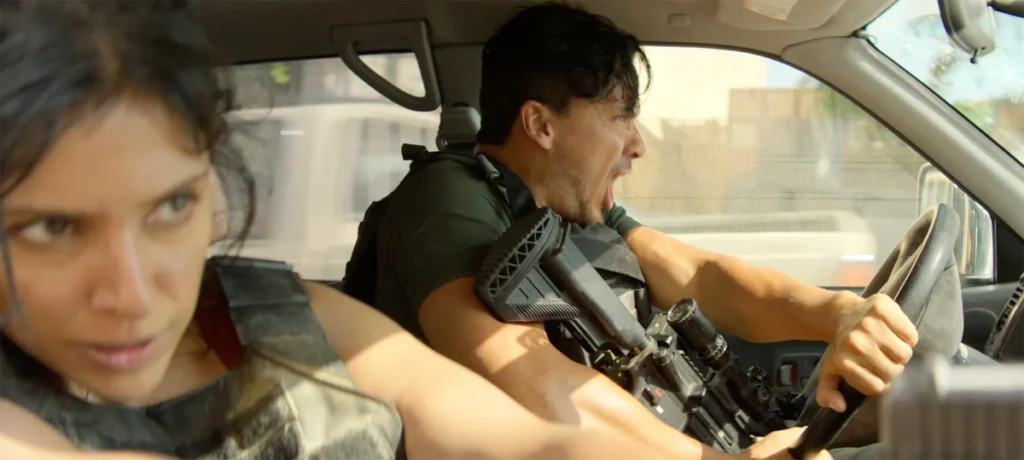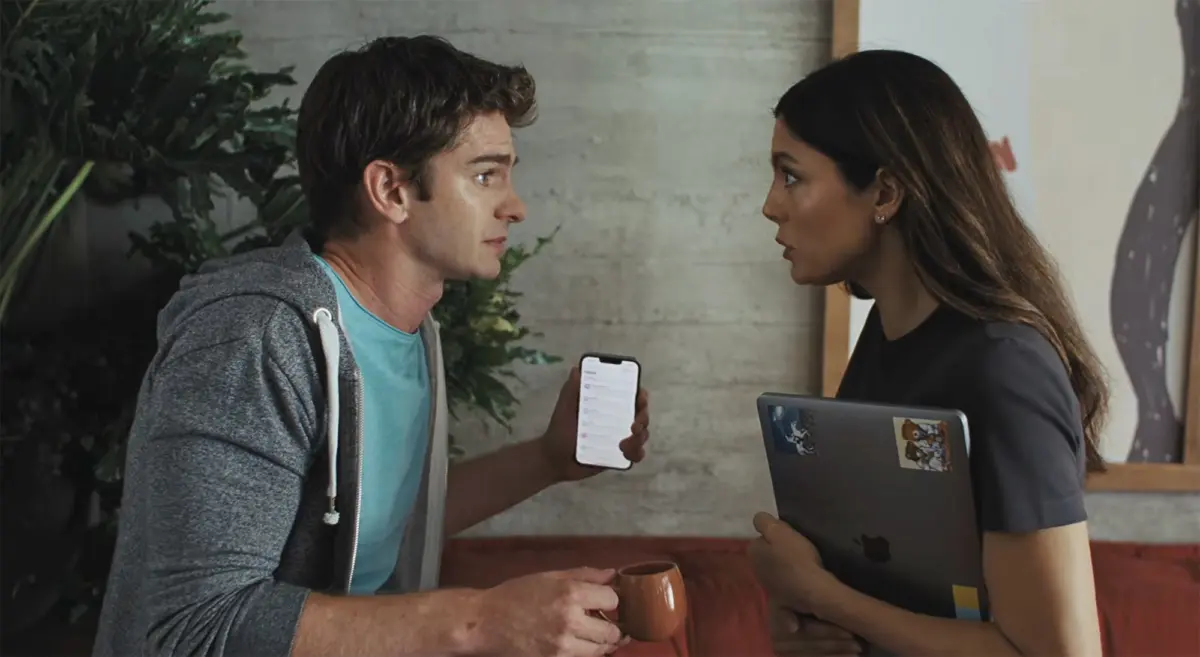
The landscape of modern cinema is increasingly defined by its willingness to urgently engage with contemporary anxieties, and few upcoming releases capture this zeitgeist as directly as Artificial. Distributor Neon has officially unveiled the full-length trailer and promotional poster for the highly anticipated biographical drama, directed by acclaimed Italian filmmaker Luca Guadagnino. Billed by early reviewers and festival programmers as a high-stakes, machine-driven chronicle of the artificial intelligence boom, the film operates structurally as a spiritual successor to David Fincher’s The Social Network, substituting the founding era of social media with the dizzying, morally fraught rise of OpenAI.
Scheduled for an awards-qualifying theatrical release on December 25, 2026, before expanding nationwide in January 2027, Artificial arrives with considerable critical momentum following its premiere run on the autumn festival circuit, most notably the New York Film Festival. Driven by a stacked ensemble cast portraying the real-world architects of the modern tech landscape, the film traces a two-decade trajectory of computer science breakthroughs, shifting paradigms, and the looming existential dread of out-of-control technological acceleration.
Main Facts and Production Overview

At its core, Artificial examines the meteoric ascent of OpenAI and the complex personalities steering the generative artificial intelligence revolution. Director Luca Guadagnino, coming off a remarkably prolific creative period that includes such diverse titles as Challengers, Queer, and After the Hunt, directs from an original screenplay penned by writer Simon Rich. The production is backed by a powerhouse roster of producers, including Jeffrey Clifford, Jennifer Fox, Guadagnino himself, David Heyman, and Rich.
The film features Andrew Garfield in a transformative lead performance as Sam Altman, the ambitious co-founder and chief executive officer of OpenAI. Garfield is joined by a powerhouse supporting cast featuring Yura Borisov—fresh off his breakout acclaim in Anora—as Soviet-born computer scientist Ilya Sutskever. Monica Barbaro takes on the role of former OpenAI Chief Technology Officer Mira Murati, while Ike Barinholtz steps into the shoes of billionaire entrepreneur Elon Musk. The cast is rounded out by Cooper Hoffman, Jason Schwartzman, Chris O’Dowd, and veteran actor Mark Rylance, who portrays pioneering cognitive psychologist and computer scientist Geoffrey Hinton, widely recognized within the tech community as the "Godfather of AI."
Chronology of the AI Revolution Explored Onscreen
The narrative scope of Artificial spans roughly twenty years, carefully plotting the inflection points that transitioned deep-learning research from obscure academic laboratories into a multi-trillion-dollar global race. According to official synopses and festival materials released by the New York Film Festival, the film’s timeline establishes its foundations in 2003. During this early era, Ilya Sutskever began intensive studies regarding artificial neural networks under the tutelage of Geoffrey Hinton at the University of Toronto.

A decade later, while Sutskever was employed within Google’s cutting-edge research divisions, his professional trajectory intersected fatefully with a young, hyper-ambitious entrepreneur named Sam Altman. This collision of academic theory, corporate ambition, and venture capital eventually crystallized into the formation of OpenAI. The newly released trailer emphasizes this escalating momentum, utilizing propulsive editing and relentless musical scoring to mimic what critics have described as a machine in unstoppable, constant motion—a history of the present being written dynamically on screen. Key lines featured in the promotional footage, such as warnings that humanity is moving too fast and risking the loss of control over constructed intelligence, underscore the moral urgency driving the narrative forward.
Supporting Data and the Real-World Context of 2026
To understand the cultural resonance of Artificial, it is necessary to examine the broader macroeconomic and societal environment surrounding artificial intelligence deployment by the mid-2020s. Over the preceding four years, generative AI technologies shifted from specialized enterprise tools to ubiquitous consumer utilities, sparking intense global debates regarding labor displacement, intellectual property rights, informational integrity, and existential risk.
OpenAI, specifically, transitioned from an open-research non-profit organization into a heavily commercialized corporate titan backed by massive multi-billion-dollar partnerships with traditional tech conglomerates. This structural pivot generated intense internal friction, highlighted by high-profile corporate governance crises, board-level ousters and reinstatements, and the departure of several foundational safety researchers who raised alarms over accelerated product timelines at the expense of rigorous alignment testing.

By setting a major motion picture against these very real corporate machinations while the individuals depicted are still actively shaping global policy and economics, Guadagnino’s project breaks traditional biographical boundaries. Rather than looking back at historical figures from a comfortable generational distance, Artificial treats contemporary Silicon Valley power brokers with the dramatic weight historically reserved for political heads of state and wartime industrialists.
Official Responses and Festival Reception
While mainstream critical reviews will formally roll out closer to the December theatrical rollout, early reactions from the New York Film Festival have been overwhelmingly enthusiastic. Programmers and early industry attendees have praised the film for successfully balancing dense technical concepts—such as neural network backpropagation, compute scaling laws, and transformer architectures—with high-stakes human drama and dark humor.
The involvement of figures directly or indirectly tied to the portrayed events has added an extra layer of meta-narrative intrigue within the entertainment industry. While representatives for OpenAI and the individual executives depicted have not released formal corporate statements regarding the film’s production, cultural analysts note that the release underscores the degree to which Silicon Valley leadership has permeated modern popular culture, effectively replacing Wall Street financiers and defense contractors as the primary antagonists and anti-heroes of contemporary prestige cinema.

Broader Impact and Implications for Modern Cinema
The release of Artificial by Neon represents a strategic positioning of a complex, intellectual drama during the highly competitive year-end awards corridor. Historically, studios reserve Christmas Day releases for sweeping historical epics, family-friendly franchise fare, or traditional melodramas designed to attract holiday moviegoers. By slotting a technologically harrowing, morally ambiguous corporate thriller into this coveted window, Neon is signaling strong confidence in the film’s awards prospects and broad commercial appeal.
Furthermore, the film arrives at a time when audiences are increasingly fatigued by traditional superhero intellectual property, creating a distinct marketplace appetite for smart, contemporary storytelling rooted in real-world friction. By dramatizing the birth of generative AI with the stylistic flair and psychological depth characteristic of Guadagnino’s filmography, Artificial bridges the gap between high-concept cinematic art and urgent journalistic inquiry.
As society continues to grapple with the daily implications of automated labor, synthetic media, and autonomous decision-making systems, Artificial offers a timely, reflective mirror to an era defined by technological acceleration. Whether the film will alter public perception of its real-life subjects or cement their status as modern mythic figures remains to be seen, but its arrival in theaters this winter ensures that the conversation surrounding the ethics of artificial intelligence will occupy center stage in the cultural mainstream.