A poignant historical melodrama offering an intimate glimpse into life in Cold War Taiwan during the 1960s and 1970s, "The Spring Outside the Fence" has been meticulously restored by the Taiwan Film and Audiovisual Institute and is slated for a significant screening as part of the 2026 Queer East Film Festival programme. This gentle cinematic work chronicles the tender chronicle of two young girls navigating their formative years amidst profound geopolitical shifts and burgeoning cultural influences, providing a valuable window into a pivotal era of Taiwanese history. Its inclusion in the festival highlights the ongoing effort to unearth and celebrate diverse narratives from East and Southeast Asia, bringing restored classics to new international audiences.
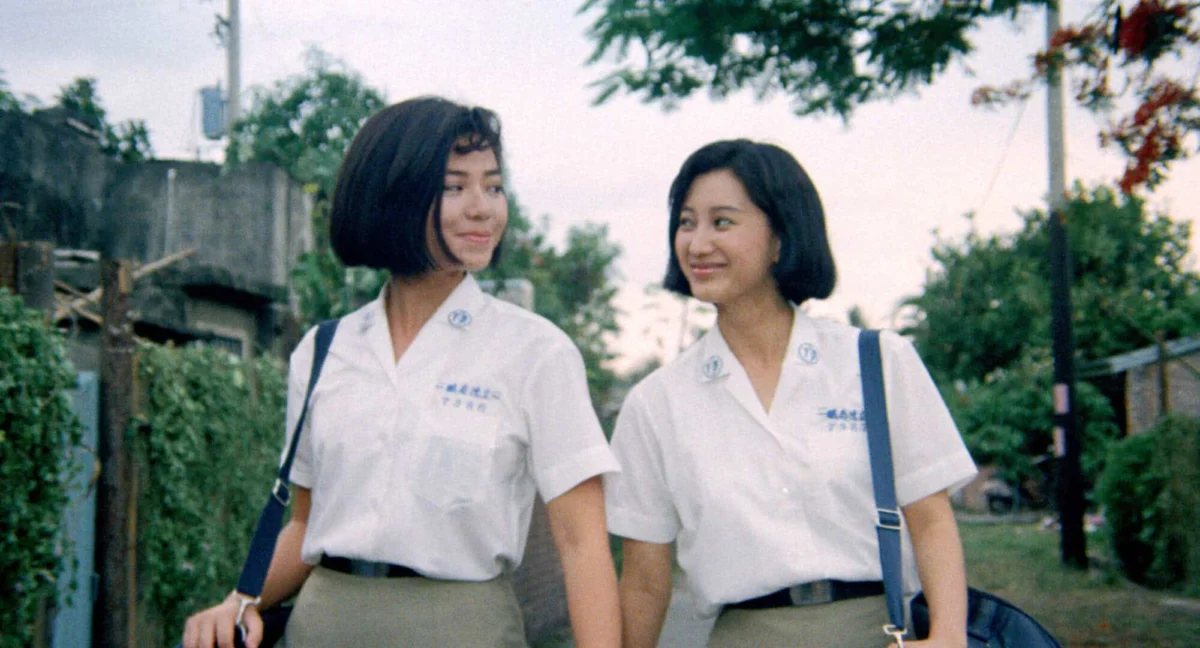
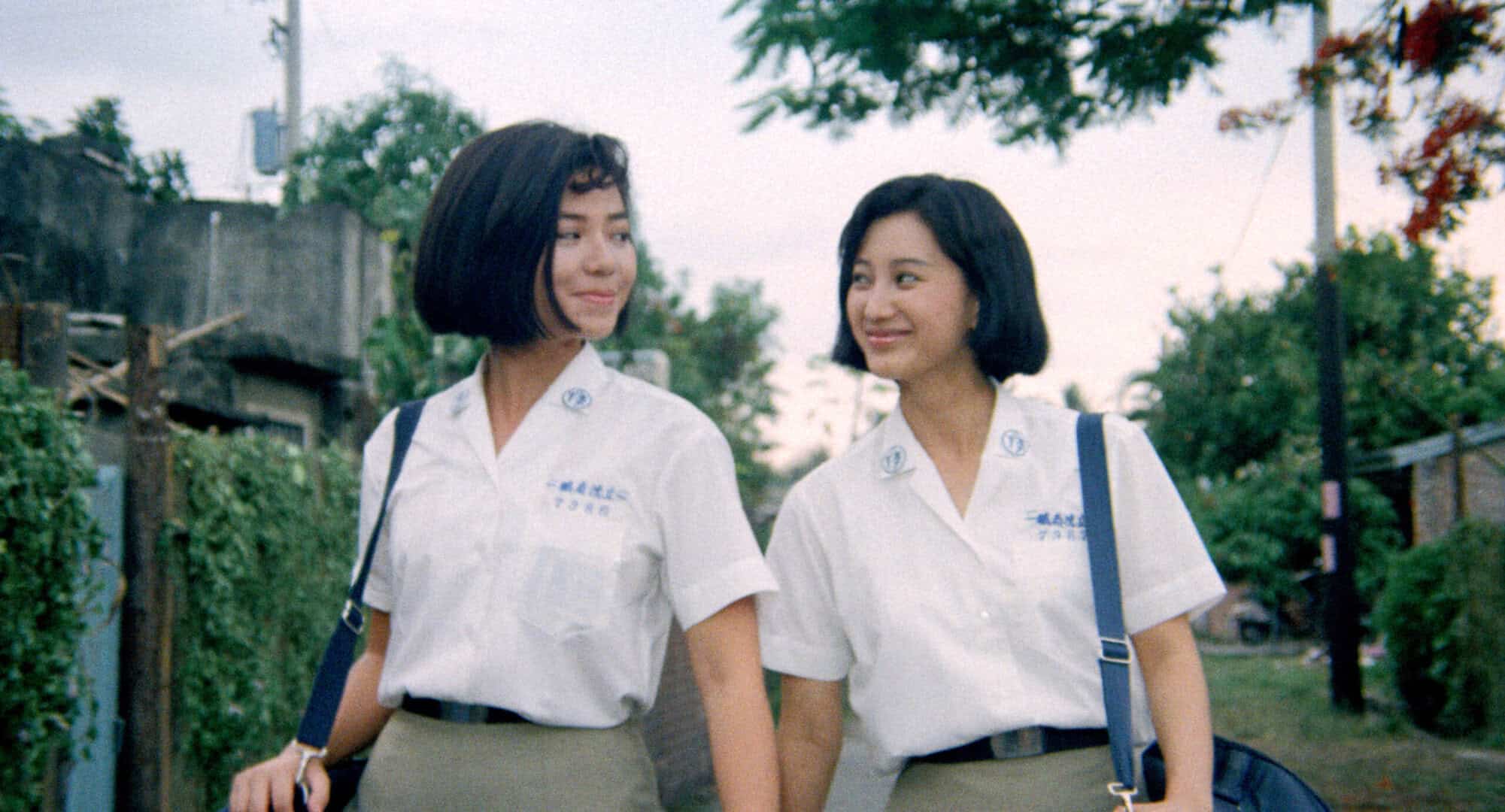
The film’s central narrative orbits around two distinct personalities: Li Lin (portrayed by Cherie Chung), an extroverted and free-spirited young girl, and Ai Hua (played by Su Ming-Ming), her meek and introspective counterpart. The story commences with Li Lin’s arrival, accompanied by her mother, into Ai Hua’s community – a military dependents’ village. This setting is far from incidental; it is a crucial detail that underpins the girls’ upbringing within a tightly-knit, somewhat insular community, perpetually under the protective, yet omnipresent, shadow of the Taiwanese armed forces. The constant drone of U.S.-built planes overhead serves as a persistent reminder of their precarious safety from communist forces across the Taiwan Strait, embedding a sense of both security and underlying tension into their daily lives.
A Glimpse into a Unique Community and Era
Military dependents’ villages, or juan cun (眷村), were unique residential communities established in Taiwan primarily for the Kuomintang (KMT) soldiers and their families who retreated from mainland China in 1949. These villages were often characterized by their distinct culture, blending traditions from various Chinese provinces with the new realities of life on Taiwan. They fostered a strong sense of community and shared destiny, largely isolated from the broader Taiwanese society initially. By the 1960s and 1970s, while some integration had occurred, the unique cultural fabric and strong ties to the military remained. For children growing up in these villages, life was structured, often disciplined, and deeply intertwined with the ongoing Cold War narrative and the perceived threat from the People’s Republic of China (PRC). "The Spring Outside the Fence" captures the essence of this specific environment, portraying how such an upbringing shaped the dreams and realities of its young protagonists.
The image of the two girls, along with their friend He Kang, standing atop the local air-raid shelter, gazing dreamily at the planes, is highly symbolic. These aircraft represent more than just military might; they embody their future aspirations, mirroring Taiwan’s own uncertain trajectory. The omnipresent U.S. influence, symbolized by these planes, plays a significant role throughout the narrative, reflecting the broader geopolitical context of the time. During the 1950s, 60s, and 70s, the United States was the primary international ally and protector of the Republic of China (ROC) on Taiwan. This alliance manifested in substantial military aid, economic assistance, and cultural exchange.
The Pervasive American Dream in Taiwan
The film vividly illustrates how deeply immersed the two girls – and, by extension, much of Taiwan’s youth – were in American and Western pop culture. Their walls are adorned with posters of iconic figures like James Dean and Marilyn Monroe, symbols of Hollywood glamour and rebellious youth, alongside images of Jesus, reflecting Western religious influence. The soundtrack is punctuated by the sounds of The Beatles, a global phenomenon that transcended cultural barriers, and the melancholic yet hopeful strains of "California Dreamin’." In a very real sense, Taiwan in the early 1960s was experiencing its own version of the "American Dream," a narrative of progress, prosperity, and cultural aspiration under the protective umbrella of the United States. This dream, often contrasted with the austerity and political turmoil of mainland China, became a defining characteristic of the island’s identity during this period.
U.S. economic aid to Taiwan between 1950 and 1965 totaled approximately $1.5 billion (equivalent to over $14 billion today), playing a crucial role in Taiwan’s post-war reconstruction and early industrialization. This aid, combined with military assistance, fostered a strong dependency and also opened doors to American cultural penetration. American movies, music, fashion, and consumer goods flooded the market, shaping the aspirations and daily lives of a generation. The presence of thousands of American military personnel further cemented this cultural exchange, creating a unique hybrid culture in urban centers, particularly Taipei.
The Inevitable Clash of Dreams and Reality
As the narrative progresses, both Li Lin and Ai Hua transition into young womanhood, eventually leaving the confines of their military village. Their youthful dreams, once boundless, inevitably collide with the harsh realities of adulthood, the complexities of romance, and the ever-present shadow of Cold War history. Ai Hua’s intellectual curiosity, exemplified by her attempts to read "Pride and Prejudice" in English, hints at her yearning for deeper meaning beyond the immediate cultural influences. This period of their lives introduces a grown-up He Kang and Michael, a dashing U.S. pilot distractingly played by pop star Fei Xiang (also known as Kris Phillips). While the casting of a Chinese pop star as an American soldier who conveniently speaks fluent Chinese might require a certain suspension of disbelief, it serves to highlight the pervasive cultural interaction and romanticized view of American personnel at the time.
However, as the film subtly suggests, the romantic entanglements are not the most compelling feature of "The Spring Outside the Fence." More profound and engaging is its exploration of what it meant to be a young, independent woman in a rapidly modernizing society that, despite its Western influences, remained heavily traditional in its social structures. Interestingly, the film pivots away from the conventional patriarchal narratives, instead focusing on the significant, often complex, roles of mothers – their overbearing presence or lingering absence – in shaping the destinies of their daughters. This emphasis on maternal influence offers a nuanced perspective on gender roles and familial dynamics in a society undergoing significant transformation.
Taipei’s GI Bars and the Shifting Sands of Geopolitics
The film also offers a fascinating, albeit brief, glimpse into Taipei’s vibrant GI bars in the early 1970s. These establishments were popular haunts for American troops stationed on the island, providing a space for entertainment and recreation between their tours of duty in Vietnam. The presence of these soldiers created a distinct social scene, reflecting the complex relationship between the host nation and its foreign protectors. For many Taiwanese women, interactions with American servicemen offered a glimpse into a different world, sometimes leading to relationships, sometimes to economic opportunities, but always shaping the social fabric of the urban landscape.
This period, however, marked a crucial turning point in Taiwan’s international standing. The film powerfully conveys the profound impact of the United States’ shifting foreign policy. In 1971, the Republic of China (Taiwan) lost its seat in the United Nations to the People’s Republic of China. This diplomatic blow was followed by President Richard Nixon’s historic visit to Beijing in 1972, signaling a decisive move towards U.S. recognition of the PRC. For ordinary people in Taiwan, particularly those who had built their lives under the U.S. protective umbrella, these events were nothing short of a betrayal. The film succeeds admirably in conveying how consequential this geopolitical reorientation was for individual lives, and how deeply it could have felt like an abandonment at the time.
Timeline of U.S.-Taiwan Relations and Diplomatic Shifts (1949-1979):
- 1949: Chiang Kai-shek’s Kuomintang (KMT) government retreats to Taiwan after losing the Chinese Civil War to the Communists. The U.S. initially adopts a "hands-off" approach.
- 1950: The Korean War breaks out. President Harry S. Truman orders the U.S. Seventh Fleet into the Taiwan Strait, effectively neutralizing the Strait and protecting Taiwan from a PRC invasion. This marks the beginning of substantial U.S. military and economic aid to Taiwan.
- 1954: The U.S. and ROC sign the Mutual Defense Treaty, formalizing their alliance and committing the U.S. to defend Taiwan.
- 1950s-1960s: U.S. military presence in Taiwan expands, with thousands of personnel stationed on the island. Economic aid helps Taiwan develop its infrastructure and industry. American cultural influence becomes pervasive.
- 1965: U.S. economic aid officially ends, reflecting Taiwan’s economic self-sufficiency and burgeoning "economic miracle." Military aid continues.
- 1960s-Early 1970s: U.S. troops often pass through Taiwan for rest and recreation between tours in Vietnam, contributing to a vibrant, albeit transient, American presence in cities like Taipei.
- 1971: The United Nations General Assembly passes Resolution 2758, expelling the representatives of Chiang Kai-shek and recognizing the People’s Republic of China as "the only legitimate representative of China to the United Nations." This is a massive diplomatic blow to the ROC on Taiwan.
- 1972: U.S. President Richard Nixon makes a historic visit to mainland China, issuing the Shanghai Communiqué. This document acknowledges the "one China" principle and signals a significant shift in U.S. foreign policy towards eventual recognition of the PRC.
- 1979: The U.S. formally severs diplomatic relations with the Republic of China (Taiwan) and establishes full diplomatic relations with the People’s Republic of China. The Mutual Defense Treaty is terminated. This event marks the end of an era for Taiwan, forcing it to redefine its international role and security strategy.
"The Spring Outside the Fence," while set primarily in the 1960s and early 1970s, powerfully foreshadows and reflects the anxieties leading up to these monumental shifts, capturing the sentiment of impending change and potential abandonment that permeated Taiwanese society.
Filmic Craft and Character Nuances
Despite its melodramatic inclinations, incorporating many expected clichés of the genre, the film’s artistic merits are noteworthy. Its cinematography and lighting are consistently described as soft, sweet, and old-fashioned, contributing to a nostalgic and dreamlike quality that complements the narrative’s focus on youth and memory. The story, coupled with the solid performances of its two lead actresses, manages to carry the film effectively to its conclusion. However, a minor critique often leveled against the film is its somewhat uneven distribution of attention between the two protagonists. The extroverted and "sexy, exuberant" Li Lin, particularly in scenes depicting her wildly dancing the twist with Michael, tends to dominate the screen, drawing both the audience’s and the film’s own focus. This often comes at the expense of Ai Hua, whose deeper interests, such as Albert Camus and existentialism, are less explored, leaving her character feeling slightly less developed than her dynamic counterpart. This imbalance might reflect a broader societal tendency to focus on more outwardly expressive figures, or perhaps a directorial choice to emphasize the more visually engaging aspects of the era’s cultural fusion.
Broader Implications and Festival Significance
Ultimately, "The Spring Outside the Fence" transcends its romantic subplot to become a more compelling portrait of a generation uniquely shaped by the anxieties of the Cold War and the profound influence of American culture. Beneath its sentimental surface lies a quietly melancholic reflection on Taiwan’s uncertain identity and its precarious place in history. It portrays the fragile dreams meticulously built under the ever-present shadow of global politics, revealing how grand international narratives directly impacted the intimate lives of individuals.
The film’s restoration by the Taiwan Film and Audiovisual Institute (TFAI) is a testament to its enduring cultural and historical value. TFAI, established to preserve and promote Taiwan’s cinematic heritage, plays a crucial role in making such invaluable works accessible to contemporary audiences. A spokesperson for the TFAI emphasized the institution’s commitment to "safeguarding the nation’s film legacy, ensuring that future generations can engage with the cinematic stories that define our past and inform our present."
Its inclusion in the 2026 Queer East Film Festival further underscores its relevance. While the film itself may not explicitly feature queer themes, Queer East is renowned for its expansive curatorial vision, showcasing a broad spectrum of East and Southeast Asian cinema that explores identity, challenges conventions, and provides critical historical context for understanding contemporary social landscapes. The festival’s programming often includes films that, while not explicitly LGBTQ+ focused, contribute to a richer understanding of diverse experiences within Asian societies, making "The Spring Outside the Fence" a fitting selection to provide historical depth and cultural insight into a particular era of Taiwanese identity formation. A representative from Queer East Film Festival commented, "We are thrilled to present ‘The Spring Outside the Fence,’ a beautifully restored film that offers an essential historical perspective on Taiwan’s cultural evolution and the intricate dynamics of identity during a transformative period. Its narrative, though set decades ago, resonates with timeless questions about belonging, self-discovery, and the impact of global forces on individual lives, themes that are central to the diverse stories we aim to share."
"The Spring Outside the Fence" stands as more than just a nostalgic journey; it is a vital historical document and a nuanced character study. It offers contemporary audiences, both within Taiwan and internationally, a crucial lens through which to understand the island’s unique post-war trajectory, its complex relationship with the United States, and the profound cultural entanglement that shaped a generation. Its screening at the Queer East Film Festival promises to ignite renewed discussions about memory, identity, and the enduring power of cinema to illuminate the past.