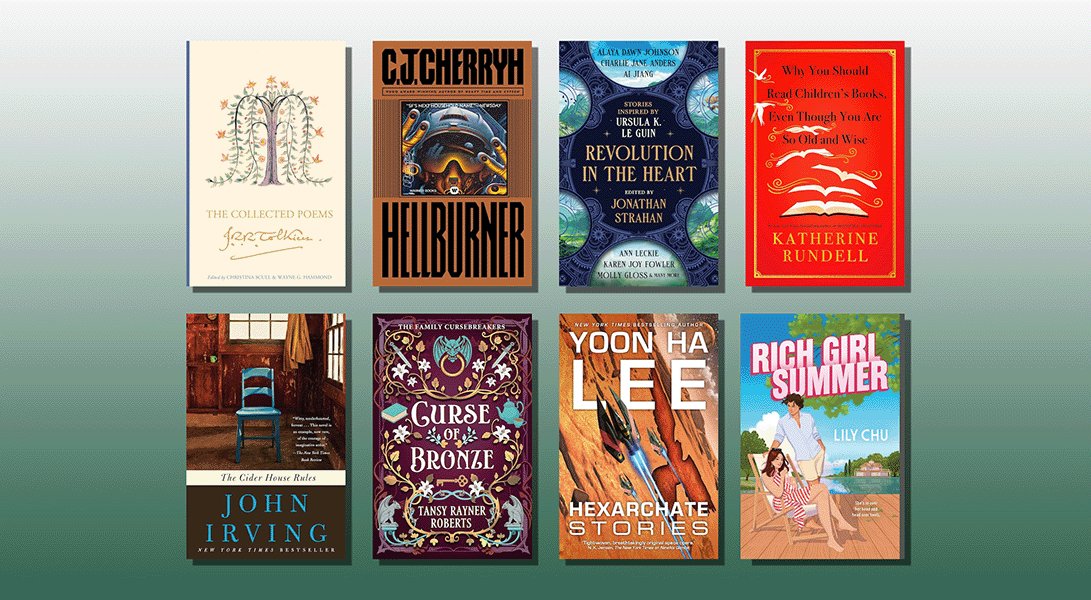
The autumn literary circuit reached its peak during a densely packed thirty-day period that commenced in Florence and concluded in Chicago, punctuated by high-speed rail excursions across European transit corridors to Milan, Strasbourg, Cardiff, and Edinburgh. Central to this transcontinental itinerary was attendance at the Stranimondi convention in Milan, a prominent gathering for speculative fiction enthusiasts, professionals, and publishers that drew international crowds to discuss the evolving landscape of genre literature. Amidst this rigorous travel schedule spanning multiple time zones, a total of fourteen distinct literary works were consumed, largely utilizing the uninterrupted hours afforded by international rail journeys and transatlantic flights. This intensive reading period offered a broad cross-section of recent publications, historical re-evaluations, and foundational genre re-reads, providing a unique vantage point on contemporary reading trends among globe-trotting intellectuals and industry participants.
Chronological Overview of the Autumn Transit and Convention Circuit
The itinerary began on the first day of October in the historic Italian cultural hub of Florence, setting a scholarly and contemplative tone for the weeks that followed. From there, the schedule necessitated rapid movement northward, leading to Milan for the annual Stranimondi convention. Stranimondi, recognized as a vital nexus for Italian and European speculative fiction, facilitated panel discussions, networking opportunities, and engagement with current publishing trends. Following the Milanese engagement, subsequent railway transits connected various European urban centers, including Strasbourg, Cardiff, and Edinburgh, before culminating in a final transatlantic transition to Chicago by the end of the month.
Throughout these movements, the dual demands of professional mobility and deep literary engagement intersected. The transit environments—ranging from the quiet compartments of European high-speed trains to the cabin interiors of commercial aircraft—served as sustained reading environments. The fourteen works examined during this timeframe covered a vast temporal range, from early twentieth-century classics and mid-century modern works to forthcoming 2026 releases, offering a rich dataset for analyzing contemporary reader engagement with diverse literary formats.
Cataloging the October Reading List: Genre Fiction, Classics, and Non-Fiction
The reading selection encompassed cozy fantasy, historical fiction, poetry scholarship, military science fiction, social satire, Shakespearean criticism, speculative anthologies, and contemporary cultural critiques. Each work presented distinct stylistic and thematic challenges, prompting varied critical responses.
In the realm of accessible fantasy, Tansy Rayner Roberts’s 2020 novel Curse of Bronze provided a light entry point. Detailing the domestic and magical fallout experienced by a young protagonist who inherits a residence from her curse-breaking aunt, the novel was assessed as a clear precursor to an ongoing series characterized by a breezy, accessible tone.
Conversely, John Irving’s 1985 sprawling novel The Cider House Rules offered a heavier, more demanding literary exercise. Approached following recent biographical interviews with the author, the work was noted for its masterclass focus on intimate human environments, personal struggles surrounding orphanages and reproductive rights, and a distinctly Dickensian grotesque style. Despite its considerable length and an episodic structure that resisted conventional narrative closure, the novel was recognized as an absorbing, larger-than-life achievement, though one unlikely to prompt immediate further exploration of Irving’s broader bibliography.
Poetic scholarship was represented by The Collected Poems of J.R.R. Tolkien, edited by Christina Scull and Wayne G. Hammond and published in 2024. Rather than functioning as a standard verse collection, the massive volume compiles chronological iterations of Tolkien’s poetic output, accompanied by extensive academic apparatus and footnotes. While certain familiar pieces resonated positively, the overall experience underscored a tension between general literary enjoyment and specialized scholarly utility, with the reviewer expressing a preference for finalized texts over exhaustive manuscript variants.
Science fiction formed a substantial core of the month’s reading, highlighted by a dual engagement with C.J. Cherryh’s Alliance-Union universe. A re-read of 1992’s Hellburner—categorized loosely as military science fiction focusing on wartime starship engineering and team dynamics—was immediately followed by a re-read of 1981’s foundational Downbelow Station. Both works were lauded for their structural complexity, realistic socio-political friction, and nuanced ethical dilemmas that mirror historical realities rather than simplified genre tropes. These readings renewed long-standing industry complaints regarding the absence of digital editions for key titles within the same continuity, specifically Cyteen.
Additional speculative works included Yoon Ha Lee’s 2019 collection Hexarchate Stories, set within the Machineries of Empire universe. Despite its connection to acclaimed earlier works, the collection was viewed as a superfluous postscript to a narrative arc that had reached a satisfactory conclusion in Revenant Gun. On the anthological front, Jonathan Strahan’s forthcoming 2026 collection Revolution in the Heart, dedicated to the legacy of Ursula K. Le Guin, emerged as a standout highlight. Featuring contributions from prominent speculative fiction authors such as Karen Joy Fowler, Ann Leckie, and Kelly Link, the anthology was praised for its uniformly high quality and anticipated dominance on upcoming award ballots.
Historical and Critical Analysis: Shakespeare, Intimacy, and AI Crusades
Non-fiction and academic studies constituted another significant pillar of the October reading log. Lisa Jardine’s 1996 volume Reading Shakespeare Historically demonstrated enduring value in its microhistorical comparisons and feminist deconstructions of agency, particularly regarding female characters like Gertrude. Similarly, Kathy Eden’s 2012 study The Renaissance Rediscovery of Intimacy traced the historical transmission of epistolary friendship from Petrarch through Erasmus and Montaigne, prompting renewed interest in Renaissance correspondence networks.
Cultural critique was addressed through Katherine Rundell’s 2019 essay-length volume Why You Should Read Children’s Books, Even Though You Are So Old and Wise, which advocates for juvenile literature through frequent invocations of Ursula K. Le Guin. While reinforcing existing valuations of children’s literature, the text was deemed most effective as a persuasive tool for uninitiated audiences.
More contemporary anxieties were examined in Adam Becker’s 2025 release More Everything Forever: AI Overlords, Space Empires, and Silicon Valley’s Crusade to Control the Fate of Humanity. The text offered a sharp, rapid analysis of modern techno-utopian movements, identifying parallels between secular technological ambitions and traditional religious cults, thereby validating fictional explorations of similar themes found in contemporary speculative fiction such as Jon Evans’s Exadelic.
Satire, Romance, and Classic Mystery
Light entertainment and classic genre fiction rounded out the month. P.G. Wodehouse’s 1925 collection Carry On, Jeeves failed to spark enthusiasm, reinforcing a broader skepticism toward traditional comedic literature despite the structural interest of its intellectually limited point-of-view narrator. In contemporary romance, Lily Chu’s forthcoming 2026 novel Rich Girl Summer was critiqued as the weakest entry in the author’s bibliography, hampered by predictable plotting and overly idealized settings despite maintaining strong fundamental prose craftsmanship.
Conversely, Agatha Christie’s posthumously highlighted 1997 collection The Harlequin Tea Set provided a welcome retrospective. Centered on the final appearance of recurring figures Mr. Satterthwaite and Mr. Quin, the title story demonstrated Christie’s late-career ability to traverse the boundaries of traditional mystery fiction, leaving industry observers to ponder why she did not pursue these marginal, atmospheric concepts more frequently.
Broader Industry Implications and Literary Trends
The synthesis of this rigorous travel schedule and diverse reading list highlights several broader trends within contemporary publishing and readership habits. First, the resurgence of interest in mid-to-late twentieth-century speculative fiction universes—exemplified by the sustained engagement with C.J. Cherryh’s catalog—indicates a persistent demand for complex, politically intricate world-building that mirrors geopolitical realities. Second, the prevalence of scholarly and archival collections, such as the Tolkien poetry compendium and academic literary histories, points to an increasingly institutionalized approach to genre preservation and authorship studies.
Furthermore, the juxtaposition of forthcoming 2026 titles against canonical texts illustrates the fluid temporal landscape inhabited by modern readers, who seamlessly navigate centuries of literary history during periods of geographic transit. As literary conventions like Stranimondi continue to foster international collaboration and intellectual exchange, the habits of active readers on the global transit circuit remain a vital barometer for the health, diversity, and evolving tastes of the international literary community.