A Legacy Spanning Three Decades
The journey of The Ruler of the Land began in May 1994, appearing in the inaugural issue of Young Champ, a premier Korean manhwa magazine. At the time, the Korean comics landscape was undergoing a significant shift, transitioning from traditional, often somber martial arts narratives toward stories that emphasized character development, humor, and a more kinetic, modern artistic style.
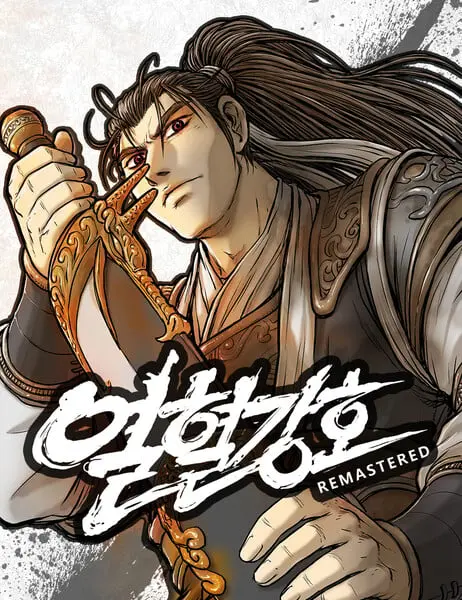
The story centers on the unlikely partnership between Han Bi-gwang, a playful yet formidable disciple of the Cheonma Shingun (the leader of the unorthodox faction), and Hwa-rin Dam, the strong-willed granddaughter of the orthodox faction’s Sword Emperor. Their odyssey against the mysterious and destructive organization known as the Shinji has captivated generations of readers. By balancing intricate world-building with a lighthearted, witty tone, the series redefined the genre, proving that epic wuxia-inspired storytelling could thrive without relying solely on the brooding archetypes common in 20th-century Asian comics.
Chronology of a Publishing Phenomenon
The history of Yeolhyeol Gangho is a study in sustained popularity. Following its 1994 debut, the series quickly gained traction, transitioning from a monthly magazine serial to a highly sought-after collection of bound volumes.
- 1994: Yeolhyeol Gangho premieres in Young Champ.
- 2004: ADV Manga attempts an English-language release, though it is limited to only three volumes, leaving a significant portion of the fanbase reliant on domestic Korean releases.
- 2010s: The series maintains a consistent release schedule, cementing its status as a pillar of Korean pop culture.
- 2023: The franchise crosses a major commercial milestone, boasting over 10 million physical copies sold and 30 million paid digital downloads.
- 2026: The creators announce that the story will conclude after more than three decades of work.
- February 2027: The final, 97th collected volume is scheduled for publication.
Initially, the creators had toyed with the idea of concluding the series around its 30th anniversary in 2024. However, the depth of the narrative and the complexity of the characters led them to extend the serialization to ensure a satisfying and coherent conclusion.
Physical Toll and the Decision to Conclude
The decision to end the series was not merely a narrative choice but a necessary response to the physical realities of long-term production. Both Jeon and Yang have expressed that the sheer volume of work required to maintain such a high-quality series for 33 years has taken a significant toll on their health.
Artist Jae-hyun Yang, now 56, revealed the severity of these conditions, noting that he had suffered from temporary paralysis in his arm during the production process. This disclosure highlights the grueling nature of the industry, where artists often face chronic injury due to the repetitive strain of high-frequency deadlines. The creators emphasized their desire to finish the work while they are still physically capable of maintaining the artistic standards they established decades ago, preferring to close the chapter on their own terms rather than sacrifice quality due to deteriorating health.
Market Impact and Commercial Metrics
The Ruler of the Land is not just a cultural touchstone; it is a massive economic engine. With over 10 million print sales and 30 million digital downloads, the series serves as a foundational example of successful intellectual property (IP) management in Korea. The series’ move to digital platforms mirrors the broader transition of the Korean publishing industry from traditional print media to web-based, vertical-scroll formats.

The success of Yeolhyeol Gangho Online, which has surpassed 130 million cumulative players globally, demonstrates the longevity of the brand beyond the page. This MMORPG success has been a vital component in sustaining the popularity of the IP among younger demographics who may not have grown up reading the original print magazine.
Broader Implications and Future Projects
The conclusion of the print series does not signal the death of the Yeolhyeol Gangho brand. Instead, it marks a transition from a long-running serial to an established library of content ripe for multimedia adaptation. Naver Webtoon is currently overseeing the development of Yeolhyeol Gangho Remastered, a vertical-scroll adaptation designed for modern mobile consumption. By reformatting the original work for the smartphone-centric webtoon market, the publishers aim to ensure that the story remains accessible to new generations of readers.
Furthermore, the franchise is currently expanding into several other media sectors. Plans are underway for live-action series, animated projects, and new gaming iterations. These initiatives reflect the current trend in the Korean entertainment industry—often referred to as the "K-Content" wave—where successful webtoons and manhwa are viewed as high-value assets for film and television production.
Reflections from the Creators
In their statement to the press, Jeon and Yang expressed a deep sense of gratitude toward their readers. For the authors, the characters of Han Bi-gwang and Hwa-rin Dam have been central to their professional lives for more than half of their adult years. They hope that the 97 volumes will remain as a legacy that readers return to periodically, serving as a definitive record of their shared creative journey.
"We are truly grateful to the readers who have stayed with us for over three decades," the creators noted. Their sentiment underscores the unique bond that develops between long-running serial artists and their audience—a relationship characterized by mutual growth and, eventually, a poignant farewell.
Industry Analysis: The End of an Era
The conclusion of The Ruler of the Land represents more than just the end of a comic; it represents the end of an era for the print-based manhwa industry. As the publishing world continues to pivot toward digital-first strategies, the existence of a 30-year-old print serial has become an anomaly.
The success of Yeolhyeol Gangho proves that long-form serialized storytelling can maintain relevance if it evolves alongside its audience. The series’ ability to bridge the gap between 1990s magazine culture and 2020s digital platform dominance provides a roadmap for other franchises. However, the physical toll described by the creators also serves as a sobering reminder of the sustainability challenges within the industry. As the Korean government and various industry guilds continue to debate labor standards for webtoon artists and mangaka, the case of Yeolhyeol Gangho will likely be cited as a primary example of the need for better health resources and production support for those tasked with creating these massive cultural works.
As February 2027 approaches, the international community of manhwa enthusiasts is preparing to bid farewell to a titan of the medium. While the final volume will close the book on a 33-year narrative, the infrastructure built around the IP ensures that the world of The Ruler of the Land will persist in new forms, carrying the legacy of Geuk-jin Jeon and Jae-hyun Yang forward for years to come.