In the annals of storytelling, the haunted house has long stood as a potent symbol, tapping into our most primal fears. This archetype, at its core, grapples with the unsettling paradox of home: the place intended as a sanctuary, a refuge from the chaos of the external world, can paradoxically become a source of profound dread. It’s the chilling realization that the very walls designed to protect us might harbor dangers equal to, or even greater than, the threats we sought to escape. This concept echoes the philosophical musings of Thomas Hobbes, where the "state of nature" is a realm of perpetual unrest. A home, in this context, is meant to be a bulwark against such existential anxieties. Yet, the horror of the haunted house lies in the subversion of this expectation, the terrifying notion that the haven itself is infused with a malevolent presence. This can be understood through the lens of early human survival; the fear of what lurked in the darkness of the cave before one claimed it – something larger, hungrier, and armed with sharp teeth.
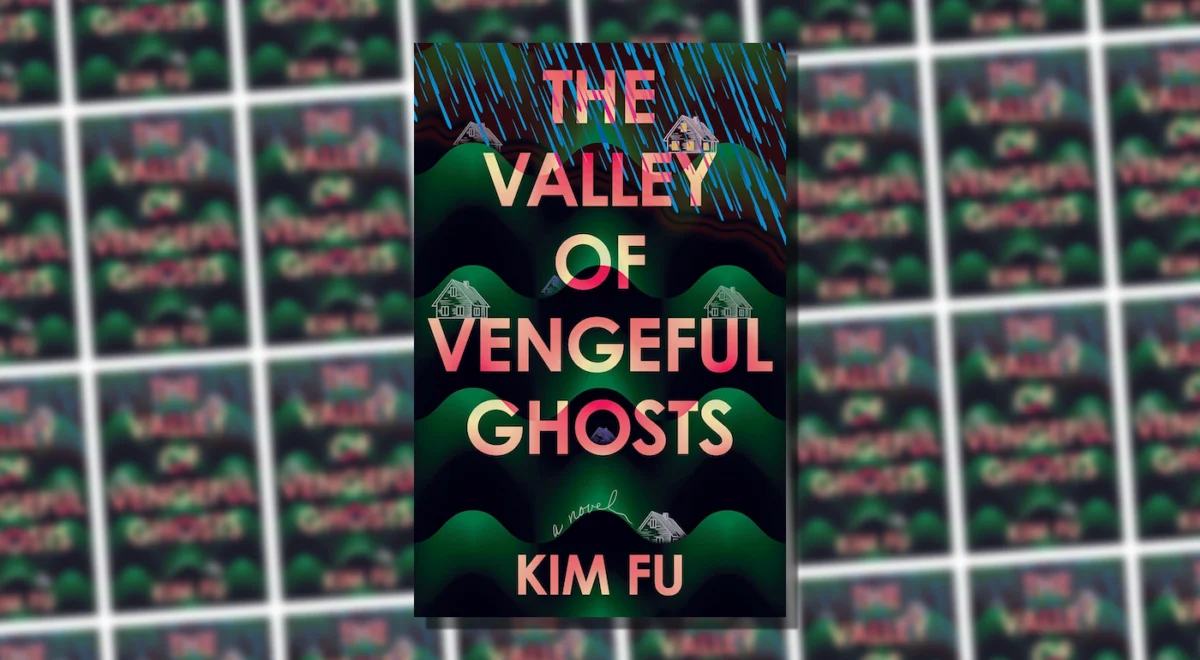
The haunted house, in its foundational form, offers a self-contained terror. However, the enduring appeal of narrative lies in the storyteller’s drive to push boundaries, to explore the expansive potential of a concept, and to reshape its very essence. Over the past eighteen months, this evolution of the subgenre has been evident in several notable works. Rivers Solomon’s Model Home and Cherie Priest’s It Was Her House First, while both undeniably haunted house narratives, offer distinct and divergent interpretations of the trope. Similarly, Juan Martinez’s Extended Stay, set in an uncanny hotel, and The Handyman Method by Nick Cutter and Andrew F. Sullivan, further exemplify this genre fluidity. Now, Kim Fu’s The Valley of Vengeful Ghosts enters this evolving landscape, presenting a narrative that, while fitting within the broad definition of a haunted house novel, distinguishes itself significantly from its contemporaries.
Unsettling Beginnings and a Protagonist’s Descent
The Valley of Vengeful Ghosts immediately immerses the reader in an atmosphere of unease. The novel opens with its protagonist, Eleanor, positioned on the roof of a house. The precise reason for her precarious placement remains initially unclear, but the scene concludes with a potent sense of foreboding:
"If only, that first day Eleanor saw the house, she’d hesitated longer, made a lower offer. If only one of Matt’s kids had woken up that morning with the flu, or an accident had blocked off the highway, or the rains had started sooner, washing out the mountain road. If only."
This poignant internal monologue reveals Matt to be a real estate agent involved in Eleanor’s house-hunting process. He is a temporary replacement for his colleague, Mary, who is on parental leave. The narrative gradually peels back the layers of Eleanor’s life, introducing her mother, Lele, whose recent death casts a long shadow over Eleanor’s present. Eleanor works as a therapist, a career path that has been constrained by her premature departure from a Ph.D. program. This decision, the novel reveals, was a direct consequence of the predatory actions of her academic mentor, a betrayal that has clearly left lasting scars.
Eleanor is a complex and challenging protagonist. The novel delves into her profound depression, a state exacerbated by her mother’s death and the lingering psychological toll of the early years of the COVID-19 pandemic. Her professional life, as depicted through conversations with colleagues about the efficacy of in-person versus virtual therapy, reflects the societal anxieties of the era. Her pursuit of a house, while outwardly a proactive step, is also an endeavor to fulfill her mother’s final wishes. Despite Lele’s physical absence from the narrative’s start, her presence is palpable, influencing Eleanor through the inheritance designated for a down payment and through the detailed preparations the mother and daughter made for Lele’s eventual passing. The initial sparseness of these allusions is deliberate; Fu masterfully constructs a fuller picture of those critical days and their profound impact on Eleanor as the novel progresses.
A Troubled Inheritance and a House with a Past
These early narrative threads establish Eleanor’s already fraught relationship with the concept of "home." Lele, as the parent of an only child, exhibited a pronounced protectiveness, a common trait that nonetheless contributed to Eleanor’s sense of isolation. The betrayal by her mentor serves as a stark reminder of trust misplaced. Even her colleague, Teddy, despite his seemingly affable demeanor, harbors an attraction to Eleanor, adding another layer of complexity to their professional relationship.
The house Eleanor ultimately purchases is a new construction, part of a residential development that failed to materialize as planned. This stalled project hints at a troubled history, a narrative that is far from benign. A confluence of events leads to a precarious situation: Matt’s insistence that Eleanor make an immediate offer, potentially bypassing crucial due diligence. The ambiguity surrounding Matt’s motives – whether genuine advice or a push to sell a potentially flawed property – ultimately becomes secondary. Once Eleanor moves in, the structural deficiencies of the house become impossible to ignore, further compounded by the spectral presence of her mother.
This is not merely a metaphorical haunting. Lele’s ghost appears to be a tangible presence in Eleanor’s new home, a dissonance amplified by the fact that her mother never visited the property during her lifetime. The house itself carries a dark history, and its visual environment is striking: a model home directly across the street acts as a surreal mirror, reflecting Eleanor’s desperate attempt to settle in and find solace.
Navigating Grief and the Uncanny
Lele’s visitations are not presented as purely terrifying encounters but rather as unfolding mysteries. Given the novel’s intense focus on Eleanor’s internal landscape, the question of whether these appearances are literal or psychological manifestations remains open. Fu’s prose, characterized by its matter-of-fact delivery, skillfully balances the depiction of a character whose perception of reality may be distorted with the genuinely uncanny phenomena she witnesses.
One passage vividly illustrates this:

"This time, when [Eleanor] emerged from the dream, finding herself back in bed, when she called out for Lele, she was there. She sat at the foot of the bed, facing away from Eleanor, the hair at the back of her head patchy and grey, the orange flowers spilling down her spine. Lele stood and made her way to the bedroom door without ever showing her face, her back always to Eleanor, her steps stately and measured."
Intriguingly, despite the novel’s title, the most overt spectral presence, Lele, is not vengeful. This aspect subtly echoes the narrative device in Guillermo del Toro’s film Crimson Peak, where the restless dead are not malevolent but rather attempt to warn the protagonist of the very real dangers posed by living antagonists.
An early instance where Matt urges Eleanor to "waive inspection" serves as a potent narrative device, akin to Chekhov’s gun. The consequences of this decision are both absurd and horrifying, leading to disquieting imagery of a pristine home becoming increasingly alien. This scene also underscores a pervasive theme in the novel: the transactional nature of many character interactions, where economic considerations often supersede genuine emotional connection.
A Narrative Compressed and its Broader Resonance
One of the novel’s perceived limitations is the sheer density of its elements within a relatively short span. Eleanor’s grief for her mother and her rekindled connection with an old flame form one narrative thread. Her precarious financial situation presents another, alongside her struggle to navigate independence without Lele’s direct influence. The presence of Lele’s ghost, the accumulation of domestic disasters, and Eleanor’s professional challenges further populate the narrative. Fu demonstrates a keen understanding of how therapeutic language can be employed in both healthy and unhealthy ways. However, the abundance of these interwoven plotlines suggests that a more expansive treatment might have allowed for greater resolution and impact.
Fu’s particular strength lies in making this narrative feel acutely relevant to contemporary anxieties. The resurgence of haunted house narratives in recent years can be attributed, in part, to the lingering economic fallout of the Great Recession and a broader societal sense of financial precarity. A 2017 New York Times Magazine article by Matthew Desmond, titled "How Homeownership Became the Engine of American Inequality," starkly illustrates this point. Indeed, the very concept of homeownership, often idealized, can be a source of profound dread when viewed through the lens of systemic inequality. The Valley of Vengeful Ghosts taps into these deep-seated fears, offering a narrative where the most chilling specter might not be supernatural, but the very real consequences of economic instability and personal betrayal.
The Lingering Impact of Economic Instability on Homeownership
The rise of haunted house narratives in contemporary literature and film is not merely a cyclical trend; it reflects a deeper societal unease rooted in economic realities. The pursuit of homeownership, long considered a cornerstone of the American Dream, has become increasingly fraught with challenges. The lingering effects of the 2008 Great Recession, marked by widespread foreclosures and a significant downturn in the housing market, left an indelible mark on a generation’s perception of financial security. Studies, such as those published by the St. Louis Fed, have detailed the long-term impact of this economic event on homeownership rates and wealth accumulation.
The aspiration of owning a home, once a symbol of stability and upward mobility, is now, for many, a source of immense stress and vulnerability. Rising housing costs, stagnant wage growth, and the increasing financialization of the housing market have created an environment where the dream of homeownership can morph into a nightmare. This is further compounded by the growing awareness of how homeownership can exacerbate existing inequalities, as highlighted by scholars like Matthew Desmond. The very structures intended to provide security can become instruments of financial hardship and social stratification.
A Broader Context for the Haunted House Trope
In this climate of economic uncertainty, the haunted house narrative resonates with a heightened urgency. The trope allows storytellers to explore themes of decay, loss, and the insidious nature of inherited trauma – themes that mirror the anxieties surrounding financial instability and the erosion of traditional markers of success. The idea of a home being "haunted" can be interpreted metaphorically: haunted by the ghosts of past financial decisions, haunted by the unfulfilled promises of a secure future, and haunted by the systemic forces that perpetuate inequality.
Kim Fu’s The Valley of Vengeful Ghosts masterfully weaves these contemporary concerns into a narrative that is both a compelling ghost story and a sharp commentary on the precariousness of modern life. The novel’s exploration of Eleanor’s personal struggles – her grief, her professional betrayals, and her battle with depression – are all amplified by the backdrop of a society grappling with its own anxieties about belonging, security, and the elusive promise of a stable home. The story, therefore, transcends the traditional ghost tale, offering a chilling reflection of the spectral forces that truly haunt our collective consciousness in the 21st century.
The Valley of Vengeful Ghosts is published by Tin House. Read an excerpt.