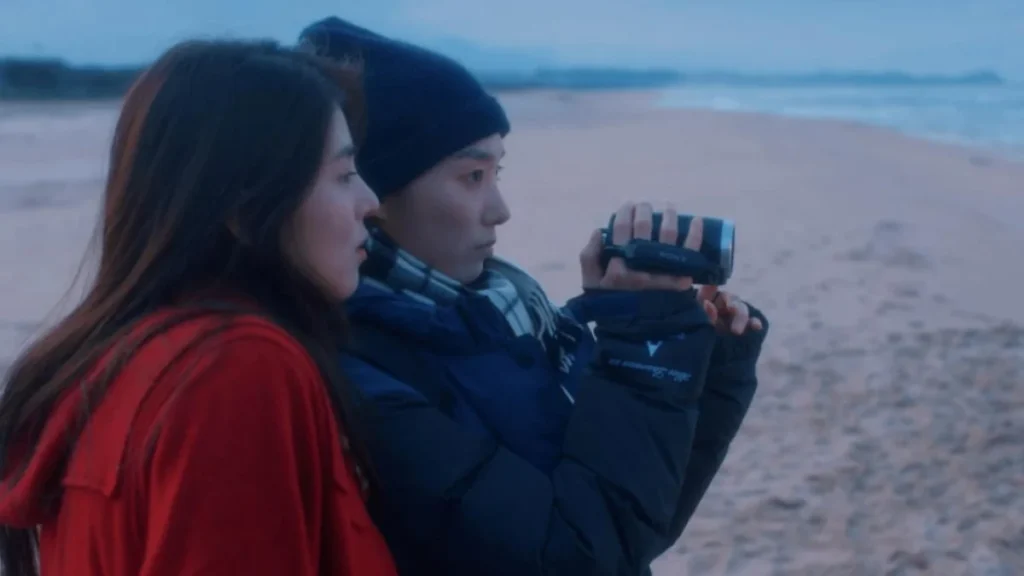
At the prestigious Hong Kong International Film Festival (HKIFF), Taiwanese director Shen Ko-Shang unveiled his highly anticipated feature debut, "Deep Quiet Room," a poignant cinematic exploration of the insidious nature of family violence, the profound weight of grief, and the silent, often devastating legacies that ripple through generations. The film, an adaptation of Lin Hsiu-ho’s critically acclaimed novel, marks a significant transition for Shen from extensive documentary research into the realm of narrative cinema, a journey he meticulously detailed during his festival appearances. His discussions illuminated the intricate process of bringing such a sensitive story to life, the profound collaborations with his esteemed cast and crew, and his insightful perspective on the evolving landscape of Taiwanese filmmaking in the contemporary era.
The Genesis of "Deep Quiet Room": From Documentary to Narrative
Shen Ko-Shang’s decade-long commitment to the themes encapsulated in "Deep Quiet Room" predates the initial call for "action." His profound engagement with the subject matter began over ten years ago, long before any camera had been prepped for a narrative shoot. "Originally I was preparing a documentary about family violence and how it affects children as they grow up," Shen recounted, illustrating the depth of his initial investigation. This formative period involved rigorous and extensive fieldwork, immersing him in numerous real-life cases. He diligently documented the intricate psychological profiles of individuals affected by such trauma and meticulously observed the recurring patterns within these fractured family units.
However, the raw, unvarnished nature of his findings presented an inherent challenge for direct presentation. "I realized it would be very difficult to present this material directly," he admitted, highlighting the ethical and practical complexities of translating such sensitive, real-world experiences into a public documentary. The turning point arrived with his discovery of Lin Hsiu-ho’s novel. "Then I encountered Lin Hsiu-ho’s novel and felt it offered a way to approach the same subject, but through a husband’s point of view and through the texture of sorrow." This serendipitous encounter provided the structural and emotional framework needed to channel years of arduous research into a compelling narrative feature. The rich tapestry of his fieldwork, while not explicitly depicted, became the unseen bedrock of the project. "All the fieldwork remained inside the project," Shen explained. "It fed the writing, the characters, and especially the father figure and the women in this family. The novel gave me structure and perspective, while my real cases gave it weight." This unique blend of authentic research and literary adaptation provided "Deep Quiet Room" with an unparalleled sense of realism and emotional resonance.
Navigating Complex Themes: Trauma, Secrets, and the Human Condition
At its narrative core, "Deep Quiet Room" unflinchingly confronts trauma, long-held family secrets, and the profound implications of pregnancy. The story unfurls as Ming, the protagonist, embarks on a painful journey to uncover the concealed past of his deceased wife, Yi-Ting, and the pervasive shadow cast by her father. Shen was acutely aware of the delicate balance required to prevent these potent elements from descending into mere melodrama. "For me the story is not just about shocking events," he emphasized. "It is about how sorrow continues, how it extends. Pregnancy can be hope and fear at the same time. Family secrets are both protection and poison. We tried to balance these elements scene by scene, always asking if we were following the emotional truth instead of just pushing for intensity."
To ground the narrative firmly in an emotionally truthful space, Shen strategically anchored the entire story in Ming’s lived experience. The film commences in the immediate aftermath of Yi-Ting’s death, tracking Ming’s meticulous preparation for the funeral, his compassionate care for his father-in-law, and his painstaking efforts to piece together the fragmented past. "Ming returns home and suddenly his whole world collapses," Shen described the pivotal opening. "From that moment, he is searching. He looks for hints in memories from their courtship, from pregnancy, from small details in the house. Structurally, I wanted the audience to discover the truth only as quickly as he could. So we built it like a puzzle, where each recollection and each new piece of information changes his understanding."
The gradual revelation of truth is facilitated by various narrative devices, including a book meticulously compiled by Yi-Ting, alongside fleeting fragments of gossip and poignant remarks overheard during the funeral proceedings. Through these subtle yet powerful cues, Ming slowly begins to comprehend the profound and often destructive influence his father-in-law exerted over the women in the family – a control potentially rooted in unspoken violence and manipulation. Ming, portrayed as a man of earnest intentions, who "believes in being a good husband and a good son," is initially oblivious to the nuanced signals from his wife. "He is straightforward, maybe too simple, and that is why he misses the fine signals from his wife. That limitation is his tragedy but also what makes him human," Shen reflected, imbuing Ming with a relatable vulnerability.
Crafting Authenticity: The Art of Casting and Performance
The successful execution of "Deep Quiet Room" hinged significantly on the casting of its central figures, particularly the emotional anchor, Ming. Shen Ko-Shang sought an actor who could embody purity, directness, and an unwavering belief in love and the role of a protector. He found these qualities in Joseph Chang, a highly respected actor in Taiwanese cinema known for his nuanced performances. "Joseph Chang has that quality. When he read the script, he immediately agreed. He saw that from the first scene to the last, he is present, and he was very excited to explore such a demanding part." The collaboration between director and actor was intensive, with daily discussions delving into "the details of each beat and how his understanding shifts," ensuring a performance that was both authentic and deeply felt. Chang’s extensive filmography, including critically acclaimed works like "Eternal Summer" and "The Mirror," has consistently showcased his ability to portray complex emotional states, making him an ideal choice for the layered role of Ming.
Ariel Lin, another celebrated Taiwanese actress, was cast as Yi-Ting, the enigmatic character who, even in her absence, remains the emotional core of the narrative. Her presence is powerfully felt throughout the film, a testament to Lin’s nuanced portrayal and Shen’s character development. Initially, Lin expressed hesitation, a response rooted in the script’s intensely painful themes. "She told me she was afraid of the story, especially because she herself had a young child and was expecting another. The script touches on losing a baby and on deep psychological pain." To support Lin in navigating such emotionally taxing material, Shen drew directly from his extensive documentary research. "She asked to learn about the real cases behind my work," he explained. "So I created something like a diary for her. For every scene she plays, I wrote down the emotional state of the character – the fear, love, anger, hope. Where does this scene sit in her inner timeline, what has already happened to her, what is she hiding. These notes became a guide for her to go into the character and come back out again. It gave her a sense of security." Lin, known for her versatile roles in popular dramas like "It Started with a Kiss" and "In Time with You," demonstrated her commitment to challenging roles by delving into this emotionally demanding character with such dedication.
The portrayal of Yi-Ting’s father, the seemingly respectable yet deeply abusive patriarch, was entrusted to veteran actor Chin Shih-chieh. His performance is a chilling yet disturbingly recognizable depiction of a hidden abuser. Shen’s fieldwork provided crucial insight into this character type: "From my fieldwork I noticed that many abusive father figures are actually very respected in society," he observed. "They build their own empire, their own castle. Outside, they are charming and successful. Inside the home, they control everything. I wanted someone who could embody that contradiction." Chin Shih-chieh, a revered figure in Taiwanese theatre and film, was Shen’s first choice, though not an easy one to persuade. "I sent him the script and he immediately refused," Shen recalled. "He said he hated this kind of man and did not want to play him." It took several face-to-face meetings, during which Shen passionately conveyed the imperative of his project and the real-world experiences behind it, to convince the veteran actor. Chin eventually agreed, stating, "If I take this role, it is not because I like the character, but because I understand the message you want to convey." This profound commitment translated into a performance that imbues the father figure with "outward elegance and an inner terror without ever turning him into a cartoon," a testament to Chin’s mastery and Shen’s vision.
Visual Storytelling: Cinematography and Symbolic Spaces
The visual language of "Deep Quiet Room" is as meticulously crafted as its narrative and performances. Collaborating with cinematographer Chen Ta-Pu, Shen created an intimate, breathing atmosphere that subtly transitions between past and present, and between various domestic spaces, each imbued with symbolic meaning. "The story constantly shifts in time," Shen explained. "Many projects mark the past with obvious color changes or strong visual effects. I did not want that. I wanted the audience to read time from the acting, from small details in the faces and bodies. So we kept the palette very close between past and present, and trusted the performances." This deliberate choice enhances the film’s realism, compelling the audience to engage more deeply with the characters’ emotional journeys rather than relying on overt visual cues.
Space itself functions as a powerful allegory within the film. "Most of the story happens in ordinary places – homes, a car, a hospital," Shen noted. "But we tried to treat them like allegories. The father’s house is like a giant tree. It is impressive, even beautiful, but it casts a huge shadow. People try to run away from it, yet they cannot escape that shade." This imagery vividly conveys the inescapable influence of the patriarchal figure. In stark contrast, "The daughter’s home is by the sea, searching for light and distance," symbolizing her yearning for liberation and a new beginning. Even mundane elements like car rides are utilized symbolically: "even in the car rides we used tunnels and bridges to show how the characters pass through darkness and light," illustrating the characters’ psychological transitions and the arduous journey toward truth and healing.
A significant artistic decision was the exclusive use of a handheld camera, positioning the lens as a silent, empathetic witness. "We treated the camera like a soul or an angel staying close to the characters," Shen elaborated. "It does not judge. It just observes. Because it is handheld, you can feel that the camera is breathing with them. That slight movement and closeness make the story feel almost like a documentary at times, even though everything is carefully planned." This documentary-style aesthetic, informed by Shen’s extensive background, lends an immersive quality to the narrative, drawing the audience into the characters’ most intimate and vulnerable moments.
Taiwanese Cinema: Navigating Commercialism and Artistic Integrity
Shen Ko-Shang’s debut emerges at a fascinating juncture for Taiwanese cinema, a landscape he views with both apprehension and optimism. "In mainstream Taiwanese cinema right now, there is a clear focus on box office," he observed, acknowledging the commercial pressures that often dictate film production. This trend, he suggests, "pushes topics toward what feels immediately relatable and entertaining. Current issues, familiar comedy, certain romance formulas." While commercial success is a vital component of any film industry, Shen highlights the potential for artistic compromise.
However, he also points to a resilient counter-current. "At the same time, there are still directors making more intimate stories, and many of us are looking to international collaboration like we did on this project, with post production work abroad and partners from different countries. That gives us a bit more oxygen." "Deep Quiet Room" itself stands as an example of this global collaboration, leveraging international resources to foster artistic independence and reach broader audiences. This strategy mirrors a growing trend in Asian cinema, where co-productions and international partnerships provide crucial funding, technical expertise, and distribution channels, enabling filmmakers to pursue more niche or artistically ambitious projects that might struggle for funding domestically.
For Shen’s generation, the profound legacy of the New Taiwan Cinema movement—spearheaded by iconic figures like Hou Hsiao-hsien, Edward Yang, and Tsai Ming-liang—remains a powerful and enduring reference point. "We grew up watching Hou Hsiao-hsien, Edward Yang, Tsai Ming-liang," he affirmed. "They taught us to believe in cinema as an art form." This artistic foundation instilled a deep appreciation for cinema as a medium for profound social commentary and aesthetic exploration. While acknowledging that "Younger directors sometimes react against that and want to treat cinema more purely as a commercial product," Shen believes that "one path cancels the other" is not necessarily true. Instead, he sees a dynamic tension: "A work like ‘Deep Quiet Room’ probably has to survive between those two poles," balancing artistic integrity with the practicalities of production and distribution in a competitive market.
The Hong Kong International Film Festival: A Platform for Asian Voices
The Hong Kong International Film Festival (HKIFF), where "Deep Quiet Room" made its debut, holds a significant place in the global cinematic calendar. Established in 1976, it is one of Asia’s oldest and most respected film festivals, renowned for its diverse programming that showcases both established masters and emerging talents from Hong Kong, Asia, and around the world. The festival is a crucial platform for independent and art-house cinema, fostering cultural exchange and providing filmmakers with an opportunity to connect with international critics, distributors, and audiences. Presenting "Deep Quiet Room" at HKIFF underscores the film’s artistic merit and its potential to resonate with a global audience, particularly given the festival’s historical emphasis on exploring complex social issues through film. For a debut feature like Shen’s, HKIFF offers invaluable visibility and critical attention, positioning it within a broader cinematic conversation.
Broader Context: Family Violence in Cinema and Society
"Deep Quiet Room" joins a lineage of films that bravely confront the sensitive and often taboo subject of family violence. Across cultures, cinema has served as a powerful medium for shedding light on the hidden realities of domestic abuse, intergenerational trauma, and the psychological scars left by such experiences. Films like "Room" (2015), "Incendies" (2010), or even earlier works like "The Color Purple" (1985), have explored similar themes, using fictional narratives to foster empathy and understanding of real-world suffering. The global prevalence of family violence remains a pressing social issue, with studies by organizations like the World Health Organization indicating that a significant percentage of women worldwide experience physical or sexual violence, often from an intimate partner or family member. By adapting a novel and grounding his narrative in extensive research, Shen Ko-Shang contributes to this vital cinematic dialogue, offering a nuanced and deeply human perspective on a topic that often remains shrouded in silence. His approach, prioritizing "emotional truth" over "shocking events," ensures that the film offers not just a portrayal of suffering, but an exploration of its lingering effects and the arduous path towards understanding and potential healing.
Looking Ahead: Shen Ko-Shang’s Future Projects
With "Deep Quiet Room" now completed and embarking on its festival journey, Shen Ko-Shang is already conceptualizing his next cinematic ventures, which continue to orbit around individuals grappling with "quiet but extreme pressure." His next project in development focuses on "someone who becomes bedridden after illness." This narrative, he reveals, will explore not merely the individual’s suffering, but "how everyone around them restructures their life, what hidden conflicts come to the surface." It is another exploration of "crises in ordinary families," a theme he clearly finds compelling and fertile ground for cinematic inquiry.
Additionally, Shen is contemplating "a smaller scale project focusing on a single location and very few characters," an endeavor designed "to push even further into emotional detail." This suggests a continued dedication to intimate character studies and psychological depth, rather than large-scale spectacle. "Whatever comes next, I think I will stay close to these themes," he affirmed, indicating a consistent artistic vision rooted in the exploration of human vulnerability, resilience, and the intricate dynamics of familial relationships. With "Deep Quiet Room," Shen Ko-Shang has not only delivered a compelling debut feature but has also established himself as a director deeply committed to exploring profound human experiences with sensitivity, intellectual rigor, and a distinctive cinematic voice, promising a significant future contribution to Taiwanese and international cinema.