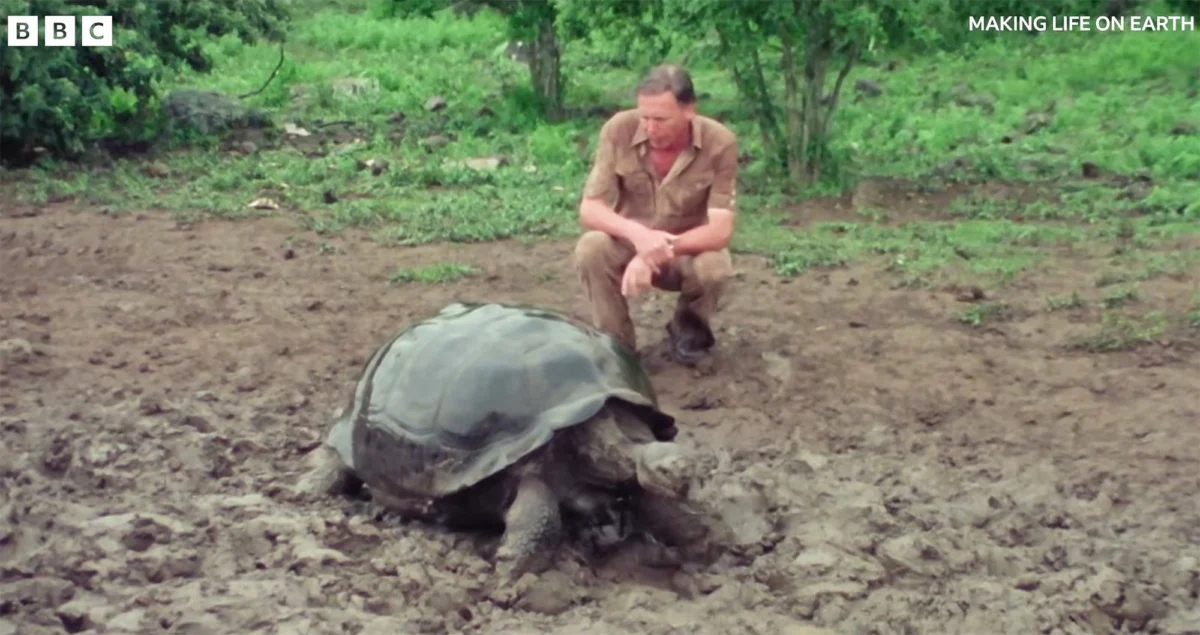
Directed and produced by Victoria Bobin, a veteran of the BBC Studios Natural History Unit, the 60-minute special focuses on the three-year production cycle that began in 1976. This period represented a pivotal moment in television history, coinciding with the widespread adoption of color broadcasting and the increasing accessibility of international jet travel. The documentary utilizes archival footage, restored outtakes, and contemporary interviews with Attenborough and his original production crew to illustrate the logistical and technical complexities of documenting life’s evolutionary history on a global scale.
The Genesis of a Natural History Landmark
In the mid-1970s, the BBC Natural History Unit (NHU) faced the daunting task of creating a program that would not merely show animals in their habitats but would tell the comprehensive story of biological evolution. Sir David Attenborough, who had already established himself as a prominent broadcaster and former controller of BBC Two, envisioned a series that would trace the development of life from the first unicellular organisms to the rise of humanity. This ambitious narrative required a production scale previously unseen in documentary television.
The resulting series, Life on Earth, consisted of 13 episodes and required a three-year filming schedule. At the time, the project was considered a significant financial and professional risk. The documentary special, Making Life on Earth: Attenborough’s Greatest Adventure, highlights how the team navigated the lack of precedent for such a venture. Unlike modern productions that benefit from high-speed digital communication and satellite mapping, the 1976 crew relied on physical maps, telegrams, and the raw intuition of field biologists.
A Global Odyssey Under Extraordinary Circumstances
The chronology of the original production, as detailed in the new special, reveals a series of geopolitical and physical challenges that nearly derailed the project multiple times. Between 1976 and 1979, Attenborough and his team traveled to more than 40 countries, capturing footage of over 600 species. The documentary provides specific data on the sheer volume of 16mm film used and the logistical hurdles of transporting heavy camera equipment through remote terrains.

The production was frequently caught in the crosshairs of global instability. The special recounts several harrowing incidents, including:
- The Comoros Coup: While attempting to film rare species in the Comoros islands, the crew found themselves in the middle of a political coup, requiring rapid evacuation and the protection of their exposed film reels.
- Conflict in Rwanda: In the Virunga Mountains, the team encountered armed groups and gunfire while tracking mountain gorillas, a sequence that would eventually become one of the most famous moments in television history.
- Iraq and the Ba’athist Regime: The documentary sheds light on the difficulties of filming in Iraq under the watchful eye of Saddam Hussein’s military, where the crew faced constant surveillance and threats of detention while documenting the marshes of the Tigris and Euphrates.
These anecdotes serve to remind contemporary audiences that the polished imagery of natural history documentaries often belies a reality of physical danger and political complexity.
Technical Innovation in the Pre-Digital Era
Making Life on Earth: Attenborough’s Greatest Adventure emphasizes the technical ingenuity required to film the original series. In the late 1970s, many of the technologies taken for granted today—such as thermal imaging, drone photography, and ultra-high-speed digital cameras—did not exist. The NHU was forced to innovate on the fly, developing specialized lenses and waterproof housings to capture the first clear footage of various marine and microscopic organisms.
The shift to color film was a central component of the original series’ success. As color television sets became standard in households across the UK and US, the vibrant hues of the tropical rainforests and the deep blues of the oceans captured in Life on Earth provided a visual feast that helped secure the program’s massive ratings. The new documentary features interviews with cinematographers who explain the difficulty of maintaining film quality in extreme humidity and sub-zero temperatures, where static electricity and condensation could ruin months of work in a single second.
The Production Team and Creative Leadership
The documentary is a product of the BBC Studios Natural History Unit, commissioned by both PBS and the BBC. Director Victoria Bobin brings a wealth of experience to the project, having previously directed Attenborough and the Jurassic Sea Monster and Attenborough and the Giant Sea Monster. Her familiarity with Attenborough’s working style and the NHU’s archives allowed for a more intimate portrayal of the production process.

The executive production team includes Mike Davis, Sue Aartse-Tuyn, and Diana El-Osta. Their involvement ensures that the special maintains a balance between historical tribute and educational insight. According to production notes, the goal was to create a "love letter to the craft of documentary filmmaking" while acknowledging the profound influence Attenborough has had on public understanding of science.
Contextualizing the Centennial Celebration
The release of Making Life on Earth: Attenborough’s Greatest Adventure is part of a broader programming strategy by the BBC to honor Attenborough’s 100th year. This follows several other high-profile releases, including the 2025 series Ocean with David Attenborough and the early 2026 release of A Gorilla Story: Told by David Attenborough.
These programs collectively represent a "centennial cycle" that reflects on Attenborough’s legacy. Data from the BBC suggests that Attenborough’s programs have been viewed by more than 500 million people worldwide over the last seven decades, making him one of the most influential figures in the history of the medium. The 2026 special serves as the cornerstone of this celebration, focusing on the moment he transitioned from a broadcaster to a global icon of natural history.
Broader Impact and the Legacy of Life on Earth
The implications of the original Life on Earth series extend far beyond television ratings. It is widely credited with popularizing the theory of evolution for a general audience and fostering a global consciousness regarding biodiversity. By showing the interconnectedness of all living things, the series provided a scientific foundation for the modern environmental movement.
Analysis of the series’ impact suggests that it set the "blue-chip" standard for natural history—a style characterized by high production values, authoritative narration, and a focus on animal behavior rather than human intervention. This format has been replicated by subsequent hits such as Planet Earth, The Blue Planet, and Our Planet. Making Life on Earth: Attenborough’s Greatest Adventure examines how this standard was built from the ground up, often through trial and error.

Furthermore, the documentary highlights the evolution of Attenborough’s own perspective. In 1979, the primary focus was on the wonder of the natural world and the mechanics of evolution. In his later years, Attenborough’s tone shifted toward urgent advocacy for conservation in the face of climate change and habitat loss. The special bridges these two eras, showing how the young, adventurous presenter of the 1970s became the "voice of the planet" in the 21st century.
Conclusion and Release Information
Making Life on Earth: Attenborough’s Greatest Adventure stands as a testament to the power of public service broadcasting and the enduring curiosity of the human spirit. As the global community prepares to celebrate the 100th birthday of Sir David Attenborough, this documentary provides the necessary context to understand why his work remains relevant in an age of rapid environmental change.
The film will be available for streaming on May 6, 2026. In the United Kingdom, it will be hosted on the BBC iPlayer, while audiences in the United States can access the special via PBS.org and the PBS App. The documentary is expected to be a major cultural event, drawing in both longtime fans of Attenborough’s work and a newer generation of viewers who have come to know him through digital platforms and social media.
By revisiting the "greatest adventure" of 1976, the film honors the past while inspiring future generations of scientists, filmmakers, and conservationists to continue the work of documenting and protecting life on Earth.