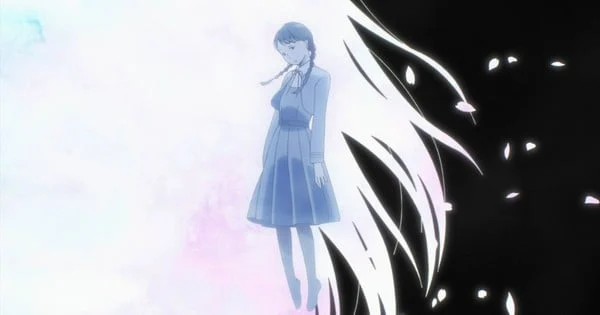
The recent emergence of A Hundred Scenes From Awajima as an anime adaptation of Takako Shimura’s acclaimed manga has ignited renewed interest in a distinct subset of Japanese storytelling: narratives centered around fictionalized versions of the Takarazuka Music School. This unique institution, renowned for its all-female stage performances and the captivating portrayal of both masculine and feminine roles by its actresses, has proven to be a fertile ground for artistic exploration. While Revue Starlight and Kageki Shoujo!! have previously delved into this thematic territory, A Hundred Scenes From Awajima distinguishes itself through its ambitious, nonlinear vignette-based approach, offering a multi-generational perspective on the school and its impact on its students. This narrative structure, while potentially groundbreaking, also presents inherent challenges in execution, making the adaptation’s success a testament to the source material’s depth and the directorial skill involved.
The Enduring Influence of the Takarazuka Revue
The Takarazuka Revue, founded in 1913 by Ichizo Kobayashi, stands as a cultural phenomenon in Japan. Its core concept of all-female performers portraying both male ("otoko-yaku") and female ("musume-yaku") roles has fostered a unique performance style and a dedicated fanbase. The troupe’s aesthetic, characterized by lavish costumes, elaborate choreography, and romanticized narratives, has captivated audiences for over a century. This enduring appeal lies not only in the spectacle but also in the exploration of gender presentation and the idealized archetypes that emerge from these performances. Writers and artists are consistently drawn to the inherent drama, the intense training regimens, and the complex relationships that develop within such a specialized environment. The "quintessence" of this legacy, as the original review noted, likely stems from the potent combination of beauty, talent, and the exploration of identity within a rigorously structured world.
Diverse Interpretive Approaches to a Shared Muse
The anime landscape has seen varied interpretations of the Takarazuka-inspired narrative. Revue Starlight, for instance, leans into the surreal and metaphysical, drawing parallels with the experimental directorial style of Kunihiko Ikuhara. Its focus is on the heightened reality of theatrical production and how interpersonal dramas can be amplified into cosmic struggles. In contrast, Kageki Shoujo!! adopts a more conventional coming-of-age narrative, following its protagonists through their formative years at a performing arts school, navigating internal rivalries and external pressures to achieve stardom.
A Hundred Scenes From Awajima, however, charts a different course. Its nonlinear, vignette-based structure allows for a panoramic view of the Awajima school, spanning multiple eras and student cohorts. This approach enables the exploration of diverse experiences and the subtle evolution of the institution and its traditions over time. The narrative eschews a singular protagonist or a linear plot, instead weaving together a tapestry of interconnected stories, each offering a distinct emotional resonance. This method, while rich in potential, demands a delicate balance to maintain narrative coherence and emotional impact across disparate episodes.
Takako Shimura: A Master of Nuance and Emotional Depth
The choice of veteran mangaka Takako Shimura as the source material’s creator is significant. Shimura, whose career began in 1997, spent over a decade, from 2011 to 2024, developing A Hundred Scenes From Awajima. This extended period of creation, interspersed with other projects, suggests a deeply personal and experimental engagement with the material. It is plausible that Awajima served as a creative sanctuary for Shimura, a space where she could explore character archetypes and thematic nuances that might not have fit neatly into her more conventional works. The manga’s published volumes, spread across this considerable timeframe, reflect a patient, iterative process of storytelling. The resulting narratives, even within the context of the anime adaptation, retain Shimura’s signature style: quiet introspection, poignant tragedy, explorations of yuri relationships, and a profound emotional incision that often belies their deceptive simplicity.
Shimura’s international recognition has largely been cemented by the acclaimed anime adaptations of Sweet Blue Flowers and Wandering Son. These series have been lauded for their sensitive and authentic portrayals of LGBTQ+ experiences, particularly transgender identity in Wandering Son. This has led to Shimura being recognized as a pivotal figure in the representation of queer themes in anime. As the anime industry has expanded its scope and embraced a greater diversity of voices, there has been a natural re-evaluation of foundational works. While acknowledging the evolving landscape and the value of contemporary perspectives, the original review suggests that Shimura’s contributions remain substantial. Her ability to craft emotionally resonant and complex characters, even if not always perfect, is a significant asset.
Deconstructing Episode Two: The Art of Implied Narrative
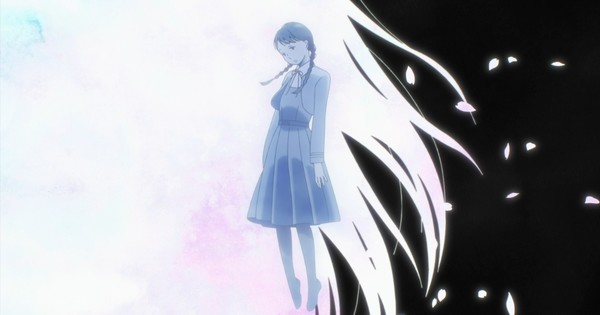
The second episode of the A Hundred Scenes From Awajima anime serves as a compelling microcosm of Shimura’s storytelling prowess. The narrative centers on the relationship between Emi Okabe and Yukie Onoda, a story that, at first glance, appears to follow classic Class S yuri tropes – a doomed love affair devoid of overt happiness, ultimately leading to tragedy for both. However, Shimura masterfully subverts audience expectations by employing a distancing technique. Instead of directly portraying Emi and Yukie’s experiences, the story is filtered through the perspective of Etsuko Takehara, a third-party observer. Further complicating the narrative, much of the crucial information is conveyed through Yukie’s letters, creating a deliberate sense of incompleteness. The audience is left with unanswered questions: the precise duration of Yukie’s suffering, the specific reasons for Emi’s demise, and the full emotional arc of their relationship. The poignant image of a solitary woman weeping on a bus becomes a powerful, yet incomplete, testament to their story, highlighting Shimura’s intentional refusal to provide a comprehensive or easily digestible narrative.
Beyond Melodrama: Unpacking Complex Emotional Landscapes
To dismiss the tale of Emi and Yukie as merely another lesbian tragedy would be an oversimplification, despite its undeniable capacity to evoke profound sadness – as the original review notes, it elicited tears upon a second viewing. The true power of Shimura’s storytelling lies in its nuanced exploration of the surrounding emotional landscape. She subtly hints at the broader context: Ibuki’s initial kindness, Yukie’s insidious jealousy, the complexities of Emi’s adult life, Etsuko’s lingering disappointment, the intricate social hierarchies and systemic pressures within the school, and the elusive concept of legacy.
Awajima itself exists in a state of quantum duality. It is simultaneously the institution that fosters emotional turmoil during the formative years of its students, driving them apart, and the alluring, almost mythical beacon of the stage that continues to draw Etsuko into adulthood, its gleam undimmed by her accumulated knowledge. The question of which manifestation of Awajima is more authentic is ultimately irrelevant. Etsuko’s unwavering support for her niece’s attendance underscores the cyclical nature of the institution and its enduring influence across generations.
Examining the Reproduction and Subversion of Tradition
The first episode, focusing on Wakana and Kinue, offers a starker depiction of Awajima’s inherent power structures. The school’s traditions appear to reinforce the divide between upperclassmen and underclassmen, fostering an environment where gossip and subservience are dictated by social expediency. Individuals are easily pigeonholed into archetypes like "crybaby" or "prince" based on superficial impressions. Yet, even within this seemingly rigid framework, Shimura introduces complexities that challenge these facile categorizations. Kinue’s "prince" persona predates her arrival at Awajima, and the "crybaby" captivates her peers with her singing prowess. Furthermore, Kinue extends genuine empathy to her vulnerable freshman roommate, Wakana. The titular "hundred scenes" provide ample narrative space for a multitude of perspectives, demonstrating that the reality within Awajima is far more intricate than initial appearances suggest.
A Pressure Cooker for Aspiring Thespians
The overall impression of A Hundred Scenes From Awajima thus far is overwhelmingly positive. The premise of a prestigious institution for teenage girls, functioning as a crucible for generations of high-strung theater enthusiasts, provides an ideal foundation for Shimura’s signature storytelling. The inherently charged atmosphere of the school, where emotional equilibrium is elusive, creates fertile ground for Shimura’s ability to ignite compelling dramatic sparks. The vignette format effectively showcases her narrative efficiency. The brief arc of Kinue and Ryouko, for instance, unfolds with the concise emotional resonance of a miniature Liz and the Blue Bird, delivering a potent dose of yuri angst. The short coda featuring Ibuki, a former bully now a teacher, illustrates Awajima’s capacity for both growth and stagnation. Ibuki’s return could signify a desire for atonement or a symptom of institutionalization. Regardless, she plays a role in nurturing the next generation. This interconnectedness of scenes gradually builds towards a comprehensive vista of the school’s multifaceted reality.
A Harmonious Adaptation: Morio Asaka and Madhouse
Shimura’s track record of successful adaptations continues with A Hundred Scenes of AWAJIMA. Director Morio Asaka, known for his extensive work in the shojo and josei genres, including acclaimed series like Card Captor Sakura, NANA, Chihayafuru, and My Love Story!!, brings a seasoned understanding of nuanced character dynamics and emotional storytelling to the project. Collaborating with the renowned animation studio Madhouse, Asaka has delivered a visually stunning and emotionally resonant adaptation. Shimura’s characteristic unhurried pacing is faithfully translated to the screen, allowing the subtle emotional beats to land with impact. The anime’s aesthetic is characterized by bursts of vibrant flower symbolism set against a predominantly soft color palette. The character animation is particularly noteworthy, featuring expressive hair and hand movements that convey a great deal of unspoken emotion. The subtle inclusion of a scene depicting Emi smoking, as highlighted in a social media post, further demonstrates the adaptation’s attention to detail and its ability to evoke potent imagery. The strong opening episodes suggest a promising trajectory for the remainder of the season, leaving viewers eager to witness more of Awajima’s intricate tapestry of stories.
Ratings and Availability
- Episode 1 Rating: [Rating to be determined based on critical consensus or further review]
- Episode 2 Rating: [Rating to be determined based on critical consensus or further review]
A Hundred Scenes of AWAJIMA is currently available for streaming on Crunchyroll, providing global audiences with access to this compelling adaptation.
About the Author
Sylvia is an active presence on Bluesky, contributing to discussions on various media. While her personal experience in high school involved the pit orchestra rather than the stage, she possesses a keen analytical eye for performance and narrative. She is also a regular participant in discussions on "This Week in Anime," offering insights on both celebrated and overlooked productions.