The cinematic landscape frequently presents a dichotomy between critical reception and public adoration, a phenomenon not uncommon for major film releases. However, it has been an unusually extended period since a film as widely scrutinized and, at times, derided as "Michael" has achieved such significant commercial success. This biographical drama, chronicling the life of pop icon Michael Jackson, has rapidly ascended to become one of the highest-grossing musician biopics in history. Despite a notable decline in ticket sales during its second weekend, the film is projected to be among the top global box office hits of 2026.
A Chasm of Discrepancies: Navigating the "Michael" Phenomenon
The film’s remarkable commercial performance, juxtaposed with its critical reception and inherent narrative choices, has illuminated a series of profound discrepancies. These gaps extend beyond the typical divergence between critical assessment and audience sentiment, touching upon the very fabric of biographical storytelling and the complex legacy of its subject.
The Estate-Approved Narrative vs. Lived Reality
One of the most significant disparities lies between the reality of Michael Jackson’s life and the narrative presented within this estate-approved biography. While biographical fiction inherently involves interpretation and selective portrayal, the chasm feels particularly pronounced in "Michael." This is partly due to the collaborative nature of the production with Jackson’s estate, which naturally influences the scope and tone of the depiction. The estate’s direct involvement, while intended to ensure accuracy and respect, also raises questions about the extent to which sensitive or controversial aspects of Jackson’s life could be fully explored. This collaboration, while common in the production of biopics concerning prominent figures, carries a unique weight when dealing with an artist whose personal life was under intense public scrutiny.
Evolving Scope and Legal Constraints
Further widening this narrative gap is the significant alteration between the film initially envisioned and the one ultimately released. Reports indicate that early iterations of the screenplay were slated to cover a more extensive portion of Jackson’s life. However, the released version concludes in 1988, with a tantalizing tease for a potential sequel. This significant curtailment is attributed, in part, to a legal misstep. Filmmakers and the estate reportedly underestimated the legal complexities surrounding the depiction of individuals who had accused Jackson of child molestation in 1993. The estate maintains that the version of events in question is "inaccurate and irrelevant," yet the inability to legally portray certain accusers necessitated a substantial revision of the film’s narrative arc. This legal entanglement underscores the delicate balance between artistic license and the legal realities of depicting real-life events, particularly those involving sensitive accusations.
The Fan Divide: Loyalists and Casual Viewers
Perhaps the most profound reality gap exists between the casual fan, potentially drawn to the film by Jackson’s enduring musical legacy, and the fiercely devoted "stan army." While many viewers may compartmentalize the controversies of Jackson’s later years, a practice often applied to complex artists who achieved undeniable brilliance, his dedicated fanbase often engages with his legacy through a lens of unwavering loyalty. This segment of his audience frequently interprets any criticism or mention of accusations as part of a long-standing conspiracy. They may vehemently defend Jackson’s innocence, often employing specific legal terminology like "not guilty" rather than "innocent," and view any negative discourse as a deliberate smear campaign. The intensity of this defense can be extreme, sometimes leading to aggressive online rhetoric and the vilification of those who do not subscribe to their unwavering belief in Jackson’s saintliness. This phenomenon highlights the powerful influence of online communities and the formation of echo chambers that can shape perceptions of public figures.
A Calculated Approach: The "Bohemian Rhapsody" Blueprint
"Michael" appears to have been meticulously crafted with a broad audience in mind, drawing clear inspiration from the commercial success of "Bohemian Rhapsody." This approach is evident in the retention of key creative personnel from that film, including its writer and editor. The inclusion of a celebrity cameo from Mike Myers further solidifies this connection, suggesting a deliberate strategy to replicate the formula that resonated with millions.
Catering to a Specific Interpretation
The film’s narrative style and thematic underpinnings seem designed to appeal to an audience that aligns with what could be termed a "Trump-style" belief in Jackson’s complete exoneration. This perspective often dismisses or downplays accusations, particularly those detailed in significant documentaries like the 2019 release "Leaving Neverland." The film’s narrative choices, by omitting the more contentious later years of Jackson’s life, implicitly validate this perspective by focusing on his early career and artistic achievements, effectively sidestepping the legal acquittals of 2005 in favor of a less confrontational portrayal.

The Unspoken Truths: Narrative Omissions and Subtle Allusions
The decision to omit the more challenging aspects of Jackson’s life is central to the film’s paradoxical success. Earlier drafts of the screenplay reportedly included scenes depicting the search of Jackson’s home following the initial 1993 accusations. The journey from script to screen has been a complex one, marked by rewrites, reshoots, and delays, largely driven by the realization of legal limitations regarding the depiction of his accuser. This situation is particularly ironic, given the Jackson estate’s history of leveraging legal clauses, such as a non-disparagement clause, to pressure HBO into removing "Leaving Neverland" from its streaming platform. This suggests a deliberate, albeit legally constrained, effort to shape the public narrative surrounding Jackson.
A Partial Story, Yet Loaded with Foreshadowing
The film was effectively compelled to operate with a fragmented narrative, intentionally bypassing the most controversial period of Jackson’s life. Curiously, despite this enforced narrative limitation, "Michael" is replete with cheerful nods and subtle Easter eggs that allude to later developments in Jackson’s life. The film is notably saturated with references to Neverland, Jackson’s sprawling estate acquired around the period the film concludes and a location central to the allegations against him. These allusions, rather than serving as cautionary tales, are presented with an almost celebratory tone, further complicating the film’s intended message.
The "Abused Puppy-Man": A Carefully Curated Portrayal
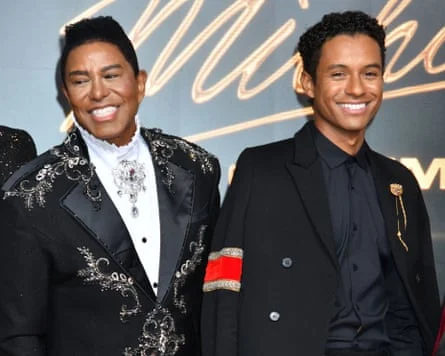
The portrayal of Michael Jackson, brought to life by his nephew Jaafar Jackson, emphasizes a youthful innocence and a yearning for a lost childhood. Jaafar Jackson captures his uncle’s iconic dance moves with precision, but offstage, his performance is characterized by a gentle, almost ethereal demeanor. The character is depicted as an "abused puppy-man," simultaneously longing for his stolen youth and striving for adult independence. This lack of overt darkness in the characterization leads the film to subtly imply that Neverland will ultimately serve as a paradise he creates, foreshadowing its significance in a manner reminiscent of how superhero films might hint at future plot developments.
Navigating Controversy: Cowardice or Daring?
The film’s credulous reading of Jackson’s inherent innocence raises questions about its intent. Is this a deliberate avoidance of real-life complexities, or a peculiar form of cinematic daring? "Michael" often adopts a tone that echoes right-wing-coded media, which refrains from explicit prejudice but employs subtle cues designed to resonate with a specific audience. The film appears to aim for a delicate balance: avoiding the overt pronouncements of the most fervent Jackson loyalists while also seeking to evade their potential ire. This nuanced approach, while perhaps not the primary intention of the filmmakers, is undeniably influenced by the Jackson estate’s role as a more palatable, yet equally protective, iteration of those online defenders.
The Estate’s Influence: A Norm in Biopic Production
The Jackson estate’s deep involvement in the production of "Michael" is not an anomaly in the realm of biographical filmmaking. It has become increasingly common for artists, or their representatives, to exert significant influence over their cinematic portrayals. This control is often amplified by the ownership of the music, a crucial element that can profoundly impact a film’s commercial and artistic viability. The absence of authorized music has historically hampered biopics, as seen in attempts to depict the lives of David Bowie and Jimi Hendrix.
The Allure of Virtual Resurrection
Furthermore, audiences appear to be increasingly drawn to the idea of a "virtual resurrection" rather than the performances of established actors embodying iconic musicians. The success of films like "Bohemian Rhapsody" and "Michael" suggests a growing preference for a cinematic experience that, while not quite a full holographic performance, offers a compelling sense of re-creation. This trend indicates a shift in audience expectations for musician biopics.
A Martyrdom in the Making? The Sequel Tease and Fan Victory
The film’s conclusion, with on-screen text teasing a sequel that would inevitably address less triumphant aspects of Jackson’s life, could be interpreted as a bold move. However, within the context of "Michael," this sequel promise feels less like an artistic endeavor and more like a calculated maneuver. It signals an intention to transform the subsequent installment into a "perverse celebration of Jackson’s martyrdom." This approach suggests that the most fervent segment of Jackson’s fanbase has, in effect, achieved a victory, influencing the narrative trajectory of his cinematic legacy. Their subsequent actions, often characterized by aggressive defense and criticism of perceived adversaries, mirror the broader fan culture that has emerged around the artist.
The Peril of Partisanship: Settling a Complex Legacy
The fundamental flaw, shared by both the most zealous fans and, arguably, the film itself, is the construction of rigidly defined "sides" when addressing the legacy of a figure whose reputation remains inherently unsettled. This difficulty is amplified for artists repeatedly accused of heinous crimes. The central question remains: does "Michael" present a complicated human being, or a saint overcoming a challenging upbringing? The film appears to shy away from controversy not out of fear, but out of an apprehension of exploring the very elements that contribute to an artist’s humanity. "Michael" avoids the difficult truths, ultimately failing to grapple with the multifaceted nature of its subject.