The Federal Communications Commission (FCC) has initiated an extraordinary and early review of the broadcast television licenses held by The Walt Disney Company for its American Broadcasting Company (ABC) stations. This administrative maneuver, which has little modern precedent in the history of broadcast regulation, moves up a renewal deadline that was not originally slated to occur until 2028. While the FCC’s official correspondence frames the action within the context of ongoing investigations into corporate practices and "public interest" standards, the timing of the order has sparked intense debate regarding potential political retaliation and the boundaries of federal regulatory authority over the media.
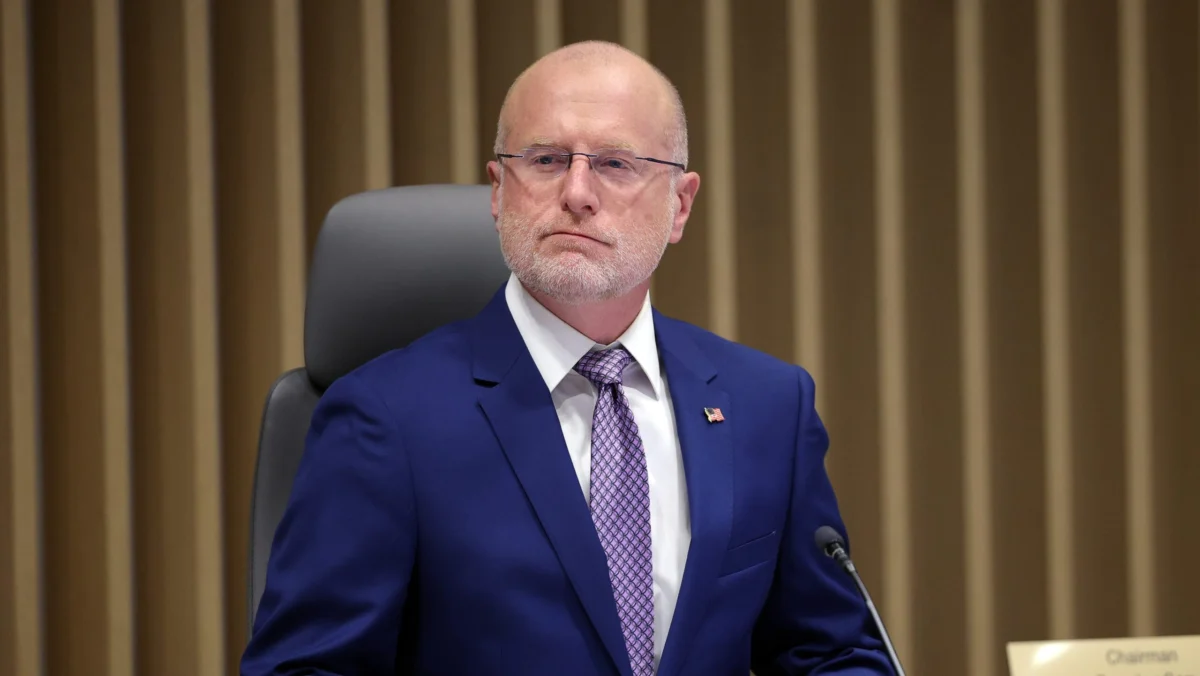
The order, issued by the commission under the leadership of Chairman Brendan Carr, requires Disney to file for license renewals for its owned-and-operated television stations by May 28, 2026. This acceleration of the regulatory calendar comes at a moment of heightened friction between the federal government and Disney-owned media outlets, particularly following public calls from President Donald Trump and First Lady Melania Trump for the termination of late-night host Jimmy Kimmel. Although the FCC’s formal letter does not explicitly mention Kimmel, the proximity of the regulatory action to the President’s grievances has led legal experts and free-speech advocates to question the underlying motivations of the review.
The Scope of the FCC’s Regulatory Action
The FCC’s authority is specifically tied to the broadcast licenses that allow local television stations to utilize the public airwaves. While Disney is a global conglomerate with vast holdings in streaming, cable, and theme parks, the FCC’s direct oversight in this matter is limited to the company’s eight local television stations. These include major market anchors such as WABC-TV in New York and KABC-TV in Los Angeles, which serve as critical hubs for local news, emergency broadcasting, and community programming.
Under the Communications Act of 1934, broadcast licenses are typically granted for eight-year terms. The current licenses for Disney’s ABC stations were not scheduled for expiration or renewal for another several years. By invoking its power to conduct an early review, the FCC is signaling a departure from standard administrative procedure. The commission’s letter states that it is investigating whether Disney’s ABC stations have violated the Communications Act or the agency’s internal rules, specifically focusing on prohibitions against "unlawful discrimination."
"The FCC has been investigating The Walt Disney Company, its American Broadcasting Company, and its subsidiaries for compliance with its obligations as a licensed broadcaster," the letter reads. "Specifically, the FCC has been investigating Disney’s ABC stations for possible violations… including the agency’s prohibition on unlawful discrimination."
Ongoing Investigations and the DEI Controversy
The move appears to be an escalation of two existing investigations into Disney and ABC. The first, opened last year, focuses on the company’s Diversity, Equity, and Inclusion (DEI) practices. Chairman Carr has been a vocal critic of corporate DEI initiatives, suggesting that such policies may conflict with non-discrimination laws and the "character qualifications" required of a federal licensee. Proponents of the investigation argue that if a broadcaster’s hiring or internal policies are found to be discriminatory, it could be deemed contrary to the public interest.
The second investigation involves the long-running talk show The View. Specifically, the FCC is looking into an appearance by Texas Senate hopeful James Talarico. The inquiry centers on the "equal opportunity rule," which mandates that broadcast stations provide equivalent airtime to opposing political candidates under certain conditions. While these types of investigations are not uncommon, using them as a justification to accelerate the entire license renewal process for a major network’s station group is a significant deviation from historical norms.
In a recent interview, Chairman Carr defended the possibility of such actions, stating that the commission has the right to review a broadcaster’s "public interest" standing at any time. "There’s lots of options. You have a license. The licenses come to you every so often. You can accelerate when a license comes to you and say, ‘Hey, we have significant concerns with the value of conducting your operations,’" Carr said.
A Chronology of Growing Friction
The relationship between the current administration and Disney has been marked by a series of escalating conflicts over the past several years. Understanding the current FCC move requires a look at the timeline of events that have led to this regulatory crossroads:
- 2023: The FCC officially opens an investigation into Disney’s corporate DEI practices, following complaints from conservative legal groups alleging that the policies constitute unlawful discrimination.
- Late 2023: ABC’s The View becomes the subject of a specific FCC inquiry regarding candidate appearances and the equal-time rule.
- Early 2024: President Trump begins a series of public attacks on Jimmy Kimmel, the host of Jimmy Kimmel Live!, citing his monologues as biased and calling for his removal from the air.
- April 2024: Following a high-profile exchange between the President and Kimmel, the FCC issues its letter to Disney, accelerating the license renewal deadline to May 2026.
- April 2024: Concurrent with the Disney order, the FCC also opens an early license review against Bridge News, LLC, suggesting a broader application of the "public interest" standard under Carr’s leadership.
Disney’s Response and Legal Defense
In response to the FCC’s order, a spokesperson for Disney emphasized the company’s long history of regulatory compliance. The company signaled that it is prepared to defend its licenses through the appropriate legal channels, citing both the Communications Act and the First Amendment.
"ABC and its stations have a long record of operating in full compliance with FCC rules and serving their local communities with trusted news, emergency information, and public-interest programming," the spokesperson stated. "We are confident that record demonstrates our continued qualifications as licensees… and are prepared to show that through the appropriate legal channels."
Legal analysts suggest that if the FCC moves to actually revoke or refuse to renew the licenses, the battle will likely move to the federal court system. Disney would almost certainly argue that the government is using its regulatory power to punish protected speech—a direct violation of the First Amendment. The "public interest" standard, while broad, has historically been interpreted by courts in a way that prevents the government from acting as a "national board of censors."
Internal Dissent and Industry Reaction
The decision to accelerate the review has not been unanimous within the FCC. Democratic Commissioner Anna Gomez issued a blistering statement, characterizing the move as a "political stunt" that lacks legal merit.
"This is unprecedented, unlawful, and going nowhere," Gomez said. "It is a political stunt and it won’t stick. Companies should challenge it head-on. The First Amendment is on their side."
Conversely, some legal organizations have praised the FCC’s assertiveness. Daniel Suhr, President of the Center for American Rights, argued that the action is firmly grounded in precedent. "For decades, the Commission and the courts have said that discriminatory employment practices are incompatible with the character qualifications of a commission licensee," Suhr said. "This renewal review is the right next step to bring transparency and accountability for Disney’s decisions."
Free speech advocacy groups, however, have expressed alarm. The Foundation for Individual Rights and Expression (FIRE) released a statement arguing that the timing of the move makes the DEI justifications appear to be a "fig leaf" for political retaliation. Similarly, Jameel Jaffer of the Knight First Amendment Institute at Columbia University warned that the move represents an attempt to "consolidate control over what Americans see and hear."
Broader Implications for the Media Landscape
The FCC’s move against Disney carries profound implications for the future of broadcast media in the United States. If the commission is successful in using DEI investigations or political grievances as a basis for license challenges, it could fundamentally alter the relationship between the government and the press.
1. Weaponization of the "Public Interest" Standard:
The "public interest" standard has always been the FCC’s most flexible tool. However, using it to target specific networks based on the content of their entertainment or news programming sets a precedent that could be used by future administrations of any political stripe to coerce media companies.
2. The Future of Corporate DEI:
By linking DEI practices to broadcast licensure, the FCC is opening a new front in the "culture wars." Other major broadcasters, including NBCUniversal, Paramount Global, and Fox Corporation, all maintain DEI programs. They will likely be watching the Disney case closely to see if their own licenses could be put at risk by their corporate policies.
3. Judicial Oversight of the FCC:
The Supreme Court has recently shown a willingness to curtail the power of federal agencies (the "Chevron deference" debate). This Disney case may provide a high-profile opportunity for the courts to further define and limit the FCC’s discretionary power over broadcasters.
4. Impact on Local Communities:
While the national debate focuses on Jimmy Kimmel and political bias, the practical result of a license revocation would be the disruption of local news and emergency services. The eight stations owned by ABC are primary sources of information for millions of people. Any prolonged legal battle or change in ownership would have direct consequences for local journalism in cities like New York, Los Angeles, and Chicago.
As the May 2026 deadline approaches, the legal and political maneuvering between the FCC and one of the world’s largest media entities is expected to intensify. With the First Amendment at the center of the dispute, the outcome of this review will likely define the limits of government oversight in the digital and broadcast age for decades to come.