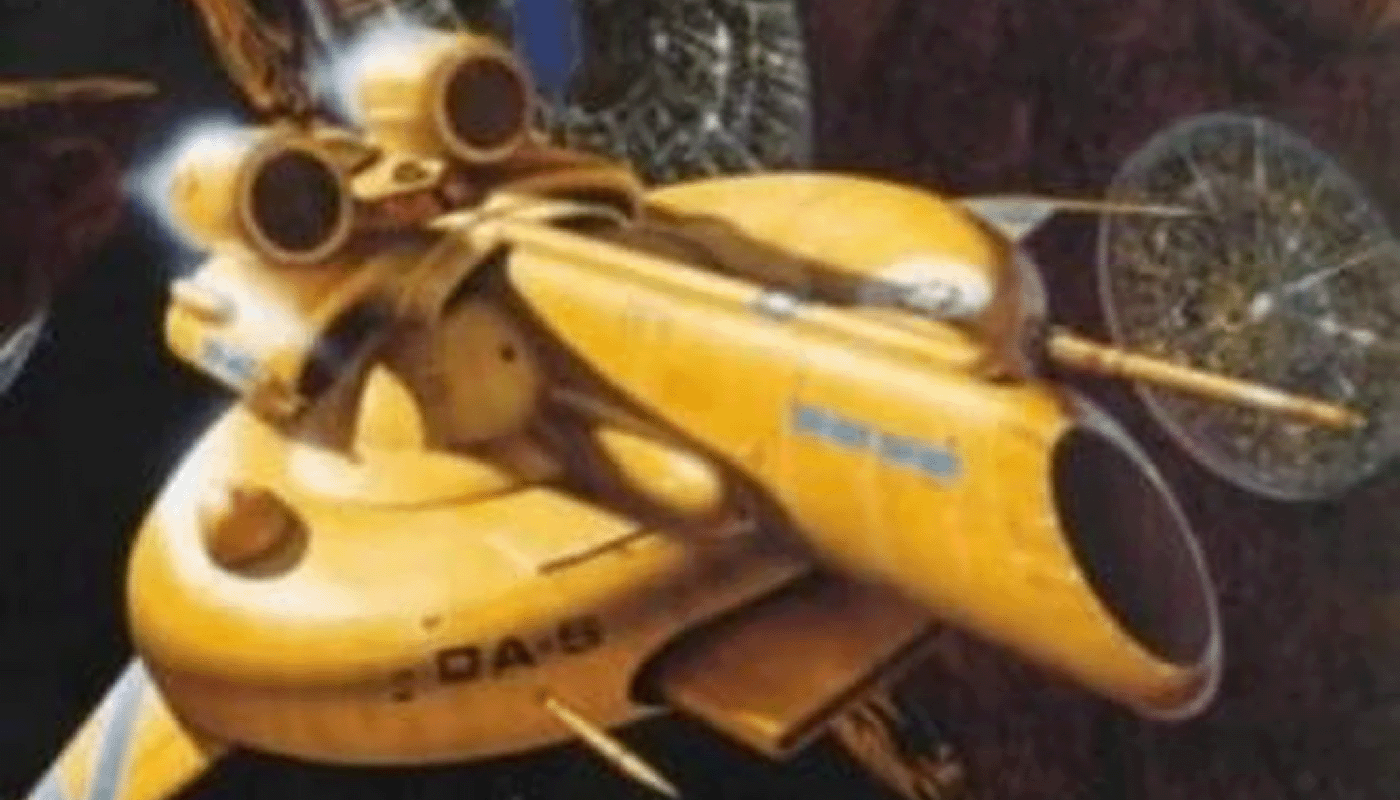
The meticulous craft of science fiction often grapples with the allure of boundless possibilities, particularly when it comes to interstellar travel. Authors aiming to depict vast, Solar System-spanning civilizations frequently encounter a significant hurdle: the practicalities of propulsion. While the concept of computationally straightforward "torchships"—vessels capable of sustained, high acceleration—promises swift journeys and grand galactic empires, a closer examination of the science reveals their unworkability or, at best, the logical consequences that could profoundly disrupt narrative cohesion. This article delves into how these very limitations, when embraced, can paradoxically become a strength, providing fertile ground for compelling plots and richly imagined settings within science fiction.
The Tyranny of the Launch Window
Consider the current state of human space exploration. Any terrestrial agency contemplating a crewed mission to Mars, for instance, must adhere to a strict celestial schedule dictated by orbital mechanics. This involves waiting for specific "launch windows"—optimal periods when a spacecraft, utilizing a Hohmann transfer orbit, can journey from Earth to Mars and arrive when the Red Planet is favorably positioned. These windows occur approximately every twenty-six months.
This temporal constraint has profound implications for long-duration space missions. Firstly, it necessitates that spacecraft be equipped to sustain human life for extended periods, often many months, without resupply. For a Mars mission, this means carrying all necessary provisions, life support systems, and contingency plans for the entire duration of the outbound journey, the stay on Mars, and the return trip. The elapsed time between these windows means that even if a mission experiences unforeseen issues or requires additional resources, immediate aid from Earth is impossible. Support can only be dispatched during the next available launch window, which, even then, would involve a considerable six-to-nine-month transit delay. For science fiction authors, these inherent logistical challenges—the extended isolation, the reliance on onboard resources, the psychological toll of prolonged confinement, and the critical importance of mission success due to the lack of immediate backup—offer a treasure trove of opportunities for character development and dramatic tension.
Gravity Assists: Turning Limitations into Advantages
Beyond the constraints of launch windows, the very limitations of modest propulsion systems can foster ingenuity and create unexpected plot drivers. Instead of relying on hypothetical super-engines, authors can explore how real-world physics, such as gravity assists, can be leveraged to make seemingly inaccessible destinations achievable. This concept effectively turns passive mass—planets and their gravitational pull—into a valuable resource.
Contrary to the romanticized notion of spacefarers actively avoiding the gravitational influence of celestial bodies, a more realistic approach suggests that spacers might actively seek them out. Both passive flybys, where a spacecraft slingshots around a planet to gain speed, and active burns, where engines are fired at opportune moments during a planetary encounter, can provide significant and cost-effective "delta-vee" (a measure of the change in velocity a spacecraft can achieve). This free or cheaper delta-vee makes journeys to destinations that would otherwise be prohibitively energy-intensive, accessible.
A prime example of this phenomenon is the journey to Mercury. The delta-vee required for a direct Earth-to-Mercury transfer orbit is substantial, exceeding 13 kilometers per second, a figure beyond the reach of many current rocket technologies for a single, efficient burn. The European Space Agency’s BepiColombo mission to Mercury serves as a real-world illustration of this principle. To reach its destination, BepiColombo employed a complex series of gravity assists. Over its seven-year journey, the spacecraft performed one flyby of Earth, two flybys of Venus, and an impressive six flybys of Mercury itself. Each gravitational encounter allowed the spacecraft to shed or gain velocity without expending significant amounts of propellant, demonstrating how patient, physics-driven trajectories can overcome seemingly insurmountable propulsion challenges.
Celestial Chokepoints and Trade Routes
The economic and political ramifications of limited, yet strategic, propulsion options extend to the very structure of interplanetary trade. Just as geographic features on Earth have historically dictated trade routes and created strategic chokepoints, planets and their orbital paths can serve a similar function in a science fiction setting.
Terrestrial trade provides a compelling analogy. Sea shipping, being remarkably cheap per ton-mile compared to land or air transport, has made naval shortcuts invaluable assets. Control over straits like the Suez or the Strait of Malacca, or even the ability to deny passage through them, has significant economic and geopolitical consequences. The dramatic disruption caused by the Ever Given container ship becoming stuck in the Suez Canal in 2021, blocking one of the world’s most vital maritime arteries, underscores this point. This accidental obstruction, which halted an estimated $9.6 billion in trade per day, offers a glimpse into the potential chaos that could arise from more deliberate blockades or the control of critical transit points. Historically, such strategic importance has led to conflicts and political maneuvering, as seen with the blockade of the Suez Canal in the early 1970s.
In a science fiction universe with realistic propulsion, planets could similarly function as natural chokepoints. Imagine the complications arising from encountering natural debris fields in orbit around planets, or the political and economic machinations surrounding the maintenance and regulation of these celestial thoroughfares. Questions would inevitably arise: Who is responsible for clearing this debris? Who pays for it? Should transit fees be levied on spacecraft passing through these strategically important orbital regions? And what bold schemes might shipowners devise to circumvent these fees or gain an advantage?
The Jupiter Gambit: A Gravitational Nexus of Power
The gravitational influence of gas giants like Jupiter presents a particularly rich area for exploration in science fiction. Jupiter’s immense mass makes it a dominant gravitational force in its region of the Solar System, offering significant opportunities for delta-vee manipulation.
Consider the delta-vee required to move payloads from Jupiter’s Trojan asteroids to Earth. While a direct journey might demand approximately 12 km/s, utilizing Jupiter’s gravity as a slingshot can reduce this requirement to a mere 3.5 km/s. This stark difference highlights the potential for control and leverage. A faction that could control access to Jupiter, or manipulate its gravitational influence, could effectively impose a significant "tax" on trade routes originating from the Jovian system. Denying access to Jupiter to, say, hypothetical Jovian asteroid dwellers, could impose an 8.5 km/s penalty on their transit to Earth, offering a powerful bargaining chip or a potent weapon in interplanetary politics.
Jupiter’s strategic importance is further amplified by its position bridging the inner and outer Solar System. Its immediate environment, teeming with moons, rings, and a complex magnetosphere, presents numerous navigational challenges. However, for those who understand and can effectively utilize these environmental factors, these impediments transform into valuable resources and strategic advantages. In any science fiction setting that features realistic propulsion and a system-wide civilization, Jupiter and its surrounding system would undoubtedly become a highly contested and valuable territory, ripe for political intrigue, economic competition, and military posturing.
The Narrative Power of Plausible Limitations
While the allure of near-instantaneous interstellar travel through advanced, hypothetical propulsion systems like torchships offers narrative convenience, it often sacrifices the very elements that make science fiction stories compelling. The equation S = ½at², which describes distance traveled under constant acceleration, is a powerful tool for creating swift, plot-advancing journeys. However, the scientific implausibility of such technologies, or the unexamined consequences of their use, can undermine the credibility of a narrative.
By contrast, embracing the constraints of realistic propulsion—the lengthy transit times, the reliance on launch windows, the utilization of gravity assists, and the strategic importance of celestial bodies—provides authors with a wealth of opportunities for plot development and world-building. These limitations force characters to confront real challenges, fostering resilience, ingenuity, and complex interpersonal dynamics. The extended journeys can lead to character introspection, the development of unique cultures adapted to long-duration spaceflight, and the exploration of the psychological impact of isolation. The strategic importance of planetary systems and orbital routes can drive political intrigue, economic conflicts, and the formation of alliances and rivalries.
In essence, the scientific realism of propulsion, rather than hindering creativity, acts as a catalyst for it. It grounds the fantastical elements of science fiction in a recognizable reality, making the challenges faced by characters more relatable and their triumphs more meaningful. The unworkability of the dream torchship, therefore, paradoxically paves the way for more robust, believable, and ultimately, more engaging science fiction narratives. The limitations become not barriers, but building blocks for richer worlds and more profound storytelling.