Decades after its explosive debut, Baz Luhrmann’s Moulin Rouge! continues to captivate audiences, a testament to its audacious vision and enduring impact on the musical genre. Released in 2001, this cinematic spectacle, set against the vibrant, tumultuous backdrop of Belle Époque Paris, remains a defining work in Luhrmann’s distinctive "Red Curtain trilogy," a style characterized by frenetic editing, hyper-stylized visuals, and a groundbreaking integration of contemporary pop music into period settings. The film’s narrative, a tragic yet passionate love story between Satine (Nicole Kidman), a dazzling courtesan and star of the famed Moulin Rouge cabaret, and Christian (Ewan McGregor), a penniless English poet, unfolds through a dizzying array of song-and-dance numbers that masterfully weave together medleys of iconic hit songs from across the decades.
Despite a polarizing reception from critics upon its initial release, Moulin Rouge! achieved remarkable commercial success, grossing over $179 million worldwide. Its critical acclaim culminated in a historic achievement in 2002: it became the first musical to secure a Best Picture nomination at the Academy Awards since Disney’s animated Beauty and the Beast in 1991, further solidifying its place in cinematic history. This article delves into the creation of this modern classic, exploring the cherished memories and behind-the-scenes insights from its cast and crew, and examining the reasons for its lasting appeal.
The Genesis of a Spectacle: From Studio 54 to Montmartre
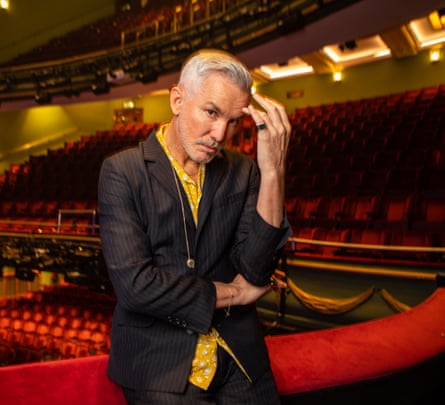
Director Baz Luhrmann, already recognized for his unique aesthetic in films like Strictly Ballroom (1992) and Romeo + Juliet (1996), sought to reignite the musical genre, which had been largely relegated to niche appeal in the late 20th century. His early conceptualization for Moulin Rouge! flirted with a different iconic setting. "In the 70s, when I was growing up, musicals were considered a joke," Luhrmann recalls. "I loved them… There was a time when I was going to set Moulin Rouge! in Studio 54. I guess Toulouse-Lautrec would have been Andy Warhol. But then I realised that would be too fashionable."

Ultimately, Luhrmann’s attention turned to the legendary Moulin Rouge in Montmartre, Paris, a venue synonymous with artistic rebellion, bohemian decadence, and the birth of modern cabaret. This choice provided a rich historical canvas for his signature maximalist style, allowing for an explosion of color, music, and emotion that would define the film. The decision to set the film in this specific Parisian landmark was a deliberate artistic choice, aiming to evoke the spirit of artistic freedom and passionate expression that characterized the era.
Casting the Bohemian Dream: A Symphony of Talent
The casting process for Moulin Rouge! was as ambitious and meticulous as the film itself. Luhrmann conducted extensive workshops in Sydney, Australia, involving rigorous singing, movement exercises, and table reads to identify the perfect ensemble. "The amount of young actors that came in, most of whom are now absolute icons…" Luhrmann muses. He specifically remembers Heath Ledger auditioning, describing him as "quite wonderful, just too young" for the role of Christian.
The search for Satine, the film’s magnetic courtesan, led Luhrmann to Nicole Kidman. Having seen her perform on Broadway, he was struck by her multifaceted talent. "I saw Nicole in a play on Broadway. I sent her some roses and said [in the message]: ‘She sings, she dances, she dies [referring to Satine].’ She came in and we workshopped. She owned the role. She worked so hard on her vocals and dancing." Kidman’s dedication to embodying the character was instrumental in shaping Satine’s iconic portrayal.
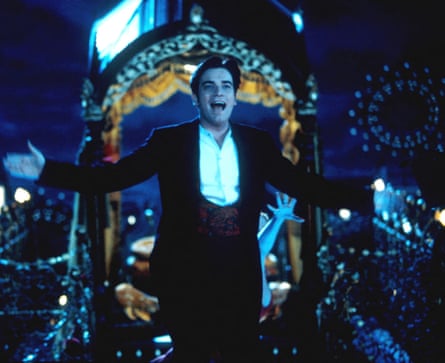
Ewan McGregor, who would ultimately portray Christian, had previously collaborated with Luhrmann on Romeo + Juliet. "I met Ewan in the workshop process on Romeo + Juliet. He was almost Mercutio, actually, and then I changed Mercutio [to be] an African American drag queen," Luhrmann explains. "The thing about Ewan was, right out of the gate, his vocal power. He was a real singer." McGregor’s vocal prowess proved crucial, as he performed all of Christian’s singing himself, a demanding feat that added authenticity to the character’s romantic declarations.
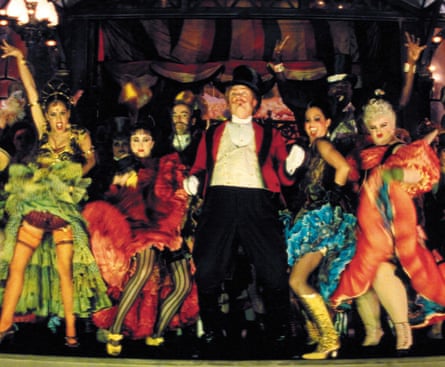
Jim Broadbent, cast as the flamboyant impresario Harold Zidler, initially expressed reservations about his singing abilities. "When Baz offered me the part, I said I wasn’t a singer," Broadbent recalls. "He said: ‘We can always add somebody else’s voice to the operatic numbers.’" However, Broadbent eventually embraced the challenge, and while some of his vocals were indeed enhanced, he delivered memorable performances, particularly in the "Like a Virgin" sequence.
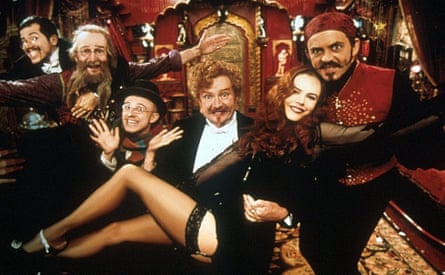
Supporting cast members also brought their unique talents to the production. Lara Mulcahy, who played Mémé Fromage, one of the Diamond Dogs, had previously worked with Luhrmann on Strictly Ballroom. Her audition, like many others, involved dance routines and singing. Jacek Koman, who portrayed the Unconscious Argentinean, described his initial meeting with Luhrmann as "quite informal," involving Luhrmann filming him as he "was prancing around."
The Crucible of Creation: Rehearsals and Early Challenges
The period leading up to filming was characterized by intense, collaborative rehearsals at Iona, a property owned by Luhrmann in Sydney. This immersive environment fostered a strong sense of camaraderie among the cast and crew. "It felt a bit like drama school," Koman reminisces. "We felt really supported and inspired. You could always pop in to watch someone else’s dance training or singing. We would meet for lunch together, dozens of us. Every Friday, we had show and tell – we watched dance routines and acting scenes evolve."
This collaborative spirit extended to the creative process, with Luhrmann encouraging input from all levels of the production. Composer Craig Armstrong noted, "Baz will ask anybody for their advice. Even the assistants making coffee. He’s very democratic."
However, the creative process was not without its personal challenges for Luhrmann. He revealed that his father, Leonard, passed away on the first day of shooting. Luhrmann delayed the production for ten days, a decision he had never made before, prioritizing personal matters over work. "The last thing Dad said to me, because he was dying from cancer, was just make sure you do your very best. So I went back with that attitude." The film is dedicated to his father.
On Set: A Whirlwind of Spectacle and Sacrifice
Filming commenced in November 1999 at Fox Studios in Sydney, with a substantial budget of $50 million, and continued until May 2000. The scale of the production was immense, requiring an extensive costume department that produced over 1,000 garments and employed up to 350 extras for key crowd scenes. Catherine Martin, Luhrmann’s wife and the film’s associate producer, production designer, and co-costume designer, highlighted the sheer volume of work involved.
The physical demands on the actors were considerable. Jim Broadbent, in his elaborate Zidler costume, often endured the discomfort of padding, a fake beard, and a wig. "I had a lot of padding, a fake beard and a wig put on every day. It was physically uncomfortable."
The commitment to Luhrmann’s vision of "more" was a constant theme on set. Lara Mulcahy recalled, "For our big main entrance, I remember Baz going: ‘No, more, I want more!’ He wanted big performances. I laugh now because I see some shots and my mouth is open wide, swallowing the camera like a tiger."
The "Lady Marmalade" Phenomenon and Early Critical Divisions
The soundtrack of Moulin Rouge! was a pivotal element of its success, featuring a bold reimagining of popular music. The lead single, a cover of "Lady Marmalade" by Christina Aguilera, Lil’ Kim, Mýa, and P!nk, became a global chart-topper, reaching number one in both the UK and the US. This success signaled the film’s ability to transcend traditional cinematic boundaries and penetrate popular culture.
However, the film’s avant-garde approach to musical storytelling and its visual extravagance were met with a polarized critical response at its premiere at the Cannes Film Festival in May 2001. While some critics lauded its innovation and energy, others found its style overwhelming and its narrative superficial. Luhrmann himself acknowledged this division: "We had a big dinner, and the first reviews were out. We got this one great review and the next review was just so scathing. It was very split in Cannes." Nicole Kidman’s pragmatic encouragement, "Listen, we know what we’ve made, soldier on," became a mantra for the cast and crew navigating the initial mixed reactions.
Behind the Numbers: Iconic Scenes and Unforeseen Hurdles
The creation of the film’s elaborate musical numbers presented unique challenges. The "Like a Virgin" scene, intended to showcase Satine’s allure to the Duke of Monroth, required a slippery glass floor. "I thought I would never get the scene, because the guys would come in – it was a glass floor – and they were just falling everywhere," Luhrmann recounted. "We put Coca-Cola all over the floor to make it sticky."
The dramatic "El Tango de Roxanne," a powerful mashup of The Police’s "Roxanne" and Mariano Mores’s "Tanguera," was a multi-day filming endeavor involving four camera crews. Jacek Koman, who performed the vocals, explained how his initial vocal experimentation led to the iconic rendition. "It was not a given that I would be singing. There were other plans, including a few famous vocalists. Just for a joke in one of the songs I used this sort of Mongolian throat singing. Marius De Vries, the music director, said: ‘Try singing Roxanne.’ So I roared: ‘Ro-o-oxanne.’ The rest is history."
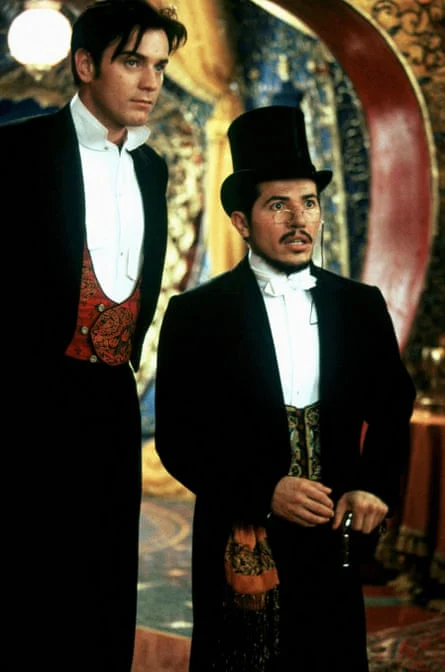
John Leguizamo’s portrayal of Henri de Toulouse-Lautrec, an artist with a shortened stature due to a childhood injury, involved custom prosthetics and careful choreography. "We made these prosthetic legs, and he could kneel in them. He learned to make it look as if he was walking with sticks," Luhrmann explained. Broadbent fondly referred to Leguizamo as "Johnny Legs," noting his resilience and positive attitude on set.
Nicole Kidman’s dedication to her role famously led to several injuries. For the iconic opening scene where Satine descends from the ceiling, Kidman insisted on performing the stunt herself, despite the inherent risks. "Nicole had this moment where she had to come down the stairs. She slipped. There’s a scene where she’s in a wheelchair because she’d really busted her ankle," Luhrmann stated. The physical toll was significant; Catherine Martin recalled how, during one instance of lacing Kidman into her restrictive corset, doctors warned that it could re-injure her already cracked rib, a testament to Kidman’s unwavering commitment.
A Legacy of Audacity: Enduring Impact and Critical Acclaim
Despite the initial critical divisions, Moulin Rouge!‘s artistic merit and cultural significance became undeniable. The film’s bold fusion of musical theatre traditions with contemporary music and Luhrmann’s signature visual style redefined what a modern musical could be. Its influence reverberated through the industry, paving the way for a resurgence of interest in the genre.
The film’s success was further validated by its eight Academy Award nominations in 2002, including a historic Best Picture nod. It ultimately won two Oscars: Best Art Direction for Catherine Martin and Brigitte Broch, and Best Costume Design for Catherine Martin and Angus Strathie. The Oscar win for costume and art direction underscored the film’s groundbreaking visual achievements.
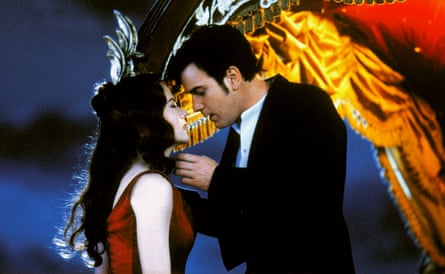
Beyond its accolades, Moulin Rouge! has cemented its status as a beloved classic. In 2016, it was ranked 53rd in the BBC’s poll of the 100 greatest films of the 21st century. The film’s enduring appeal is reflected in its successful adaptation for the stage in 2018, which continues to tour globally.
Reflecting on the film’s legacy, Luhrmann expressed a quiet satisfaction with its contribution to cinematic history. "Twenty-odd years ago, people said the musical will never be popular again. I like our little contribution in smashing the door open." The film’s impact continues to be felt by its cast and crew, who often hear from fans who remain deeply moved by its vibrant energy, imaginative storytelling, and unforgettable musical numbers. As Jim Broadbent aptly summarized, "It’s an exciting film, and the energy comes across on the screen – the imagination, the music, the performances and the whole design leave a lasting impression."