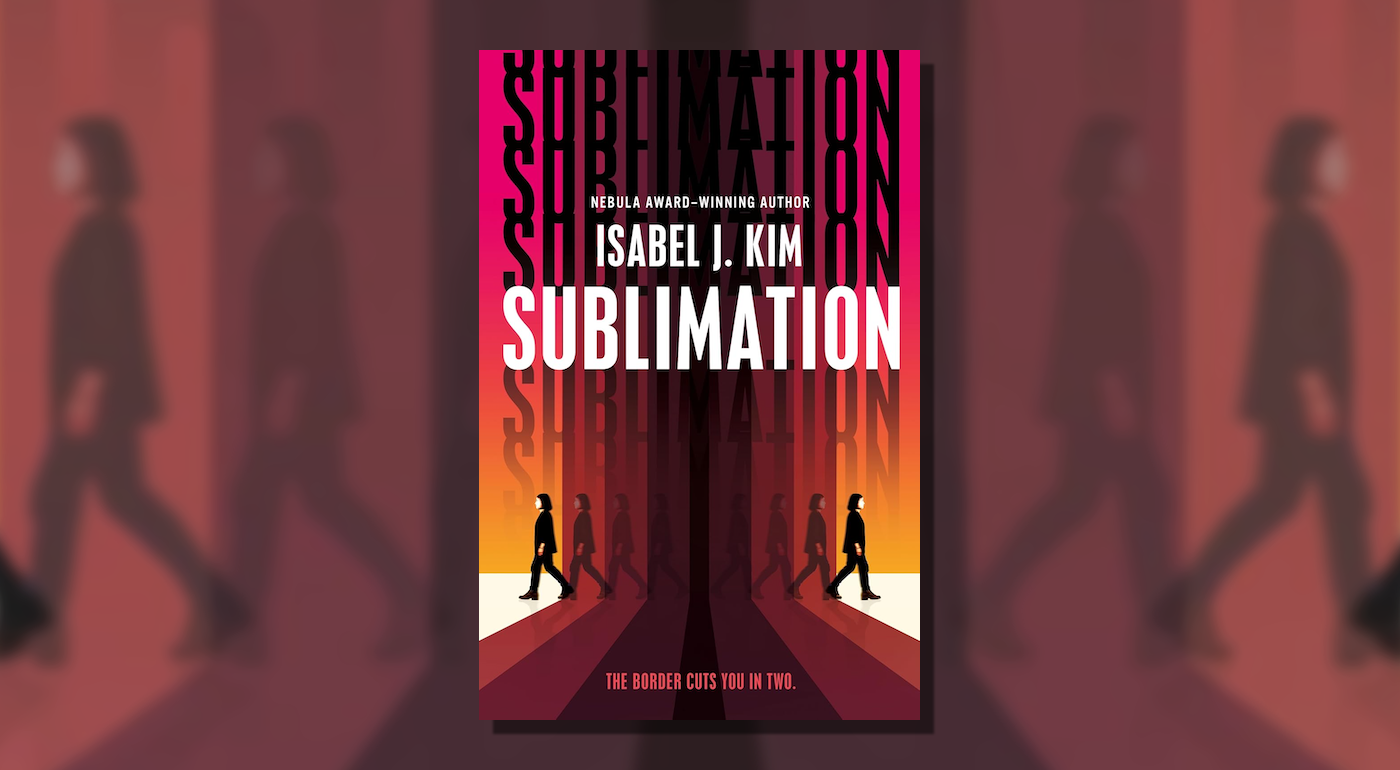
Tor Books is set to release Isabel J. Kim’s highly anticipated science fiction novel, Sublimation, on June 2nd, offering readers a profound exploration of sacrifice, identity, and the complex ramifications of choosing a different life. The novel delves into the concept of "instancing," a speculative phenomenon where individuals who immigrate leave behind a duplicate self, an "instance," in their homeland. This groundbreaking narrative challenges readers to consider the profound choices individuals make when presented with the opportunity to reclaim or redefine their existence.
The core premise of Sublimation hinges on the idea that when an individual immigrates, a part of them remains behind. This "instance" is a living echo, a parallel existence tethered to the original life. Some instances maintain a connection with their counterparts, striving for a synchronized existence with the hope of eventual reintegration. Others, like the novel’s protagonist, Soyoung Rose Kang, sever these ties entirely, forging a new identity in their adopted country. Rose, having left Korea at the age of ten, had no intention of returning until the death of her grandfather necessitated her presence. This unexpected summons forces her to confront her past and the existence of her Korean instance, who harbors a secret agenda: to claim Rose’s body and life.
The Phenomenon of Instancing: A Sociological and Psychological Exploration
Sublimation introduces the concept of "instancing" not merely as a science fiction trope, but as a deeply ingrained aspect of human migration and identity formation. According to the novel’s internal logic, instancing is a phenomenon that occurs when a person emigrates. This process results in the creation of a duplicate self, or "instance," who continues to live in the country of origin. The term "instantiate" refers to the act of becoming an instance, with the present tense being "instancing."
The narrative posits that the concept of parallel selves has deep historical and cultural roots, referencing ancient texts such as Hammurabi’s Code, which contains a translation suggesting that "the foreign brother-self will receive no inheritance." This historical allusion underscores the enduring human fascination with the idea of multiple selves and the societal implications thereof. Across various cultures, these parallel selves are known by diverse appellations, including "sibling-self," "changeling," and "the one-who-does-not-return."
The novel outlines two primary requirements for instancing: a settled culture and intentionality. Historically, instances have been predominantly observed in seafaring societies, where the ocean served as a natural demarcation between the familiar and the foreign. The second crucial element is intent. While sailors might depart their home ports for extended periods without instancing, a profound shift in their emotional landscape—a silent acknowledgment that their departure is permanent and their former lives have become foreign—can trigger the phenomenon. This internal recognition, a severance of emotional ties, is presented as the catalyst for the spontaneous manifestation of an instance.
A Tale of Two Lives: Soyoung and Rose
The novel offers dual perspectives, delving into the minds of both Soyoung and Rose, revealing the stark contrasts and unsettling similarities between their lives. The narrative begins with Soyoung, who finds herself in the bustling basement of the Shinsegae Department Store in Seoul. The sensory overload of the food hall—the vibrant displays, the hurried commuters, the lingering tourists—stands in stark contrast to her current emotional state. The familiar sights and smells of her childhood haunt her, but the reality falls short of her idealized memories. The taste of the food is different, beloved stalls are gone, and the magic of her youth has faded. This personal disappointment mirrors her internal turmoil as she grapples with the impending reintegration with her instance, Rose.
Soyoung’s internal monologue reveals a profound sense of guilt and grief over her grandfather’s death. She questions the emotional equivalence of reintegration to murder, a morbid thought that surfaces amidst her anxiety. Her contemplation of her grandfather’s passing is complex, tinged with a sense of relief alongside sadness. The foregone conclusion of his death, while anticipated, still leaves her feeling profoundly hollow. She reflects on their relationship, acknowledging the love they shared, even if it was overshadowed by the societal preference for her male cousin, Minsoo, the firstborn son. This bittersweet acknowledgment underscores the complex familial dynamics that permeate her life.
Her conversation with Yujin, a confidant who views his own instance as a potential savior, highlights the sensitive nature of instancing. Soyoung’s morbid musings, while perhaps a manifestation of her own fears, reveal a deeper anxiety about confronting her other self. She admits to feeling like a coward, needing Yujin’s presence for moral support, yet she also recognizes her own agency in initiating contact with Rose. The act of calling her instance, even at an inconvenient hour, demonstrates a level of resolve that belies her self-proclaimed cowardice.
The initial phone call between Soyoung and Rose is fraught with a palpable sense of otherness. Rose, awakened by the call, responds with a sleep-laden voice, and is surprised by her Korean instance’s American accent. The stark news of their grandfather’s death is delivered with an emotional detachment that belies the gravity of the situation. Soyoung’s explanation of her grandfather’s dying wish—to see her—and her subsequent decision to return to Korea, even after a decade of silence, is presented as a final, perhaps posthumous, gift from her grandfather. The physical manifestation of this connection is symbolized by the "MERGEBREAK" cuff on Soyoung’s wrist, a gift from Yujin, with a matching cuff intended for Rose.
Rose’s Perspective: A Stranger in a Familiar Land
Conversely, Rose’s narrative begins with her arrival in Seoul. The flight was turbulent, and sleep eluded her, leaving her wired and strangely captivated by the organized chaos of the Shinsegae Department Store’s food hall. This environment, so alien to her New York existence, sparks a childlike wonder, a desire to revisit the past and indulge in simple pleasures like ice cream. However, she is acutely aware that confronting her instance will shatter this fleeting sense of normalcy and force her to confront the somber reality of her grandfather’s death.
Rose’s grief is described as abstract, a hollow ache for something she had long assumed was lost. Her instance’s late-night call dredged up a buried history, a past she had meticulously compartmentalized. The initial exchange is marked by a linguistic duality: Rose speaks in English, her instance in Korean. The surprise at her instance’s American accent reveals the extent of Rose’s detachment from her Korean self. The news of her grandfather’s death, delivered by her own voice, is a shock that causes her to drop the phone.
Her memories of her grandfather are sparse, limited to polite exchanges on birthdays and brief inquiries about her life. She recalls asking about "other Soyoung," a question met with dismissive reassurances from her grandfather. This silence surrounding her Korean counterpart fueled Rose’s perception of her instance’s existence as anathema to her own. The casual use of informal Korean by her instance, devoid of polite suffixes, further emphasizes the chasm between them. Rose interprets her instance’s silence on her own feelings about their grandfather’s death as a reflection of her own perceived emotional distance.
Rose’s decision to return to Seoul is driven by a sense of obligation, a feeling that she owes her grandfather something, perhaps more than her presence at his funeral. She acknowledges the presence of her instance, her mother’s instance, and other family members who remained in Korea, framing herself and her mother as the "only two people in the family to ever conclusively instance." This suggests a deliberate choice to sever ties, a form of self-preservation in the face of familial expectations.
Thematic Exploration: Identity, Sacrifice, and the Nature of Self
Sublimation intricately explores the theme of identity, questioning what constitutes the "true" self when faced with bifurcated existence. The novel posits that the distance between instances is not inherent but manufactured, a consequence of deliberate choices and societal structures. Rose and her instance, along with their respective mothers, have carved out distinct spheres of existence: Korea for one, America for the other. This division, while seemingly fair, is fraught with the emotional weight of missed connections and unlived experiences.
The narrative also delves into the concept of sacrifice. What does one sacrifice for a different life? For Rose, it was the tangible elements of her Korean heritage—the sensory experiences, the familial bonds, the cultural nuances. For Soyoung, it is the life she has built in America, the identity she has forged as Rose. The novel questions whether these sacrifices are truly volitional or the inevitable consequences of broader societal forces and familial estrimes.
The story of Clarissa, Rose’s friend, serves as a parallel narrative, illustrating the complexities of reintegration. Clarissa, who instanced and moved to Germany for work, contemplates returning to her original self. Her conversation with Rose highlights the logistical and emotional hurdles involved in merging two distinct lives. The casualness with which Clarissa discusses reintegration, contrasted with the profound implications of such a decision, underscores the diverse ways individuals navigate their instanced existences.
Analysis of Implications: Societal and Personal Ramifications
The concept of instancing, as presented in Sublimation, carries significant implications for our understanding of immigration, identity, and the legal and social frameworks that govern human lives. The novel suggests that the administrative state plays a crucial role in logging and managing the outcomes of these bifurcated existences. In America, instances are considered full individuals, a stance rooted in the nation’s founding principles. However, the decision of an instance to remain in a new country introduces complex legal and ethical questions that transcend individual choice, touching upon the very definition of personhood and belonging.
The folktale of the sailor and his instance, interwoven throughout the narrative, offers a cautionary tale about the destructive potential of resentment and the primal urge for reintegration. The sailor’s return to find his instance living his life with his wife culminates in a violent act of self-destruction, a merging of selves born from profound anger and a sense of stolen time. This mythologizes the core conflict of the novel: the inherent tension between two parallel lives and the desperate desire to reclaim what has been lost. The folktale’s message—that intention is secondary to physical action in the pursuit of homecoming—serves as a potent thematic undercurrent, suggesting that the act of physical proximity and connection can override abstract desires.
The concluding encounter between Soyoung and Rose in the Shinsegae Department Store’s basement marks a pivotal moment. The initial awkwardness gives way to a tentative connection, a shared laugh that signifies a release from the years of manufactured distance. Rose’s surprise at her instance’s preference for a black Americano, a stark contrast to her own sweet coffee habits, offers a subtle yet profound insight into the divergent paths their lives have taken. This small detail underscores the fundamental differences forged by their separate experiences, while simultaneously hinting at the possibility of finding common ground.
Sublimation promises to be a thought-provoking and emotionally resonant novel, prompting readers to contemplate the sacrifices they might make for a different life and the enduring complexities of identity in an increasingly globalized and interconnected world. Isabel J. Kim’s exploration of instancing offers a unique lens through which to examine the human condition, the nature of self, and the profound consequences of the choices that define us.