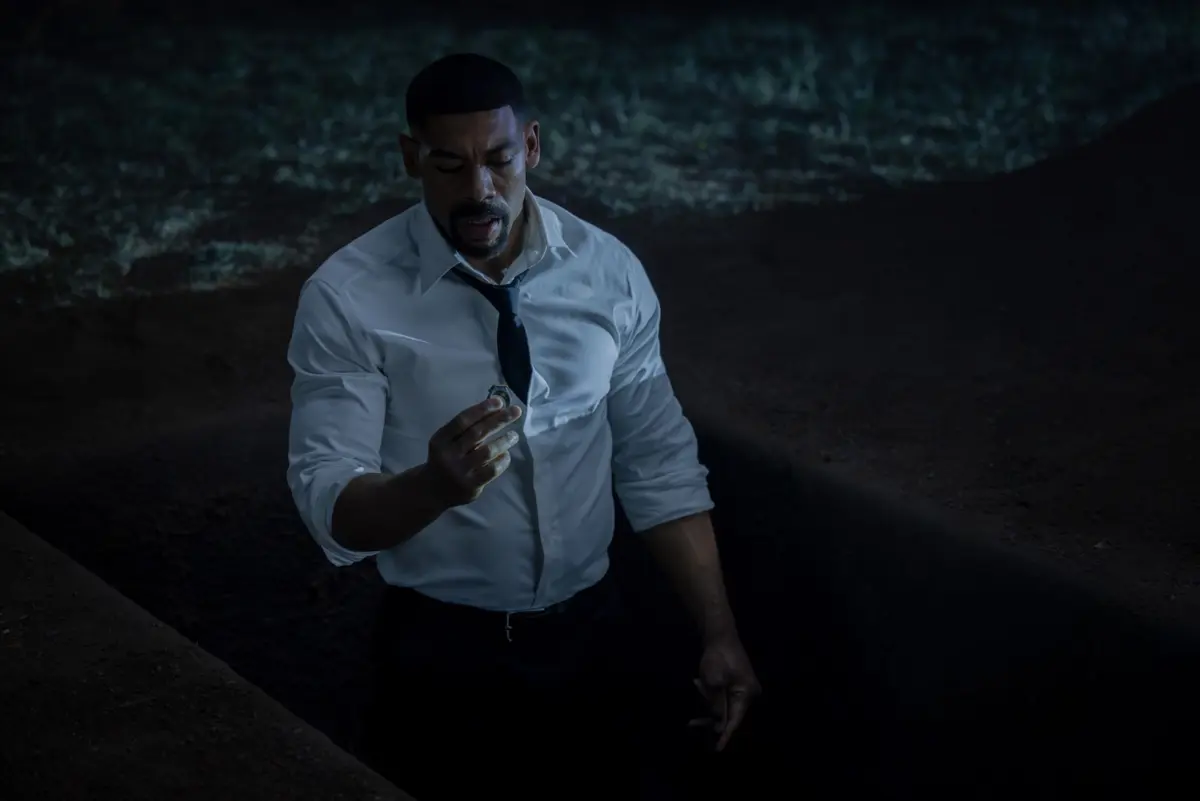
The conclusion of HBO’s critically acclaimed superhero drama Lanterns marked a significant turning point in modern comic book adaptations, fundamentally challenging decades of established lore for the DC Universe. During the dramatic season one finale, actor Aaron Pierre, portraying the stoic and complex Marine-turned-hero John Stewart, delivered a heavily modified iteration of the iconic Green Lantern oath while charging his power ring. Eschewing the foundational requirement that Green Lanterns must be entirely devoid of fear, Stewart’s altered recitation embraced human vulnerability, explicitly acknowledging apprehension as a tactical and emotional reality rather than a liability.
For the production team, the network, and the creative minds behind the adaptation, this thematic shift was not merely a superficial writing choice, but a calculated character evolution designed to modernize a beloved hero for contemporary audiences. In the wake of the finale, Pierre elaborated on this pivotal creative direction during a post-finale press conference, framing the character’s relationship with fear not as a fatal flaw, but as the cornerstone of his heroism. According to the actor, Stewart’s true superpower lies in his capacity to recognize internal terror, confront it directly, and ultimately push past it to achieve mission success.
This profound philosophical divergence from traditional Green Lantern mythos has sent ripples through the fanbase, prompting widespread discussion across entertainment platforms and critical essay spaces. By redefining the very mechanism that powers the most potent weapon in the universe, the creators of Lanterns have successfully subverted expectations, trading traditional invulnerability for a deeply resonant, humanistic portrayal of psychological endurance.
Main Facts and Narrative Turning Point
The climax of the eight-episode first season of Lanterns resolved numerous narrative threads while establishing a bold new paradigm for the Corps. Central to this resolution was John Stewart’s internal reckoning regarding his worthiness to wield the ring. In the closing moments of the finale, as cosmic stakes reached their zenith, Stewart refused to recite the standardized words that have defined the Green Lantern Corps since its inception in the silver age of comic books. Instead, his personalized oath anchored the power of the ring in self-awareness and the mastery of dread.
Industry analysts and television critics have noted that this deviation represents the most radical departure from source material in recent DC television history. For generations, the core mandate of the Green Lantern Corps has centered on the psychological eradication of fear. Characters like Hal Jordan and Kyle Rayner were historically chosen because of their innate, sometimes reckless, ability to stare down danger without flinching. Stewart’s iteration, however, repositions the ring not as a reward for the absence of emotion, but as an amplifier for emotional maturity and tactical resilience.
Pierre’s portrayal has received widespread acclaim for grounding a cosmic, science-fiction narrative in gritty, emotional realism. As a former United States Marine, Stewart’s background in the series heavily informs his approach to combat and leadership. Rather than operating under the delusion that danger does not exist, the television incarnation of Stewart approaches conflict with calculated caution, viewing fear as a vital biological and psychological feedback mechanism that must be managed rather than ignored.
Character Evolution and Chronological Context
To fully understand the weight of Stewart’s season one finale oath, critics must examine the multi-year trajectory of the character as established within the narrative timeline of the series. The chronology of John Stewart’s journey in the HBO adaptation is defined by a deliberate, patient reluctance—a stark contrast to heroes who eagerly accept cosmic responsibility upon first contact.
According to narrative exposition and Pierre’s post-release commentary, Stewart was first approached by the ring in the year 2016. At that juncture in the timeline, a younger Stewart made the mature, albeit painful, decision to reject the extraterrestrial artifact. He recognized that his psychological framework, professional standing, and emotional readiness were simply not aligned with the immense burden of policing the cosmos. This rejection was not rooted in cowardice, but in a profound sense of responsibility; Stewart understood that an unpolished operative wielding a ring capable of planetary destruction would pose an unacceptable risk to innocent lives.
Ten years later, in the contemporary timeline of the series, Stewart is revisited by the mantle. The intervening decade has seen him weather personal and professional trials, hardening his resolve while deepening his self-awareness. When he finally dons the ring, it is not because he has miraculously lost his capacity to feel fear, but because he has learned how to process and leverage it. Pierre emphasized that Stewart “leans into” his self-awareness rather than deflecting criticism or masking his insecurities behind an impenetrable wall of bravado. This developmental arc transforms Stewart from a standard-issue sci-fi action hero into a complex psychological study of trauma, duty, and redemption.
Supporting Data and Production Background
The production of Lanterns represents a major financial and creative investment for HBO, serving as a cornerstone for the network’s broader strategy to revitalize high-end comic book adaptations. With a reported multi-million-dollar budget per episode, the series required meticulous world-building to bridge the gap between terrestrial military drama and sweeping cosmic opera.
Audience metrics and streaming data released following the drop of the season finale indicate that Lanterns has performed exceptionally well for the platform, consistently ranking among the top-streamed original series across major domestic and international markets. The eight-episode run averaged substantial week-over-week viewership growth, driven largely by critical praise for Aaron Pierre’s performance and the series’ willingness to tackle mature, psychological themes uncommon in traditional superhero television.
Behind the scenes, the decision to alter the Green Lantern oath was subjected to rigorous debate among the series’ showrunners, writers, and DC Studios executives. Sources close to the production indicate that the adaptation sought to distance itself from past cinematic iterations that struggled to connect with audiences on an emotional level. By anchoring the mythology in Stewart’s Marine background and psychological realism, the creative team aimed to construct a narrative framework capable of sustaining a multi-season television arc.
Official Responses and Critical Analysis
Reaction from the broader entertainment industry has been overwhelmingly positive, with trade publications and fan communities alike praising the narrative bravery required to rewrite a sacred text of DC lore. Comic book purists initially expressed apprehension regarding any modification to the legendary oath—“In brightest day, in blackest night…”—yet the narrative justification provided in the finale effectively converted skeptics.
Entertainment law and media analysts point out that altering foundational intellectual property elements often carries commercial risk, yet in the case of Lanterns, the risk paid dividends in critical engagement. Cultural commentators have noted that Stewart’s reimagined oath serves as a powerful metaphor for modern mental health awareness, actively destigmatizing anxiety and fear for a demographic of viewers that frequently looks to media for validation.
Furthermore, industry insiders suggest that Pierre’s nuanced performance has elevated his status as a premier leading man in contemporary prestige television. By treating genre material with the dramatic gravity typically reserved for historical biographies or psychological thrillers, the actor and the production team have established a new benchmark for how comic book characters can be translated to the small screen.
Broader Implications for the DC Universe
The structural and philosophical changes introduced in the final moments of Lanterns season one carry profound implications for the future of the interconnected DC television and film landscape. As studios increasingly look for ways to distinguish their properties in a saturated marketplace, the willingness to deconstruct and rebuild classic tropes provides a clear template for success.
By establishing that the Green Lantern ring responds to the mastery of fear rather than its absolute absence, the series opens the door for complex future storylines involving the broader emotional spectrum. The narrative groundwork laid by Stewart’s altered oath suggests that subsequent seasons could explore inter-corps dynamics—such as the Yellow Lantern Corps, fueled by fear—with unprecedented psychological depth.
As all eight episodes of the inaugural season continue to stream on HBO, the cultural footprint of John Stewart’s journey from hesitant Marine to self-aware protector is firmly cemented. The series has demonstrated that modern superheroes resonate most deeply not when they are portrayed as infallible gods, but when they possess the courage to acknowledge their vulnerabilities and rise above them anyway.