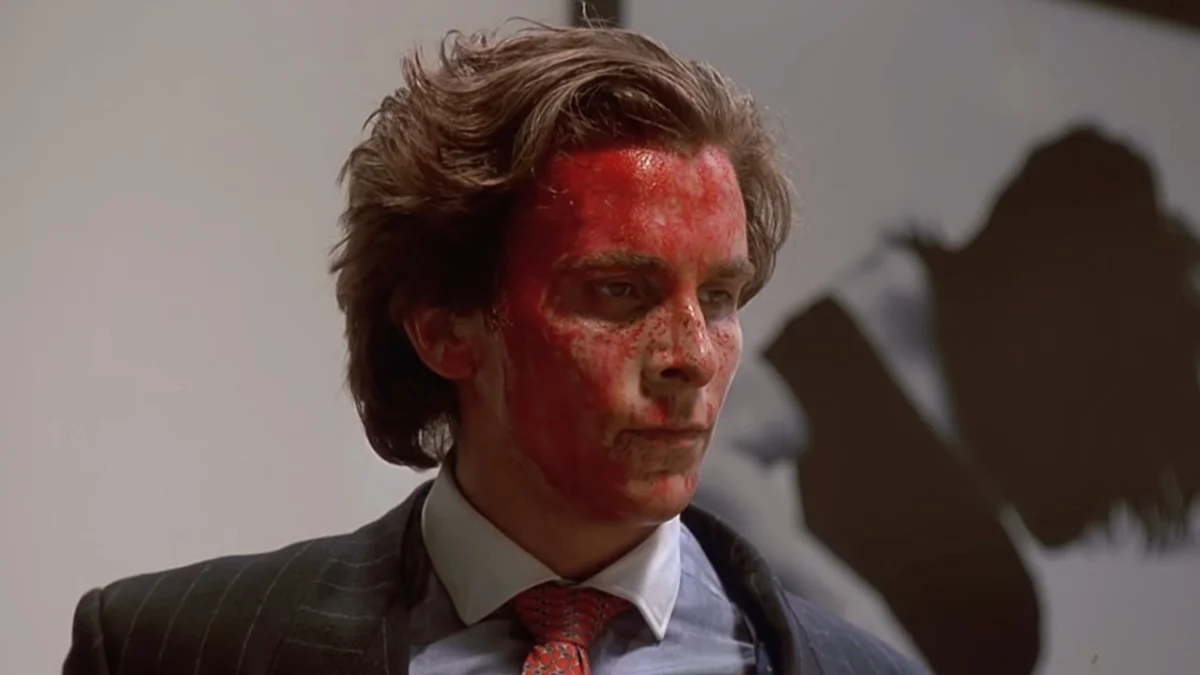
The specter of a remake for the cult classic American Psycho has been a persistent topic of discussion within cinematic circles, particularly since the acclaimed director Luca Guadagnino, known for his sensitive explorations in films like Call Me By Your Name and the more recent horror-tinged Bones and All, has expressed interest in the project. While Guadagnino’s foray into genre filmmaking with his Suspiria remake in 2018 and his adaptation of Camille DeAngelis’s novel has garnered significant attention and critical acclaim, the casting for the film’s central, psychopathic figure, Patrick Bateman, remains the most contentious point of speculation. In an exclusive interview, Mary Harron, the original director who helmed the chilling 2000 adaptation, firmly stated her unwavering conviction about the definitive portrayal of the character, unequivocally endorsing Christian Bale for the role.
Harron’s comments came during an interview with Dread Central concerning the theatrical re-release of her 1996 film, I Shot Andy Warhol, which has undergone restoration by Janus Films. The conversation naturally turned to her seminal work on American Psycho, and when pressed about the possibility of a remake and who she might envision stepping into Bateman’s impeccably tailored shoes in a contemporary context, Harron was resolute. "Christian Bale is so firmly set in my mind, I can’t imagine anyone else doing it," Harron declared. "Once I do casting, I can’t imagine anyone else in the main role – like I can’t imagine anyone else but Lili Taylor [in I Shot Andy Warhol]." She elaborated on this phenomenon of definitive casting, stating, "When I’ve done it, it’s like that’s it; that’s the person. They’re just fixed for me."
This strong sentiment effectively dismisses the names that have been circulating in fan theories and speculative articles, including prominent actors such as Jacob Elordi and Austin Butler, both of whom have demonstrated a capacity for inhabiting complex and morally ambiguous characters. Harron’s perspective, rooted in her intimate creative process and her deep connection to the characters she brings to life, suggests that for her, the role of Patrick Bateman is inextricably linked to Christian Bale’s groundbreaking performance.
The Enduring Legacy of Harron’s American Psycho
Released in 2000, Mary Harron’s American Psycho was a bold and darkly satirical adaptation of Bret Easton Ellis’s controversial 1991 novel. The film plunges viewers into the opulent yet hollow world of 1980s Manhattan, focusing on Patrick Bateman, a wealthy investment banker who, by night, descends into a chilling spree of violence and torture. Christian Bale’s portrayal of Bateman was a revelation, a performance that masterfully navigated the character’s superficial charm, his obsessive-compulsive tendencies, and his monstrous depravity. Bale captured the essence of a man so consumed by material possessions and social status that he views other human beings as disposable commodities, his internal monologues revealing a terrifying disconnect from reality and empathy.
The film’s critical reception was initially mixed, with some critics struggling with its graphic violence and satirical intent. However, over time, American Psycho has achieved cult status, lauded for its incisive social commentary, its distinctive visual style, and, most importantly, Bale’s iconic performance. The film’s exploration of yuppie culture, consumerism, and the performative nature of identity resonated deeply, cementing its place as a significant work of late 20th-century cinema. The ambiguity surrounding Bateman’s actions – whether his confessions are literal or a product of his fractured psyche – has fueled endless debate and analysis, further contributing to the film’s enduring appeal.
The Allure of a American Psycho Remake
The prospect of a remake, while potentially exciting for some, inevitably invites comparisons to the original and raises questions about what a new interpretation could offer. Luca Guadagnino’s reputation for artistic vision and his recent success in the horror genre make him a logical choice for such a project. His ability to imbue his films with a distinct atmosphere and explore the complexities of human desire and transgression suggests he could bring a unique sensibility to the material.
![‘American Psycho’ Director Mary Harron ‘Can’t Imagine Anyone Else’ as Patrick Bateman [Exclusive]](https://www.dreadcentral.com/wp-content/uploads/2026/06/yXESa2FwKKm74N5mwiBiEZ.jpg)
However, the challenge of recasting Patrick Bateman is immense. The character is not merely a villain; he is a product of a specific cultural moment, and his appeal lies in the chilling juxtaposition of his outward perfection and his inner monstrosity. The original novel is notorious for its extreme violence and disturbing psychological portrait. Harron’s film managed to translate this darkness onto the screen with a darkly comedic edge that both titillated and repelled audiences, largely due to Bale’s commitment to the role. His ability to embody Bateman’s meticulously crafted facade, complete with his monologues about Huey Lewis and the News and his elaborate skincare routine, while simultaneously hinting at the unhinged killer beneath, set an incredibly high bar.
Harron’s Casting Philosophy: An Unshakeable Vision
Mary Harron’s statement about her casting process highlights a director’s deep-seated connection to the actors and characters that define her work. Her analogy to Lili Taylor’s performance in I Shot Andy Warhol underscores the idea that once she has envisioned an actor in a role, that casting becomes almost immutable in her creative mind. This suggests a process of intense collaboration and discovery during pre-production, where the director and actor work together to excavate the character’s essence. For Harron, the casting isn’t just about finding a suitable actor; it’s about finding the specific individual who can embody the multifaceted nature of the character in a way that feels authentic and definitive.
This perspective can be seen as a testament to the power of inspired casting. When a director and actor achieve a profound synergy, the resulting performance can become so iconic that it eclipses all future interpretations. Christian Bale’s Patrick Bateman is precisely such a performance. His physical transformation, his vocal inflections, and his sheer intensity created a character that is instantly recognizable and profoundly unsettling. The meticulous attention to detail in his performance, from the way he meticulously arranged his business cards to his chillingly detached delivery of violent confessions, has become inseparable from the character itself.
The Implications for a Potential Remake
Harron’s firm stance on Christian Bale’s definitive portrayal of Patrick Bateman has significant implications for any future American Psycho remake. While Guadagnino may indeed be interested in the project, the casting of Bateman will undoubtedly be a focal point of intense scrutiny. If Harron’s sentiment is widely shared among those who deeply admire the original film, it could present a challenge for any new actor attempting to inhabit the role.
The success of a remake often hinges on its ability to offer a fresh perspective or a new understanding of the source material. For American Psycho, this would likely mean either exploring aspects of the novel that were less emphasized in the 2000 film or recontextualizing Bateman’s character within a different societal framework. However, the very nature of the character’s iconic status, largely cemented by Bale, makes a direct reimagining a perilous endeavor.
The debate over who should play Patrick Bateman also touches upon broader themes in filmmaking and adaptation. It highlights the subjective nature of artistic interpretation and the indelible impact that certain performances can have on cultural consciousness. While directors have the creative freedom to reimagine beloved works, they also contend with the legacy of previous interpretations. In the case of American Psycho, that legacy is inextricably linked to Christian Bale.
As discussions about a potential remake continue to evolve, Mary Harron’s unwavering endorsement of Christian Bale serves as a powerful reminder of the profound impact that a singular performance can have. Her words suggest that for many, the chilling, satirical, and deeply disturbing portrayal of Patrick Bateman is a role that has already been cast, and cast perfectly, by Christian Bale. This conviction, born from her direct experience as the film’s architect, casts a long shadow over any future attempts to bring the American psycho back to the screen. The enduring power of Bale’s performance, as affirmed by Harron, means that any new iteration will face the formidable challenge of not only living up to the original’s critical acclaim but also of transcending the ghost of a performance that has become synonymous with the character himself.