Apple TV+ has ignited the digital ether with the release of its first official teaser trailer for its forthcoming adaptation of William Gibson’s seminal 1984 cyberpunk novel, Neuromancer. The brief, enigmatic preview offers a potent glimpse into the world that redefined science fiction literature and laid the foundational blueprints for the cyberpunk genre, a vision that has profoundly influenced countless subsequent works in literature, film, and video games.
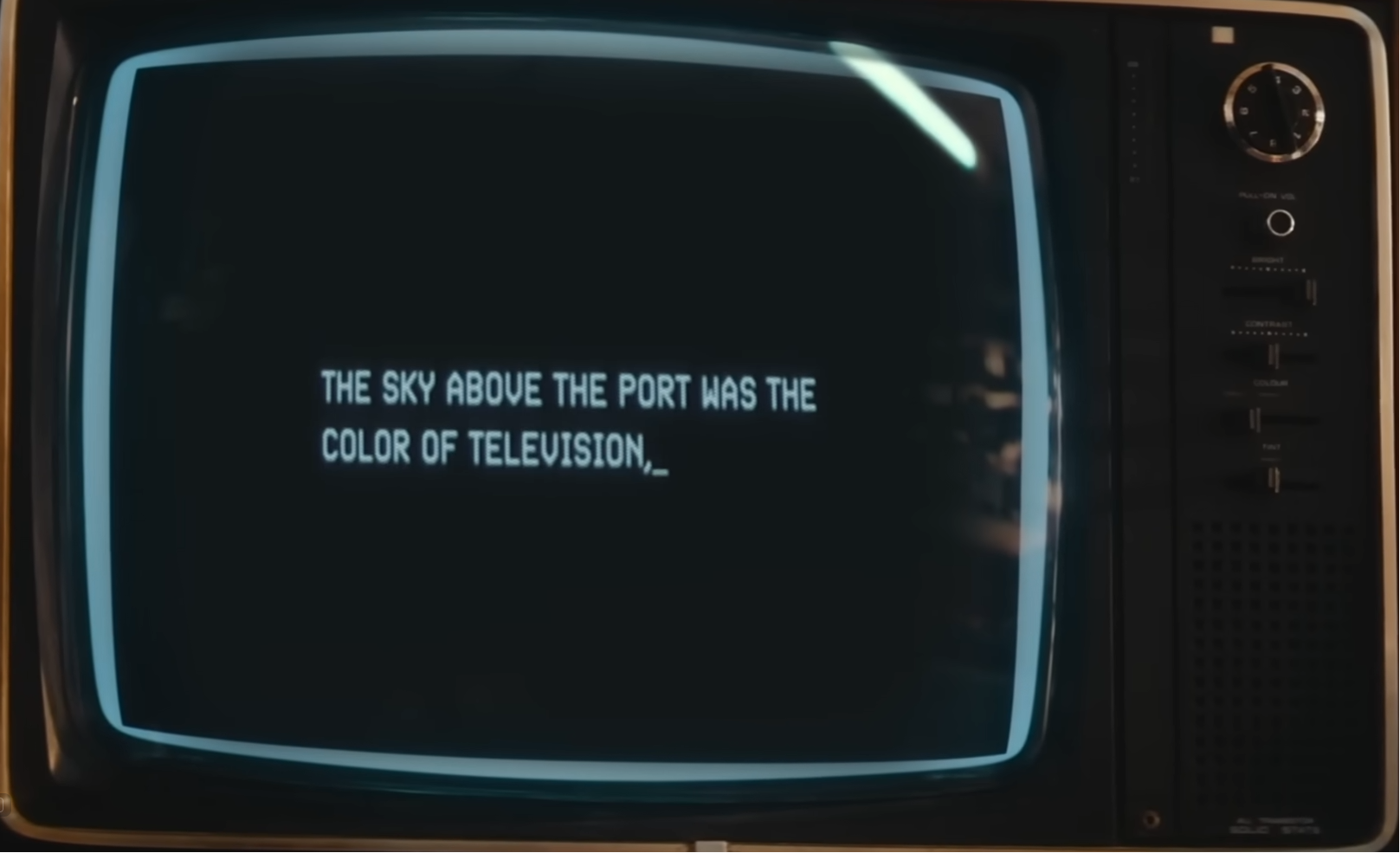
The teaser, true to its designation, provides a tantalizing yet sparse introduction to the series. It opens with the iconic, melancholic line from the novel: “The sky above the port was the color of television, tuned to a dead channel.” This instantly recognizable phrase, etched into the minds of legions of Gibson’s readers, flickers across a retro-styled monitor before transitioning to a brief, indistinct shot of an interior setting, shrouded in visual ambiguity. The accompanying descriptive text from Apple TV+ further fuels anticipation, stating, “42 years ago, William Gibson introduced the world to Neuromancer. Now, the next chapter is loading.” This suggestive phrasing has immediately sparked speculation among fans and industry observers about the potential scope of the adaptation, hinting at a narrative that might extend beyond the confines of the original novel.
A Legacy of Innovation: The Enduring Impact of Neuromancer
Published in 1984, William Gibson’s Neuromancer was a watershed moment in speculative fiction. It introduced readers to a gritty, neon-drenched future characterized by advanced artificial intelligence, global corporate dominance, pervasive cybernetics, and the immersive, simulated reality of cyberspace. The novel’s distinctive blend of high-tech low-life, its exploration of consciousness and identity in a digitally saturated world, and its pioneering use of language to depict virtual environments were revolutionary. Gibson coined terms like "cyberspace" and "the matrix," which have since become integral to our understanding of digital culture and the internet. The novel’s influence is so profound that it is often credited with shaping the very aesthetic and thematic landscape of modern cyberpunk, inspiring a generation of creators. Its impact can be traced in films like Blade Runner (which predated Neuromancer but shared thematic resonance), The Matrix trilogy, and Ghost in the Shell, as well as numerous video games, from the Deus Ex series to Cyberpunk 2077.
The Teaser’s Cryptic Clues and Narrative Ambitions
The phrase "the next chapter" in Apple TV+’s teaser is particularly intriguing. While the series’ official description – "A hacker and an assassin are thrust into a web of high-stakes crime as they take aim at a corporate dynasty" – aligns closely with the core plot of the original novel, the suggestion of a "next chapter" could imply an expansion of the narrative. This might involve delving deeper into the established universe, exploring the fates of characters beyond the conclusion of the first book, or even integrating elements from the subsequent novels in Gibson’s Sprawl trilogy: Count Zero (1986) and Mona Lisa Overdrive (1988). The possibility of adapting the entire trilogy, a feat that has long been considered a significant challenge for filmmakers, is now a tantalizing prospect for fans. However, no official confirmation regarding the adaptation of the full trilogy has been made at this time.
Beyond the narrative hints, the teaser also offers a visual confirmation of the show’s commitment to the novel’s distinct aesthetic. The inclusion of "rough, retro tech" suggests that the production will embrace the often-clunky yet functional technology that was a hallmark of Gibson’s vision. This deliberate choice is likely a wise one, as the novel’s often crude and jury-rigged technological elements were not merely plot devices but integral to its world-building, contributing significantly to the gritty realism that defined the cyberpunk genre. This visual fidelity is crucial for capturing the essence of Neuromancer, which helped popularize a specific style of futuristic world-building that balanced advanced concepts with a tangible, lived-in feel.
Production Team and Cast: Assembling the Future
The Neuromancer adaptation is being spearheaded by co-creators Graham Roland, known for his work on Dark Winds, and J.D. Dillard, director of Sweetheart. Roland will serve as the showrunner, guiding the overall creative direction, while Dillard is slated to direct the pilot episode, setting the visual tone for the series. The involvement of William Gibson himself as an executive producer and creative consultant is a significant endorsement, ensuring that the adaptation remains faithful to his original vision.
The confirmed cast brings a compelling ensemble to the forefront:
- Callum Turner is set to portray Case, the brilliant but jaded console cowboy whose journey forms the narrative core of the novel.
- Briana Middleton will embody Molly Millions, the formidable and iconic street samurai, known for her mirrored eyes and razor-sharp skills.
- Mark Strong takes on the role of Armitage, the enigmatic and powerful figure who hires Case and Molly.
- Clémence Poésy is cast as Lady 3Jane, a complex and influential character within the novel’s intricate power structures.
While the teaser trailer does not reveal a release date, the fact that the show is reportedly in post-production, coupled with the release of this initial preview, strongly suggests that a debut in late 2026, as previously rumored, remains on track.
The Unfilmable Novel: A New Hope for a Digital Classic
For decades, Neuromancer has been considered one of the most coveted yet challenging literary adaptations in the science fiction canon. Its experimental narrative structure, dense prose, and conceptual complexity led many to deem it "unfilmable." The novel’s exploration of consciousness, the fluidity of identity, and the abstract nature of cyberspace presented significant hurdles for visual translation. However, Apple TV+ has been steadily carving out a reputation as a premier destination for critically acclaimed science fiction and fantasy series, with titles like Foundation, For All Mankind, and Severance garnering significant praise. This track record lends considerable weight to the hope that they may indeed succeed where others have hesitated, bringing Gibson’s groundbreaking work to life on screen in a manner that honors its legacy.
The adaptation of Neuromancer arrives at a time when the themes Gibson explored—digital immersion, the power of artificial intelligence, the ethical implications of technology, and the blurring lines between the real and the virtual—are more relevant than ever. As our own world becomes increasingly intertwined with digital networks and artificial intelligence, the insights offered by Neuromancer resonate with a new urgency. The success of this adaptation could not only satisfy a long-standing desire among fans but also reignite a broader cultural conversation about the future we are actively building, a future that William Gibson so presciently imagined over forty years ago. The anticipation surrounding this project is palpable, marking it as a potential landmark event in the evolution of science fiction storytelling on streaming platforms.