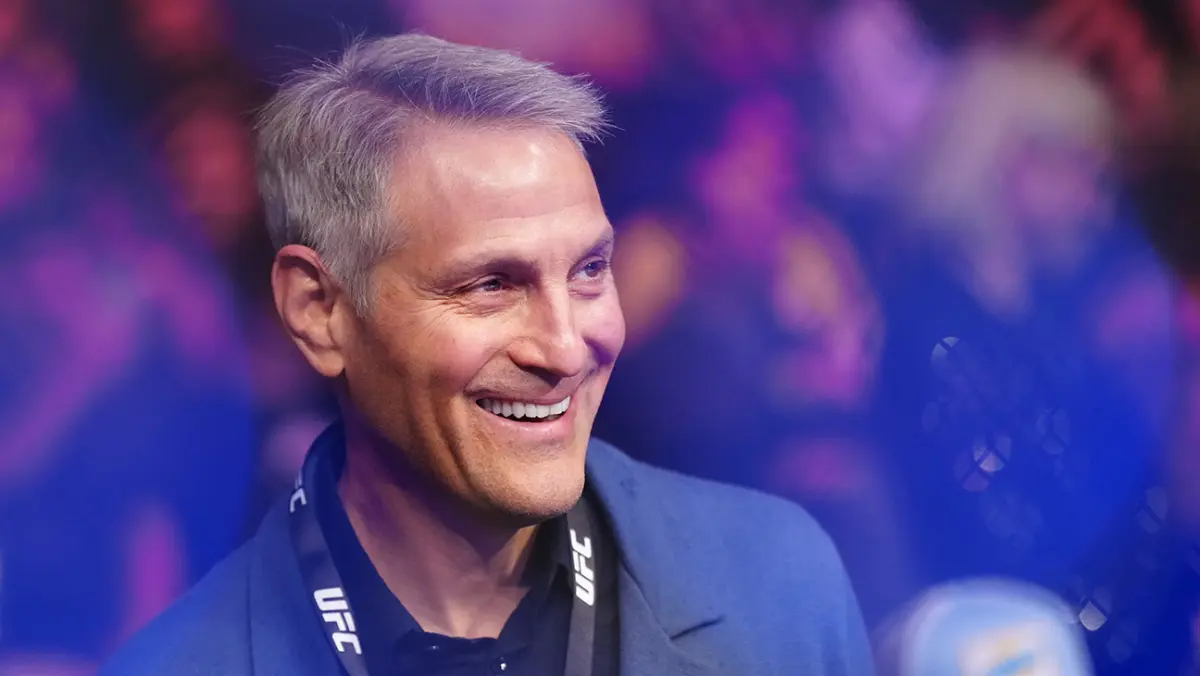
Ari Emanuel, the high-profile chief executive of TKO Group Holdings and a dominant force at WME Group, recently headlined an evening in London titled An Evening With the Dealmaker Who Reshaped Hollywood. Hosted by the intellectual forum Intelligence Squared and moderated by veteran media executive Tina Brown, the event served as a platform for Emanuel to reflect on his storied trajectory in the entertainment industry, the publication of his memoir Roll the Calls, and the shifting geopolitical and technological landscapes currently defining global commerce.
The conversation provided a rare, granular look at the professional philosophy of a man who spent decades navigating the volatile waters of talent representation, corporate mergers, and political advocacy. From his humble beginnings in the Creative Artists Agency (CAA) mailroom to his current status as a titan of sports and media conglomerates, Emanuel’s career has been marked by a relentless focus on the value of subjective judgment—a quality he argues is becoming increasingly vital as the creative industry grapples with the rise of artificial intelligence.
The Mailroom to the Boardroom: A Career Defined by Judgment
Emanuel’s ascent is often cited as a blueprint for the modern Hollywood power broker. Throughout his career, he has represented an A-list roster including Martin Scorsese, Larry David, and Oprah Winfrey. His reputation for aggressive, decisive deal-making was so iconic that it served as the primary inspiration for the character Ari Gold in the HBO series Entourage.
During the London discussion, Emanuel distilled his professional ethos into a single, blunt proposition: the value of an agent lies entirely in the weight of their opinion. He noted that while he has been terminated by clients for offering advice that ran counter to their own desires, his loyalty to his own perspective remains absolute. He views this dynamic not as a point of friction, but as the essential service for which his clients pay a ten percent commission. According to Emanuel, the willingness to be fired for the sake of integrity is a hallmark of a successful long-term partnership, citing instances where he has successfully re-signed clients who had previously parted ways with him over such disagreements.
Artificial Intelligence and the Retention of Human Taste
As the entertainment industry faces an existential debate regarding the role of generative AI, Emanuel offered a nuanced perspective that departs from the alarmism seen elsewhere in the sector. While acknowledging that AI is a powerful tool for productivity, he categorized it as a "very good average"—a sophisticated tool capable of synthesizing existing data but fundamentally devoid of the "taste" required for true innovation.
Emanuel argued that as AI democratizes the ability to generate content, the premium on human judgment and personal taste will only increase. He drew a parallel to his own household, noting that his wife, a fashion designer, utilizes AI as a collaborative tool to expedite processes. However, he emphasized that the creative spark—the initial idea and the final curation—remains a strictly human domain. For Emanuel, the danger of AI is not its potential to replace human labor, but the risk that industry participants will mistake the "average" output of algorithms for the "extraordinary" output of human creative genius.
The Complexity of Mega-Deals: The UFC Case Study
Beyond the philosophical, the event provided a deep dive into the logistical hurdles of high-stakes corporate finance. Emanuel pointed to the acquisition of the Ultimate Fighting Championship (UFC) as his most challenging professional endeavor. The deal, which eventually paved the way for the creation of TKO Group Holdings, was fraught with external pressures that threatened to derail the transaction.
The timeline of the UFC acquisition highlights the volatility of international markets. Emanuel recounted how the initial plan was for a straightforward acquisition. However, the unexpected outcome of the Brexit referendum in 2016 caused significant disruption to the global banking system, complicating the financing structures required for the multi-billion-dollar deal. Coupled with a lack of interest from traditional partners like Fox and the financial instability of other potential suitors, Emanuel had to navigate a landscape where external macroeconomic shocks dictated the pace of the deal. Despite these "headaches," the successful integration of the UFC into a broader media ecosystem stands as a testament to his tactical persistence.
Sports as a Bridge in a Polarized Landscape
Addressing the broader societal impact of his work, Emanuel positioned live sports and entertainment as one of the few remaining "common grounds" in a deeply polarized political climate. As a registered Democrat, he expressed a desire for more dialogue across the ideological aisle. He suggested that the communal nature of live events—where millions of people from disparate backgrounds converge to witness the same spectacle—serves as a necessary social glue.
When pushed by Brown on the intersection of the UFC brand and the Trump era, Emanuel remained steadfast in his view that the sport’s appeal is universal and durable. He dismissed the notion that the success of the organization is tethered to the political fortunes of any single figure, asserting that the brand possesses an longevity that will outlast current political cycles.
Politics and the Future of Leadership
The conversation naturally veered into the current political climate, with Emanuel navigating questions about his interactions with former President Donald Trump. He confirmed that they maintain a line of communication, noting a recent discussion regarding foreign policy, specifically in relation to Ukraine. While he expressed concern over current policy directions, he maintained a pragmatic approach to political engagement, suggesting that ongoing dialogue is necessary regardless of partisan alignment.
Perhaps the most significant revelation of the evening was his endorsement of his brother, Rahm Emanuel, as a potential presidential candidate. Despite the political differences often associated with the Emanuel family, Ari described Rahm as a uniquely qualified centrist capable of bridge-building. He highlighted Rahm’s administrative experience and his perceived commitment to public service, framing him as a candidate who prioritizes the welfare of the United States and the next generation.
Fact-Based Implications: The Future of WME and TKO
The implications of Emanuel’s recent public appearances are twofold. First, they signal a stabilization of the TKO Group strategy as it continues to integrate its various sports and entertainment assets. By focusing on the "human element" of taste and curation, Emanuel is setting a tone for his organizations to focus on premium, talent-led content that resists the commoditization of AI-generated media.
Second, his comments on political engagement suggest a shift in how high-level industry leaders are approaching the current election cycle. Rather than retreating from political discourse, figures like Emanuel are increasingly utilizing their platforms to advocate for centrist policies and direct engagement with political leaders, regardless of their party.
As the industry looks toward the next decade, the "Emanuel model"—a blend of aggressive, opinion-based representation and a focus on high-value, live-event assets—appears poised to remain a dominant force. Whether or not his political aspirations for his brother gain traction, his influence on the entertainment sector is firmly established. The emphasis on human-centric creativity in a post-AI landscape serves as both a strategic roadmap for WME and a cautionary tale for those who might over-rely on the convenience of automation at the expense of the subjective excellence that built the industry.
As the session concluded, the consensus among attendees was clear: Ari Emanuel remains a singular figure whose ability to pivot between the boardrooms of global media and the nuanced conversations of political strategy continues to shape the culture at large. His memoir, Roll the Calls, acts as both a historical record of a transformative era in Hollywood and a manifesto for how the next generation of dealmakers might navigate an increasingly complex, automated, and politically fractured world.