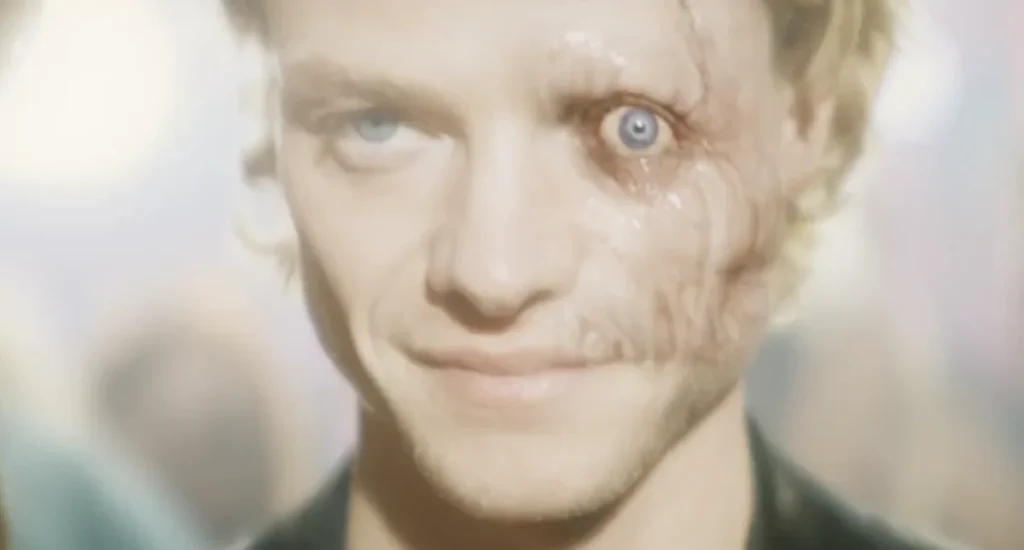
The Genesis of a Psychological Nightmare
The narrative roots of The Unknown can be traced back to 2024, when Arthur Harari and his brother, Lucas Harari, authored the graphic novel The Case of David Zimmerman. This source material provided the structural skeleton for what would become one of the most polarizing films of the current festival circuit. Following the immense critical and commercial success of Anatomy of a Fall—which garnered the Oscar for Best Original Screenplay in 2024—Arthur Harari leveraged his heightened industry profile to secure the resources necessary to bring this complex vision to the screen.
The film follows David Zimmerman, a marginalized Parisian photographer, whose life is irrevocably shattered after a chance encounter at an underground social event. The catalyst for the story is a wordless, high-stakes exchange with a mysterious woman, played by Léa Seydoux. During a climactic sexual encounter, the characters undergo a inexplicable body swap. Zimmerman finds his consciousness trapped within the body of a woman later identified as Eva Helsinger, while his own physical form is usurped by a separate entity.
A Technical and Stylistic Departure
The cinematography, led by Tom Harari, is instrumental in establishing the film’s pervasive sense of dread. The production utilizes a distinct visual language characterized by restless, kinetic camerawork—incorporating frequent crash zooms and abrupt audio dropouts—which serves to mirror Zimmerman’s internal disorientation. These frenetic sequences are punctuated by static, somber photography of changing Parisian landscapes.
Zimmerman’s background as a photographer—a man who spends his time obsessively documenting the decay and transformation of urban architecture—serves as a poignant metaphor for his own plight. As he struggles to reconcile his sense of self with a body that no longer reflects his identity, the film asks a fundamental question: Is the body merely a vessel, or is it an inextricable component of the human soul?
Chronology of the Displaced
The narrative follows a linear, albeit increasingly fragmented, timeline that tracks Zimmerman’s descent into the unknown:
- The Inciting Incident: Zimmerman is coerced by friends to attend an artsy social gathering. He meets the woman (Seydoux) and enters a basement, where the swap occurs.
- The Realization: Zimmerman wakes in the body of Eva Helsinger, navigating the immediate physical dissonance and the realization that his original body has vanished into the city.
- The Investigation: Zimmerman attempts to track down his own identity, encountering obstacles that suggest a broader, more systemic phenomenon of displacement.
- The Confrontation: The second act culminates in a meeting with other characters—notably Malia (Lilith Grasmug)—who have been affected by similar shifts, forcing a confrontation between consciousness and physical disgust.
- The Terminal Phase: The film concludes with the abandonment of the quest for restitution, settling instead into a state of permanent alienation.
Thematic Analysis: Identity and Alienation
At its core, The Unknown serves as a meditation on the concept of the "doppelgänger stalker." It aligns itself with recent entries in the psychological horror canon such as It Follows and Enemy, yet it distinguishes itself by rejecting the biological mutations typical of the genre. Instead, the horror is derived from the "uncanny valley" of human behavior—the internal realization that the physical self is failing to align with the mind.

Sociological observers have noted that the film’s depiction of "rational self-deception" is particularly striking. In the narrative, characters affected by the swap instinctively choose to hide their condition from friends and family, fearing social ostracization or disbelief. This choice reflects a broader societal commentary on how individuals suppress trauma and identity crises to maintain a façade of normalcy. By choosing to lie, the protagonists effectively abandon their previous lives, underscoring the film’s thesis that the body is not merely an instrument of the mind, but a restrictive boundary that, when breached, renders the individual a stranger to the world.
Industry Reception and Critical Implications
Since its debut, the film has faced a polarized response from critics and audiences alike. Industry analysts note that The Unknown challenges conventional narrative expectations by leaving the core mystery unresolved. There is no traditional "villain" or "cure" for the displacement. For some, this lack of resolution is a narrative failure; for others, it is the film’s greatest strength, forcing the viewer to inhabit the same state of uncertainty as the protagonist.
Léa Seydoux’s performance has been widely lauded for its physical precision. Portraying a man trapped in a female body required a nuanced approach to movement and reaction, which Seydoux executes with a controlled intensity that anchors the film’s more abstract elements.
The Broader Impact on the Body Horror Genre
The success of The Unknown suggests a shifting appetite for "intellectualized" horror among mainstream audiences. By utilizing the aesthetic of body horror without relying on gore or biological monstrosities, Harari has created a template for "existential horror." This approach aligns with the growing trend of high-concept, low-exposition storytelling that emphasizes emotional and psychological resonance over jump-scares.
Furthermore, the collaboration between the Harari brothers—Arthur and Tom—highlights the increasing trend of creative dynasties within modern French cinema. The interplay between the director’s narrative focus and the cinematographer’s visual framing suggests a high level of intentionality that has become a hallmark of the current "French New Wave" of genre films.
Conclusion: The Abyss Gazes Back
As The Unknown continues its festival run, it remains a focal point for discussions regarding the nature of the self. The film is not designed to provide comfort or clarity. Instead, it invites the audience to participate in an exercise of profound discomfort. In the final estimation, Arthur Harari has produced a work that is as much about the viewer as it is about David Zimmerman. By the time the credits roll, the lingering question remains: if our identities are tied to our physical form, what happens to us when that form is no longer our own? The film does not offer an answer, but its refusal to do so is exactly what makes it a significant, albeit unsettling, entry in the history of contemporary psychological cinema.