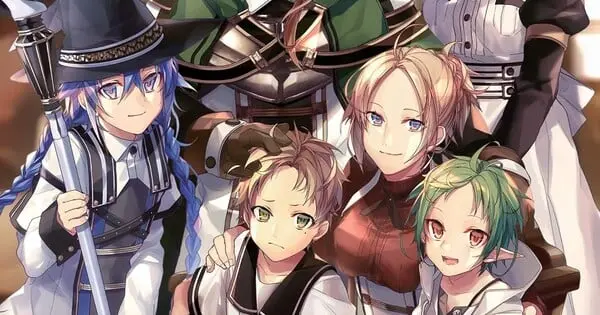
The light novel series Mushoku Tensei, authored by Rifujin na Magonote, occupies a singular and contentious position within the contemporary Japanese fantasy landscape. Since its inception as a web novel on the Shōsetsuka ni Narō platform in 2012, the series has served as a foundational pillar for the modern isekai (portal fantasy) genre. However, as the franchise has expanded into a multi-season anime adaptation produced by Studio Bind, it has simultaneously become the focal point of a polarized debate regarding the representation of problematic protagonists and the boundaries of character redemption arcs in serialized fiction.
The Evolution of a Genre-Defining Narrative
Rifujin na Magonote’s work centers on the reincarnation of an unnamed, 34-year-old shut-in—a social recluse known as a "hikikomori"—who is reborn into a high-fantasy world as Rudeus Greyrat. Unlike many contemporary iterations of the genre, which often utilize reincarnation as a convenient plot device to facilitate an immediate power fantasy, Mushoku Tensei prioritizes the psychological trajectory of its protagonist.
The narrative spans 26 volumes, charting Rudeus’s development from infancy through adulthood. While the story incorporates tropes common to the genre—such as magical aptitude and the discovery of a vast, geographically diverse world—it distinguishes itself through a commitment to long-form, interconnected storytelling. The "Six-sided world" serves as a meticulously detailed setting, featuring complex geopolitical histories and an expansive cast of supporting characters who exist independently of the protagonist’s immediate desires.
Chronology of the Franchise and Its Reception
The trajectory of the franchise has been marked by a rapid expansion that has outpaced critical consensus:
- 2012–2015: The original web novel is serialized, garnering significant attention for its dense world-building and character-driven focus.
- 2014: Media Factory begins publishing the light novel version, illustrated by Shirotaka, which introduces substantial narrative refinements and expanded character backstories.
- 2021: The first season of the anime adaptation premieres. It is widely praised for its high production values and directorial choices that elevate the source material’s visual storytelling.
- 2023: The second season debuts, bringing increased scrutiny to the series’ depiction of sexual themes and the protagonist’s internal monologue.
- 2024–2027: The third season enters production. The series is currently mid-cycle, with the second half of the third season scheduled for a 2027 release.
Analytical Perspectives on Character Agency
The controversy surrounding Mushoku Tensei is largely anchored in the first-person narrative perspective of Rudeus Greyrat. Magonote employs an unexpurgated approach to the protagonist’s thoughts, which include predatory behaviors and deep-seated insecurities inherited from his previous life.
Critics of the series argue that the constant focus on the protagonist’s "perverted" inner monologue creates an unnecessary barrier to entry for the audience and minimizes the severity of his actions. Conversely, proponents of the work argue that the narrative is not intended to be a moral endorsement of Rudeus, but rather a clinical examination of a deeply flawed individual attempting to navigate a second chance at life. The protagonist’s own recognition of his failures, coupled with the long-term consequences he faces for his behavior, is cited by fans as evidence of a genuine, if slow-moving, character arc.
World-Building and Structural Integrity
Beyond the ethical discourse, Mushoku Tensei is frequently analyzed for its structural complexity. Unlike episodic fantasy series that rely on "videogame-esque" mechanics, the narrative relies on foreshadowing and causal relationships. Characters introduced in the earliest volumes—such as the formidable Orsted and the noble Perugius—are not merely flavor text but are integral to the resolution of conflicts many volumes later.
The series utilizes a distinct pedagogical structure: the first volume remains contained within the domestic sphere of the Greyrat estate, establishing the foundational relationships with mentors like Roxy Migurdia and peers like Sylphiette. Subsequent volumes expand the scope to the Ranoa Magic Academy and beyond, mirroring the protagonist’s physical growth with an increasing level of geopolitical complexity. This "globe-spanning" approach is a significant factor in the series’ critical durability, as the world of the Six-sided world provides a consistent draw for readers even when the protagonist’s internal state remains a point of contention.
Industry Implications and Audience Engagement
The debate over Mushoku Tensei reflects a broader shift in the anime and light novel industry, where the lines between "escapist fantasy" and "complex character drama" are increasingly blurred. The success of the franchise—demonstrated by its consistent presence in top-selling rankings and its sustained momentum through multiple animation seasons—suggests a market demand for narratives that challenge the viewer’s comfort level.
For producers and publishers, the "loaded reputation" of the series represents a delicate balancing act. While the controversial elements of the protagonist’s personality have led to significant public criticism, these same elements are central to the story’s identity. Industry analysts note that such "polarized" properties often generate higher levels of engagement in digital forums and social media, which in turn sustains interest throughout the years-long production cycles of anime adaptations.
The Role of Adaptation in Narrative Framing
The transition from text to screen has further complicated the reception of the series. Audiobooks, such as the versions narrated by Cliff Kirk, provide an additional layer of interpretation, often grounding the protagonist’s internal thoughts with a vocal gravitas that can shift the listener’s perception. In the visual medium, Studio Bind’s directorial choices—such as the depiction of the protagonist’s facial expressions and his interactions with his family—have been analyzed for their potential to either exacerbate or mitigate the more uncomfortable aspects of the source material.
Conclusion
Mushoku Tensei remains a landmark in the modern isekai genre, not merely for its commercial success but for its refusal to sanitize the psychological wreckage of its lead character. Whether the series succeeds as a "rehabilitation" narrative is a subject of ongoing debate, but its impact on the literary and animation landscape is undeniable. As the series moves toward its 2027 conclusion, it serves as a case study for the limits of moral ambiguity in popular entertainment and the degree to which audiences are willing to tolerate—or interrogate—flawed characters in service of a sprawling, meticulously crafted narrative. The series stands as a testament to the fact that, within the current media landscape, an work of art does not necessarily need to be palatable to be considered culturally and narratively significant.