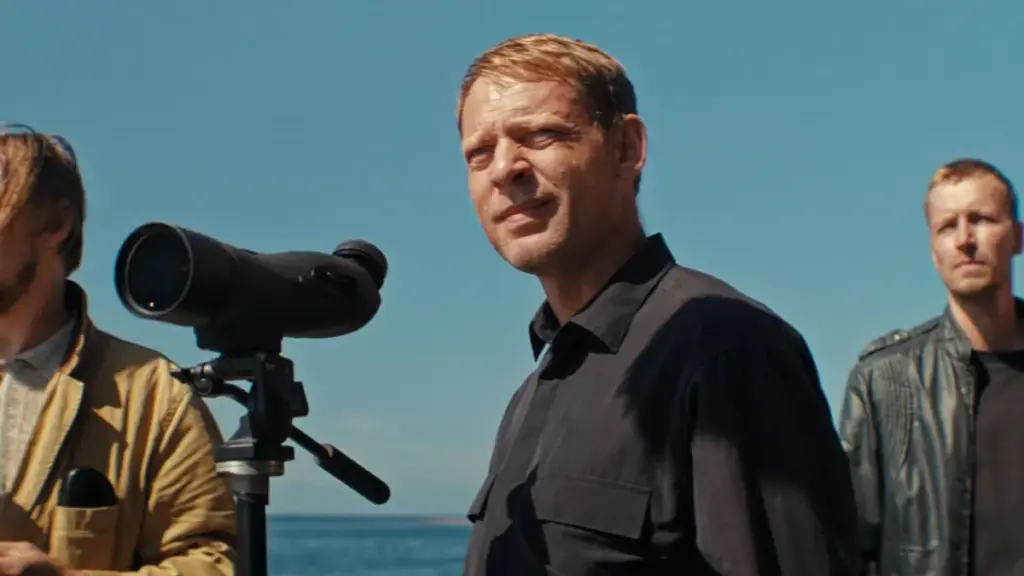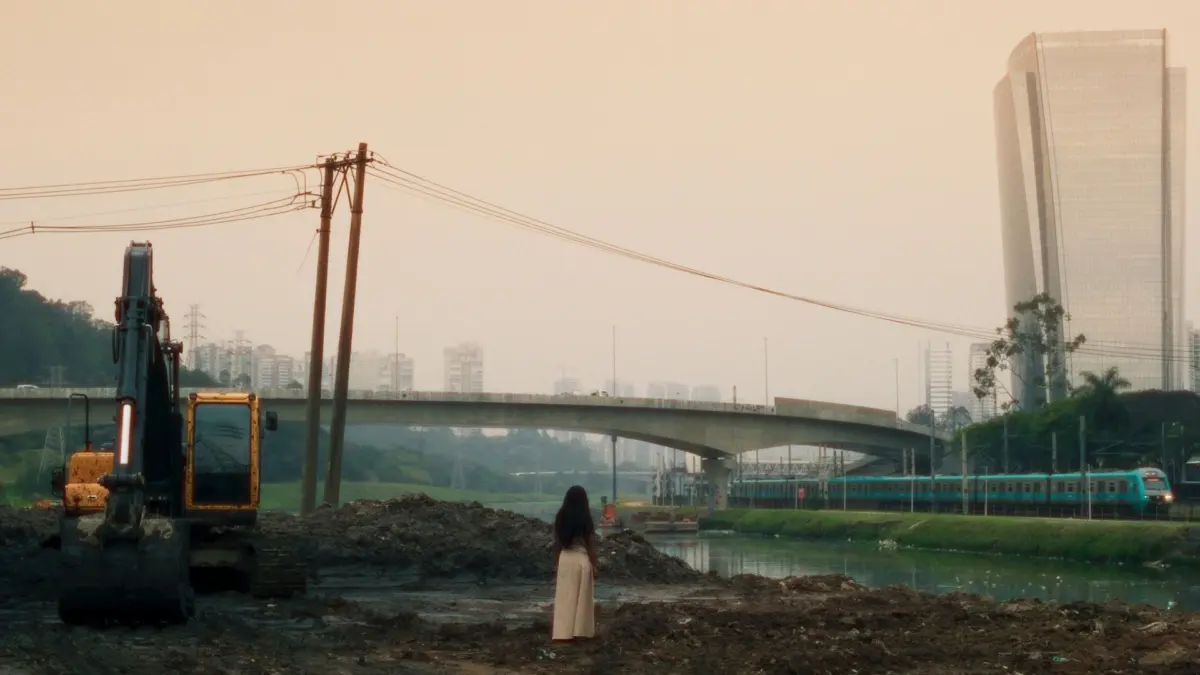
On the periphery of São Paulo, a sprawling metropolis defined by its concrete monoliths and relentless urbanization, a profound collision of worlds is taking place. It is a space where the ancestral territory of the Guarani people struggles for survival against the encroaching tide of urban expansion. This struggle is the subject of Arrow for a Stone Heart, a documentary-fiction hybrid by writer-director Luiza Calagian, which makes its world premiere on November 17 at the 30th Tallinn Black Nights Film Festival (PÖFF) in Estonia. Selected for the prestigious Rebels with a Cause competition, the film serves as both a cinematic feat and a political intervention, aiming to reframe the history of colonization through the lens of indigenous cosmology.
The film introduces viewers to a unique narrative guide: a peccary—a pig-like creature native to the region—named Rete. Through Rete’s perspective, the film chronicles the arrival of the "many," the term the Guarani use to describe the colonizers who transformed the landscape with stone and mortar, effectively stifling the flow of rivers and the growth of ancient forests. This creature, acting as a bridge between the physical and spiritual realms, embodies the Guarani belief that nature is not a static background but a sentient participant in human history.
The Genesis of a Seven-Year Journey
The project began seven years ago, rooted in Calagian’s long-standing commitment to indigenous rights advocacy. Having worked for over a decade in communication efforts alongside the Guarani community in São Paulo, Calagian initially sought to highlight the legal and environmental battles surrounding land demarcation. However, as her immersion in the community deepened, her approach to the filmmaking process underwent a radical shift.
"I understood that it wouldn’t make sense for me to try to tell the story—the story of the Guarani—from a Western perspective," Calagian explained. "The mission became how to bring the Guarani cosmology and their philosophy into the structure of a film, which is by its nature a Western medium."

This evolution led to a collaborative partnership with Jera Rete, a prominent Guarani leader who became the film’s co-writer and the heart of its production. Under Rete’s guidance, the film moved away from traditional documentary tropes and toward a structure dictated by dreams and myth. For the Guarani, dreams are not merely subconscious projections; they are conduits to other dimensions, ancestral spirits, and divine entities. By centering the narrative on these experiences, Calagian and Rete have created a work that challenges the Western linear perception of time and space.
The Historical Context of the São Paulo Territory
The tension depicted in the film is not merely symbolic; it reflects a centuries-old geopolitical reality. São Paulo was built upon territories that were traditionally managed by indigenous groups, a fact often erased by the city’s regional culture. This culture frequently celebrates the "Bandeirantes"—expeditionaries who, in the 17th and 18th centuries, penetrated the interior of Brazil to capture slaves and search for precious metals.
Today, these figures are immortalized in public monuments and street names throughout the city. The title of the film, Arrow for a Stone Heart, is a direct critique of this historical veneration. It functions as a linguistic and physical strike against the "stone hearts" of monuments that celebrate the subjugation of indigenous peoples.
"There are still a lot of historical monuments, street names, and public symbols that celebrate the people who killed and enslaved the indigenous population," says Calagian. "We understood how important this dispute between narratives was, and that is how this project was born."
A Multi-Layered Production and Narrative Structure
The film’s production process was as unconventional as its narrative. Jera Rete took an active role in casting and logistical coordination, ensuring that the participants were members of her own community. Her two daughters play pivotal roles: the youngest serves as the personification of the river—a central spirit in Guarani culture—while the eldest provides the voice for Rete, the peccary.

The choice to include the river as a character is a deliberate attempt to give voice to an element of the landscape that has been severely degraded. In Guarani belief, rivers are powerful, often dangerous, and deserving of deep respect. By anthropomorphizing the river, the film underscores the ongoing environmental degradation of the São Paulo metropolitan area, where rapid development has left many water sources polluted or redirected.
The technical team, including producers Vinicius Toro and Sabrina Zimmermann and executive producer Bruno Cucio, facilitated a production environment that respected the community’s pace and priorities. The film’s visual style—described by early observers as "hallucinatory"—mirrors the fluidity between the physical forest and the spiritual landscape, utilizing cinematography that prioritizes texture, light, and the presence of non-human entities.
Environmental Implications and Indigenous Sovereignty
The struggle depicted in Arrow for a Stone Heart is representative of a broader issue in Brazil: the legal recognition of indigenous lands. In São Paulo, several indigenous communities reside in small, fragmented territories surrounded by urban density. These communities have spent years fighting for the formal demarcation of their lands to protect them from real estate development and illegal deforestation.
According to data from the Indigenous Missionary Council (CIMI), indigenous land rights in Brazil have faced systemic challenges for decades, often exacerbated by political shifts in the federal government. The Guarani in São Paulo exist at the intersection of these pressures, their traditional way of life constantly threatened by the expansion of the urban footprint. The film highlights how the "stone" of the city—the buildings and infrastructure—acts as an invasive force that restricts the movement of both humans and animals.
The Significance of the Rebels with a Cause Competition
The inclusion of Arrow for a Stone Heart in the Rebels with a Cause competition at the Tallinn Black Nights Film Festival is significant. The section is dedicated to films that challenge conventional cinematic boundaries and tackle pressing social or political issues. The festival, which celebrates its 30th anniversary, has a history of platforming works that demand a re-evaluation of history and power structures.

By premiering at a major European festival, the film brings the specific struggle of the Guarani to an international audience, effectively using the global stage to push back against local erasure. The distribution and sales, handled by Utopia Docs, signal a broader interest in "decolonial cinema," a growing movement that seeks to strip away the Eurocentric bias from ethnographic filmmaking.
The Future of Narrative Change
As the film moves into its festival run, its impact may extend beyond the screen. By re-centering the narrative on the perspective of the oppressed rather than the observer, Calagian and Rete are participating in a larger effort to rewrite the historical record of São Paulo.
The film does not offer easy solutions or a sanitized ending. Instead, it presents the resilience of nature and the endurance of a culture that continues to exist despite the "stone" world around it. As Rete the peccary notes in the film, the ability to travel between worlds is the true power of the Guarani. In this context, cinema itself becomes a form of technology—a tool for navigating and perhaps even healing the fractures caused by centuries of colonization.
Ultimately, Arrow for a Stone Heart serves as a testament to the persistence of indigenous voices in the face of immense pressure. It asks the audience to consider not just the history of the land beneath them, but the living spirits and memories that still reside within it. Whether the film will influence public policy or the deconstruction of colonial monuments remains to be seen, but its arrival in the global cinematic landscape marks an undeniable shift in how the history of the Americas is being told, documented, and remembered.