The 30th edition of the Tallinn Black Nights Film Festival (PÖFF) is set to host the world premiere of Mo Amor, the latest feature from acclaimed Estonian writer-director Eeva Mägi. Scheduled for screening on Monday, November 16, within the festival’s prestigious Critics’ Picks Competition, the film marks a significant milestone in Mägi’s burgeoning career. Known for her previous works, including Mo Mamma, Mo Papa, and The Weight of All the Beauty, Mägi returns to the festival circuit with a narrative that blends the ethereal qualities of a traditional fairy tale with the stark, often complex realities of contemporary gender identity and human connection.
The film introduces audiences to Princess Niina, a character defined by an inherent restlessness that transcends the boundaries of her castle walls. Courted by three distinct figures—The Mentor, The Writer, and The Stonemason—Niina’s journey is one of shedding expectations, both literal and metaphorical. As the narrative unfolds, the protagonist discards her crown to embrace an authentic self, leading to a secluded summer retreat where the interplay of memory, myth, and reality forces the characters to confront the fluid nature of love and the persistence of past traumas.
Contextualizing the Tallinn Black Nights Film Festival
The Tallinn Black Nights Film Festival has established itself as one of Northern Europe’s most influential cinematic gatherings. Now in its 30th year, the festival serves as a vital platform for Baltic and international cinema, often focusing on works that challenge conventional storytelling paradigms. The inclusion of Mo Amor in the Critics’ Picks section is a testament to the festival’s commitment to bold, auteur-driven projects.

This selection follows the trajectory of Mägi’s career within the PÖFF ecosystem. Her 2025 feature, Mo Papa, opened the same competitive section and garnered a special mention, signaling her emergence as a prominent voice in European independent film. By consistently participating in this festival, Mägi has cultivated a symbiotic relationship with the local audience and international critics alike, establishing a reputation for a filmmaking style that is as much about the process of discovery as it is about the final product.
The Methodology of Organic Filmmaking
Eeva Mägi’s approach to production is characterized by a departure from rigid, pre-written scripts. Working closely with producer and cinematographer Sten-Johan Lill and editor Jette Keedus, Mägi adopts a process-oriented methodology that allows the narrative to evolve alongside the filming. This "surfing on the wave of chaos," as she describes it, relies heavily on a core group of collaborators who have grown accustomed to her fluid directorial style.
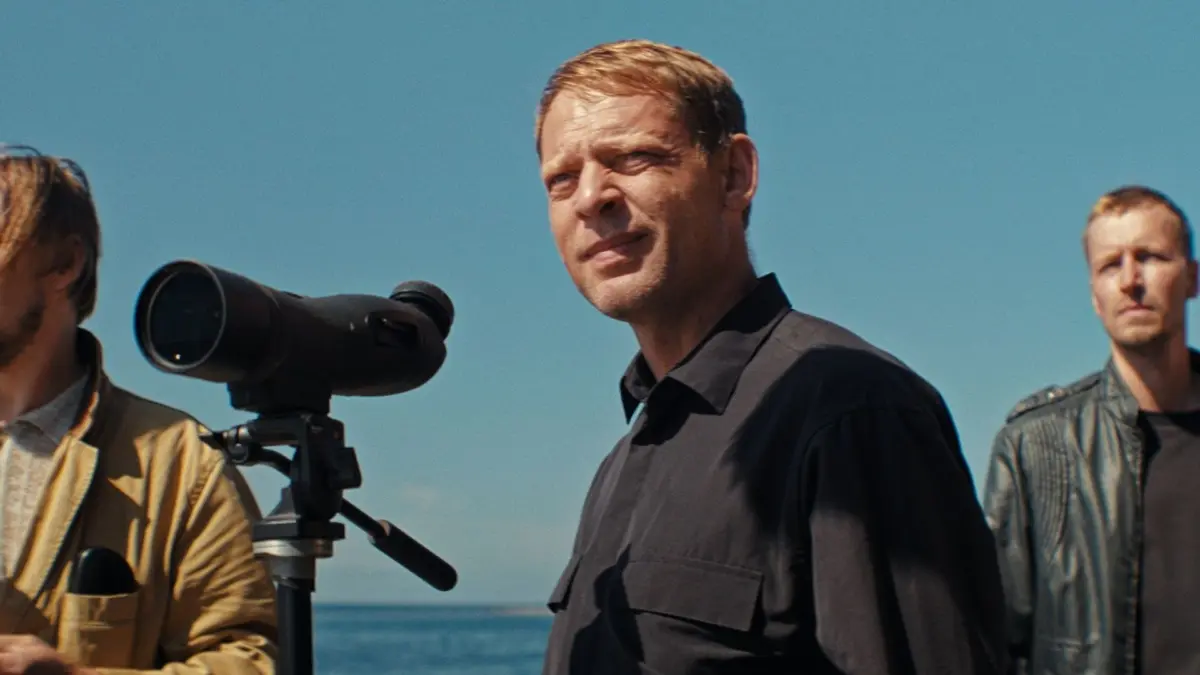
The cast features returning talents from Mo Papa, including Ester Kuntu and Jarmo Reha. Reha’s inclusion is particularly notable, as he was recognized in this year’s Black Nights Stars showcase, an initiative designed to spotlight emerging acting talent in the Baltic region. The ensemble is rounded out by Tambet Tuisk, Andres Mähar, Sander Roosimägi, and Ivor Mikker. The casting of Mikker, a sculpture student at the Estonian Arts Academy, underscores Mägi’s preference for authentic, non-traditional performance dynamics over conventional casting calls.
The film’s aesthetic is shaped by its location—a boathouse on Vilsandi Island, Estonia’s westernmost inhabited isle. The choice of setting was both a practical necessity dictated by the film’s modest budget and an artistic decision to leverage the island’s stark, cinematic landscape. The recurring use of still frames and the sound of camera shutters, serving as a homage to the protagonist’s profession as a photographer, further bridges the gap between the film’s fairy-tale premise and the grounded reality of its characters.

Addressing Representation and Narrative Intent
In discussions regarding the film’s themes, Mägi emphasizes that the decision to frame the story as a fairy tale was intentional. She argues that society frequently treats the lived experiences of transgender individuals as if they were fictions or unreachable myths. By adopting the structure of a fairy tale, the film asserts the validity of the protagonist’s transition while avoiding the common tropes of trauma-focused storytelling.
Regarding the casting of cisgender actors in trans roles, Mägi clarified that the decision was a reflection of the current reality in the Estonian film industry, where such representation is limited. Following consultations with the local trans community, it was determined that the focus of the film should not be on the physical process of transition—which is often the subject of intense, sometimes exploitative, cinematic focus—but rather on the universal nature of love. As Mägi notes, the objective was to present a "transgender person as a hero" in a story that ultimately posits that all love, regardless of the identities involved, is simply "pure love."
Industry Implications and Future Directions
The release of Mo Amor coincides with a broader conversation in the Baltic film industry regarding artistic integrity, the ethics of representation, and the relationship between the creator and the subject. Mägi’s upcoming project, Mo Hunt, which is currently in post-production, further explores these tensions.
Described as a "staged documentary," Mo Hunt examines the fine line between artistic creation and manipulation. By collecting real-world stories from artists about their experiences with exploitation and mental strain, and then having actors perform these stories, Mägi intends to bridge the gap between fictional narrative and lived reality. This approach represents a shift in her career, moving away from purely personal or fairy-tale-inspired narratives toward a more meta-cinematic investigation of the filmmaking process itself.

The production of both Mo Amor and Mo Hunt highlights a growing trend in independent European cinema: the move toward hybrid genres that resist easy categorization. By utilizing a small, dedicated team and allowing the story to guide the production, filmmakers like Mägi are able to maintain a level of creative autonomy that is increasingly rare in the global film market.
Looking Ahead: The Significance of the Premiere
As the world premiere of Mo Amor approaches, the film stands as a case study in how personal, small-scale productions can articulate broad, socially significant themes. The success of this project—and the anticipation surrounding Mägi’s future work—speaks to the strength of the Estonian film scene and the enduring power of the fairy tale as a tool for social commentary.
For the audience at the Tallinn Black Nights Film Festival, the premiere offers more than just a screening; it offers an invitation to participate in a dialogue about identity, the fluidity of truth, and the necessity of rewriting the stories that define our society. As the film makes its transition from the intimate setting of a Vilsandi boathouse to the global stage of the festival circuit, its message remains clear: the stories we tell until they become reality are the ones that matter most.
The festival’s decision to showcase Mo Amor in the Critics’ Picks Competition ensures that it will receive the critical attention necessary to engage with these complex themes. Whether through the lens of a photographer or the narrative arc of a fairy tale, Eeva Mägi’s latest work is poised to leave a lasting impact on both the local cinematic landscape and the broader, international conversation regarding identity, love, and the evolving nature of storytelling.