Henry Winkler, the Emmy Award-winning actor whose portrayal of Arthur “The Fonz” Fonzarelli remains one of the most indelible fixtures in American pop culture, recently shared a candid and somber reflection on the professional and psychological challenges he faced following the conclusion of the long-running sitcom Happy Days. Speaking on the June 17 episode of the podcast Where Everybody Knows Your Name, hosted by fellow television veteran Ted Danson and Woody Harrelson, the 80-year-old actor detailed a period he described as “going dark,” a decade-long struggle with typecasting and identity that followed his departure from the role that made him a global superstar. Winkler’s testimony provides a rare glimpse into the "sitcom curse" that often plagues actors associated with iconic characters and serves as a broader meditation on the necessity of professional evolution in the face of stagnation.
The Weight of an Icon: Life After the Leather Jacket
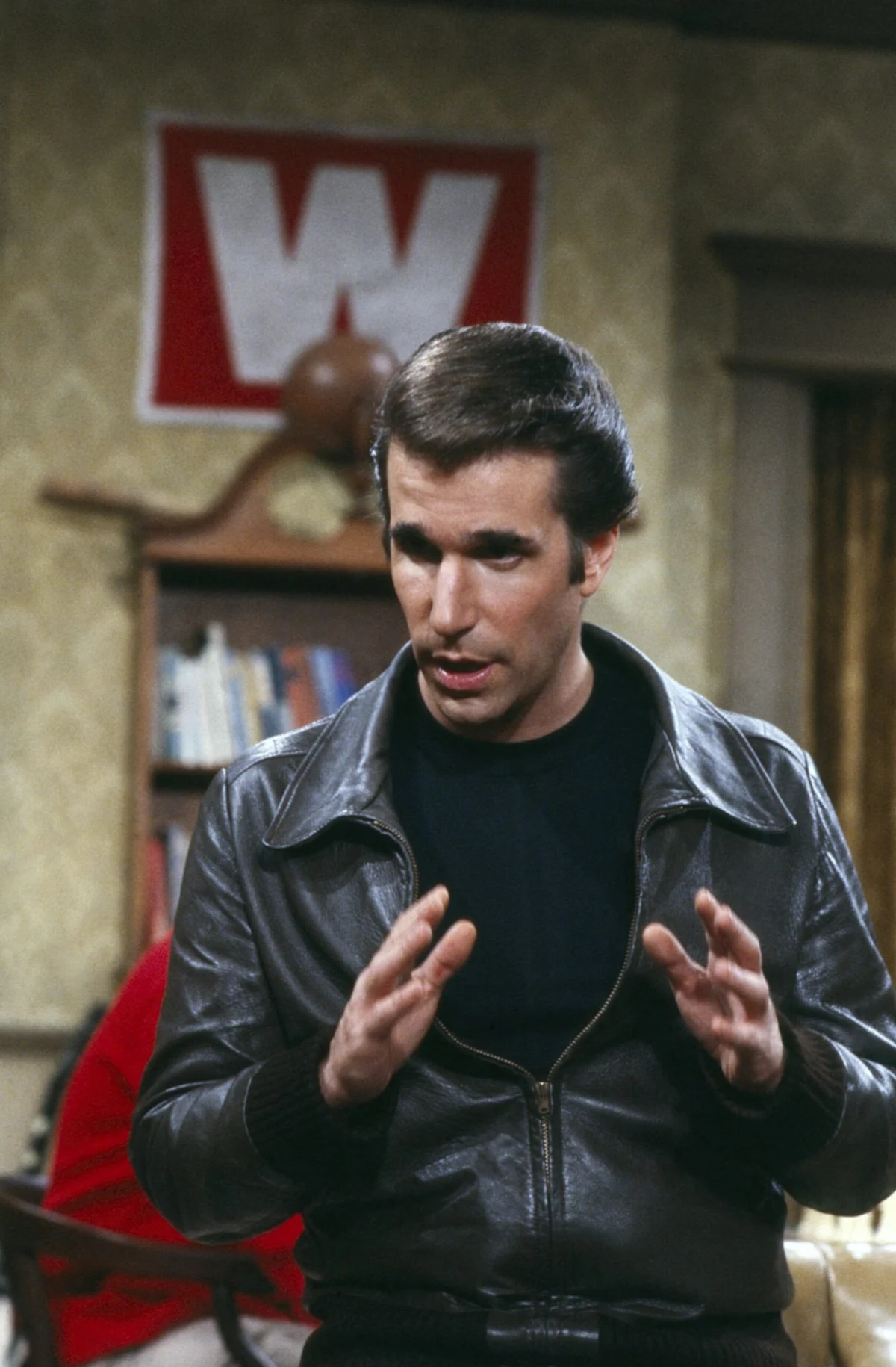
From 1974 to 1984, Henry Winkler occupied a unique space in the entertainment zeitgeist. As Fonzie on Happy Days, he transitioned from a secondary character to the show’s primary draw, embodying a specific brand of 1950s cool that resonated across generations. However, the very success that brought him fame also created a professional prison. When the series finally shuttered after 11 seasons and 255 episodes, Winkler found that the industry was unable—or unwilling—to see him as anything other than the thumb-gesturing, motorcycle-riding greaser.
Recounting the immediate aftermath of the show’s finale, Winkler described a scene of quiet desperation in his personal office. Despite his status as a household name, the scripts crossing his desk were derivative and narrow in scope. "I’m sitting in my office," Winkler told Danson. "All I’m getting are Fonzi-like [offers]. I have no idea, ‘Am I ever going to do anything that is as powerful?’" This realization led to what he termed a "dark" period, characterized by a profound sense of uncertainty regarding his future in the industry. The actor admitted to fearing that his career had peaked and that his relevance had expired at the age of 38.
A Decade of Stagnation and the Eight-Year Hiatus
The period following Happy Days was not merely a brief lull but a sustained era of professional re-evaluation. Winkler noted that his acting career effectively ground to a halt for approximately eight to nine years. During this time, the "Fonz" persona cast a shadow so long that it obscured his range as a classically trained actor—Winkler is an alumnus of the Yale School of Drama. The industry’s insistence on pigeonholing him meant that the dramatic and varied roles he sought were consistently out of reach.
This phenomenon is not unique to Winkler but is a documented hurdle for actors on high-profile television series. The "sitcom curse" refers to the difficulty stars of long-running comedies face when trying to transition into new roles, as audiences and casting directors struggle to decouple the actor from their most famous character. While his co-star Ron Howard successfully transitioned into an A-list director almost immediately, Winkler’s path was marked by a more difficult internal and external struggle to redefine his identity.
The Strategy of the Pivot: Producing and Directing
The turning point for Winkler came from a fundamental shift in mindset—what he calls "the pivot." Recognizing that the acting roles he desired were not forthcoming, he diverted his creative energy into behind-the-scenes work. This was not merely a survival tactic but a strategic expansion of his professional repertoire.
"The greatest thing you learn is to pivot," Winkler advised during the podcast. "You’re going on a way, and you’re thinking, ‘Oh, I got to stay, I got to do. I can’t do anything else. Nah, I don’t want to do anything else.’ You have to learn to pivot, and when you pivot, the universe opens up."
This pivot led to a prolific career as a producer and director. Most notably, Winkler served as an executive producer for the original MacGyver series, which premiered in 1985 and became a global phenomenon in its own right, running for seven seasons. By moving into production, Winkler proved that his value to the industry was not limited to his on-screen presence. He also stepped into the director’s chair for feature films, including the 1988 dramedy Memories of Me, starring Billy Crystal, and the 1993 family comedy Cop and a Half, starring Burt Reynolds.

Chronology of a Career Evolution
To understand the scale of Winkler’s "dark" period and subsequent recovery, one must look at the timeline of his professional transitions:
- 1974–1984: The Happy Days Era. Winkler becomes a cultural icon, winning two Golden Globe Awards and earning three Emmy nominations for his role as Fonzie.
- 1984–1992: The "Dark" Period. Acting offers are limited to Fonzie-clones. Winkler experiences a near decade-long hiatus from major acting roles.
- 1985–1992: The Production Pivot. Winkler executive produces MacGyver, establishing himself as a powerhouse behind the camera.
- 1988–1993: Directorial Forays. Winkler directs Memories of Me and Cop and a Half, further diversifying his skill set.
- 2003–2019: The Acting Resurgence. Winkler returns to prominence with a recurring role in Arrested Development and a career-defining performance as Gene Cousineau in HBO’s Barry.
- 2018: Critical Redemption. Winkler wins his first Primetime Emmy Award for Outstanding Supporting Actor in a Comedy Series for Barry, 42 years after his first nomination.
Expanding into Literature: The Hank Zipzer Series
Winkler’s "pivot" was not confined to the screen. In 2003, he began co-authoring a series of children’s books titled Hank Zipzer: The World’s Greatest Underachiever. Drawing from his own struggles with undiagnosed dyslexia during his youth, the books became a critical and commercial success, selling millions of copies worldwide. This venture allowed Winkler to connect with a new generation of fans who had no prior association with Happy Days, effectively stripping away the "Fonzie" label and replacing it with that of a respected author and advocate for learning differences.
The success of the Hank Zipzer series, which was later adapted into a television show in the United Kingdom, reinforced Winkler’s philosophy that the "generous stardust" he spoke of falls on those willing to redefine themselves. By the time he returned to high-profile acting in the 21st century, he was no longer just a relic of 1970s television; he was a multifaceted creator with a proven track record in multiple disciplines.
Analysis of the "Sitcom Curse" and Industry Implications
The "darkness" Winkler described is a cautionary tale for the modern era of "Peak TV." Actors who lead successful series for a decade often find that the financial security of a long-running hit comes at the cost of future artistic mobility. Winkler’s experience highlights the psychological toll of this transition. When an actor’s identity becomes synonymous with a character, the end of the show can feel like the end of the self.
Industry analysts point to Winkler’s career as a blueprint for longevity. In an industry that often discards older talent or those associated with past eras, Winkler’s ability to "pivot" into producing, directing, and writing ensured his survival. His eventual return to acting—culminating in his acclaimed work on Barry—was made possible because he had spent the intervening decades building a reputation for intelligence, reliability, and creative versatility.
Legacy and Modern Reception
Today, Henry Winkler is viewed as a "national treasure" of the American acting community, known as much for his kindness and mentorship as for his iconic roles. His recent comments on the Where Everybody Knows Your Name podcast have resonated with many in the creative arts who face similar periods of professional stagnation.
The cast of Happy Days has maintained various levels of public presence since 1984. While Ron Howard became one of Hollywood’s most successful directors and Marion Ross continued a steady career in television, others struggled to find their footing. Winkler’s openness about his "dark" period serves to humanize the experience of fame, reminding audiences that even the most successful figures face moments of profound doubt and professional rejection.
Happy Days remains available for streaming on platforms such as Pluto TV and Paramount+, continuing to introduce the Fonz to new audiences. However, for Henry Winkler, the leather jacket is a piece of history, not a uniform. His journey from the heights of 1970s stardom through the "darkness" of the 1980s, and finally to the critical triumphs of the present day, stands as a testament to the power of the professional pivot. As he told Ted Danson, the act of changing direction is not a sign of failure, but the very mechanism by which the "universe opens up."