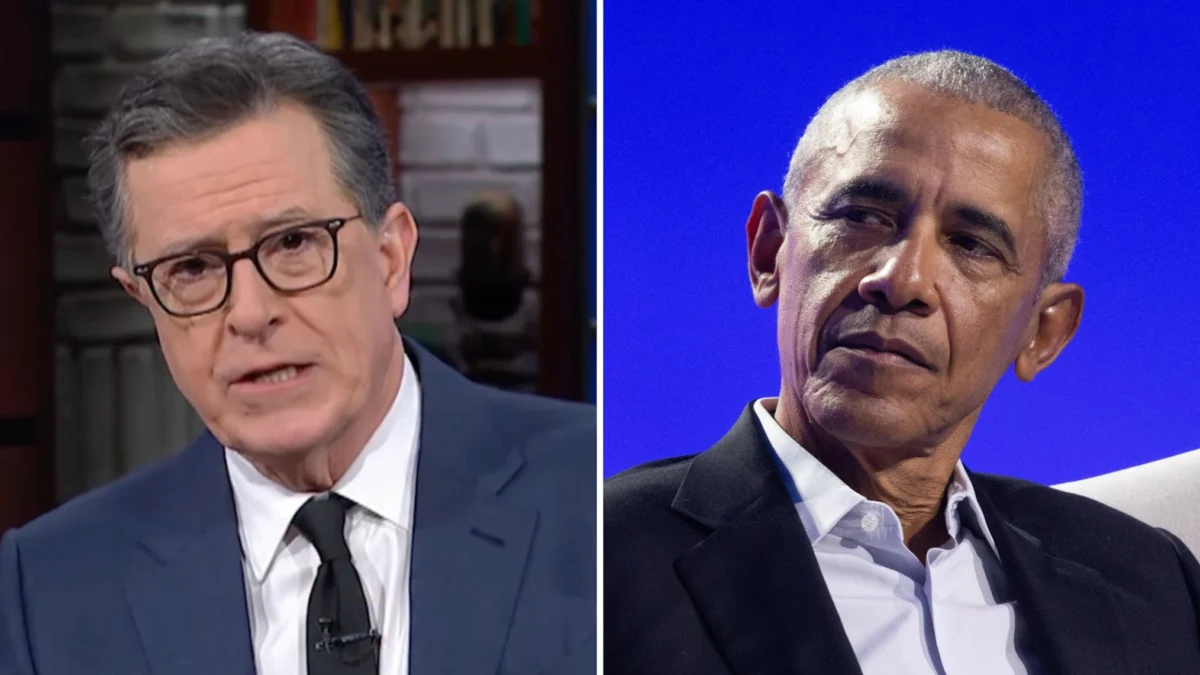
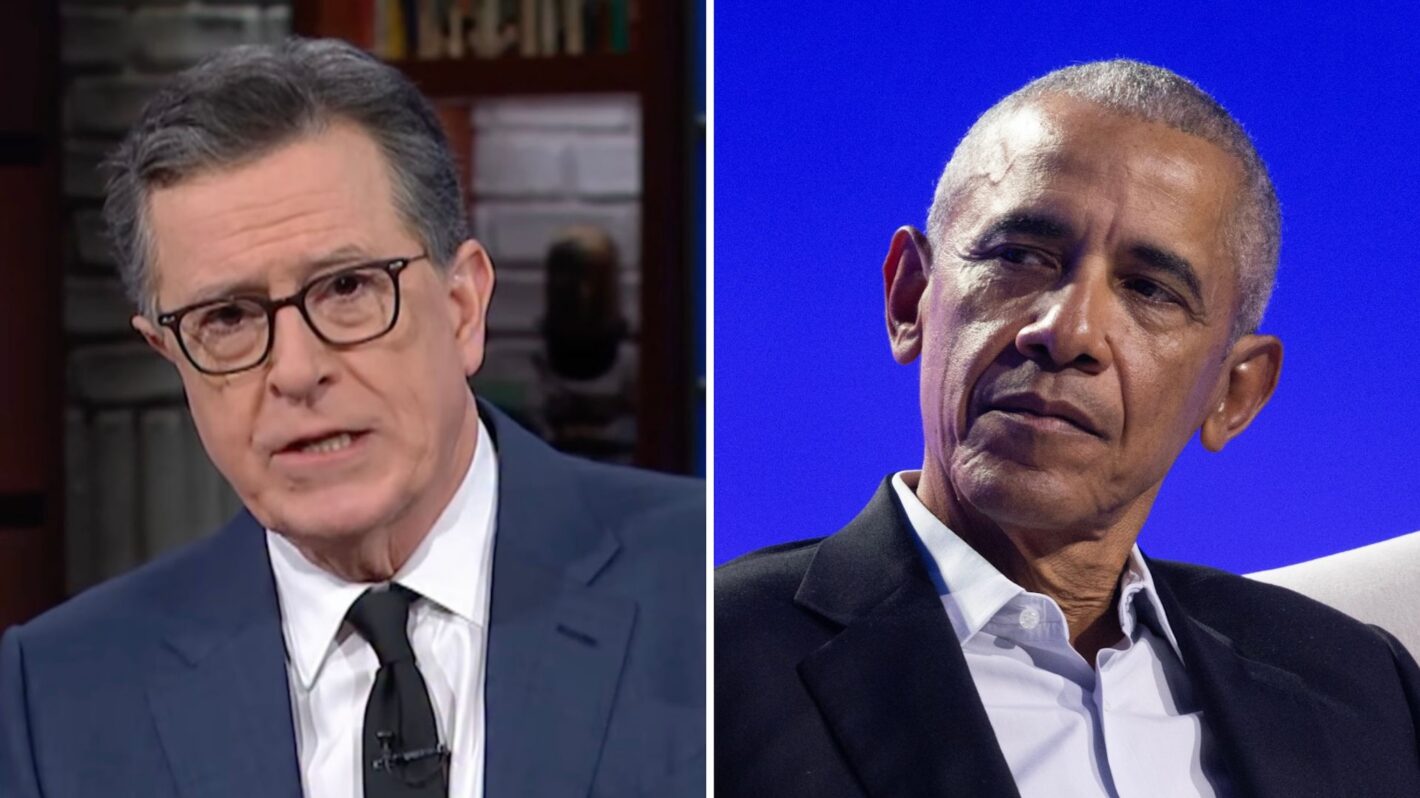
Former President Barack Obama is scheduled to return to The Late Show with Stephen Colbert for a final high-profile appearance before the long-running CBS late-night program concludes its historic run on May 21, 2026. Host Stephen Colbert officially announced the upcoming segment during the Thursday, April 23, 2026, broadcast, confirming that the interview will take place on location at the newly constructed Obama Presidential Center in Chicago. This sit-down, scheduled to air on Tuesday, May 5, marks the first televised interview granted from the center ahead of its highly anticipated grand opening to the public on June 19, 2026.
The announcement represents a significant milestone for both the program and the former president’s foundation. Colbert, speaking from his desk at the Ed Sullivan Theater in New York, informed his audience that the conversation would serve as a centerpiece for the show’s final month on the air. The Obama Foundation signaled its enthusiasm for the event shortly after the broadcast, posting on social media that the venue is prepared for the arrival of the late-night host. This upcoming appearance will be the third time Obama has visited The Late Show since Colbert took over the hosting duties from David Letterman in 2015, and it continues a professional relationship that spans over two decades of political and cultural shifts.
A Chronology of the Colbert-Obama Dialogue
The relationship between Stephen Colbert and Barack Obama has been a fixture of American political satire and late-night television since the mid-2000s. Their interactions began during Colbert’s tenure on Comedy Central’s The Colbert Report, where Obama appeared three times. One of the most notable segments occurred in 2014, when Obama sat in the host’s chair to deliver the "The Word" segment, humorously titled "The Decree," showcasing a rare willingness for a sitting president to engage directly with the tropes of political parody.
After Colbert transitioned to CBS to host The Late Show, the frequency of their interactions remained steady, often coinciding with major national transitions. In 2016, as Obama prepared to leave the Oval Office, he joined Colbert for a series of segments that blended humor with a reflection on his eight-year legacy. He returned to the program in late 2020 to promote his memoir, A Promised Land, and to discuss the transition of power leading into the Biden-Harris administration.
Beyond the studio, Colbert has played a recurring role in events involving the 44th president. Most recently, on March 28, 2024, Colbert moderated a landmark presidential fundraiser at Radio City Music Hall in New York City. The event featured President Joe Biden alongside former presidents Obama and Bill Clinton. The fundraiser was a massive financial success, generating over $26 million for the Biden-Harris re-election campaign and highlighting Colbert’s unique position as a bridge between the entertainment industry and the highest levels of the Democratic Party.
The Significance of the Obama Presidential Center
The choice of the Obama Presidential Center as the venue for this final interview is deeply symbolic. Located in Jackson Park on the South Side of Chicago—the neighborhood where the former president began his community organizing career and where the former first lady, Michelle Obama, was raised—the center is a multi-faceted campus designed to serve as a hub for civic engagement.
Construction on the center began in 2021 following years of planning and environmental reviews. The facility is not a traditional presidential library in the sense of housing official National Archives and Records Administration (NARA) documents, which are now digitized. Instead, the 19-acre campus features a museum tower, a branch of the Chicago Public Library, a fruit and vegetable garden, an athletic center, and a forum for community meetings.
The May 5 interview will provide the American public with one of the first comprehensive looks inside the finished museum and the nonprofit Obama Foundation’s headquarters. The grand opening on June 19, 2026, is expected to attract global leaders and cultural icons for a dedication ceremony that coincides with the Juneteenth holiday, emphasizing the center’s mission to celebrate the progress of civil rights and the power of grassroots democracy.
The Economic and Political Realities of the Late-Night Exit
The news of Obama’s final appearance comes amid a period of significant transition for CBS and the broader television industry. CBS announced in late 2025 that The Late Show with Stephen Colbert would conclude following the 2025–2026 broadcast season. The decision was met with surprise by many in the industry, given Colbert’s consistent performance at the top of the late-night ratings.
According to internal reports and financial disclosures, CBS cited a challenging economic environment for the cancellation. The network claimed that the program was losing approximately $40 million annually. This deficit is largely attributed to the shifting habits of television viewers, as traditional linear broadcast ratings continue to decline in favor of digital streaming and short-form content on platforms like YouTube and TikTok. While Colbert’s digital reach remains massive—often garnering millions of views per clip—the traditional advertising model of late-night television has struggled to keep pace with the high production costs associated with a daily hour-long broadcast based in Manhattan.
Furthermore, the cancellation has been the subject of intense political scrutiny. The decision was finalized during the merger between Paramount Global (the parent company of CBS) and Skydance Media. Industry analysts have pointed out that the merger required various forms of government approval. Some critics and political commentators have argued that the decision to end Colbert’s tenure was a strategic move by Paramount leadership to appease the Trump administration and conservative regulators who have frequently been the targets of Colbert’s nightly monologues. While the network has maintained that the decision was strictly financial, the timing of the announcement relative to the political climate has sparked ongoing debate regarding the independence of corporate media under political pressure.
Analyzing the Impact and Legacy of The Late Show
As the final show on May 21, 2026, approaches, the legacy of Stephen Colbert’s The Late Show is being re-evaluated by media historians. Colbert took over the program at a time of immense cultural polarization, and he successfully pivoted the show from David Letterman’s irreverent, absurdist style to a more overtly political and topical format. Under Colbert, the program became a nightly "town square" for liberal-leaning viewers, particularly during the first Trump presidency and the subsequent years of the Biden administration.
The program’s departure marks the end of an era for CBS, which has hosted a late-night talk show at the 11:35 p.m. time slot since 1993. The loss of the show also raises questions about the future of the Ed Sullivan Theater, a landmark venue that has been synonymous with American entertainment for decades. CBS has yet to announce a permanent replacement for the time slot, leading to speculation that the network may shift toward lower-cost programming or an expanded news format to fill the void.
The interview with Barack Obama is expected to address these themes of transition, legacy, and the future of American civic life. For Obama, the appearance is an opportunity to frame the opening of his center as a new chapter in his post-presidency. For Colbert, it serves as a validation of his career’s trajectory—from a cable news satirist to a network host capable of securing the most sought-after interviews in the world.
Looking Toward the Final Broadcast
The remaining weeks of The Late Show are expected to feature a roster of high-profile guests, returning favorites, and retrospective segments. The May 5 interview from Chicago is positioned as the emotional and intellectual peak of this farewell tour. Producers have hinted that the conversation will not only cover the architecture and mission of the Obama Presidential Center but will also touch upon the current state of the nation as it prepares for another pivotal election cycle.
The final broadcast on May 21 will likely be a star-studded affair, though the network has kept the specific details of the finale under wraps. For now, the focus remains on the upcoming journey to Chicago. The intersection of a retiring late-night giant and a former president opening his legacy project provides a rare moment of reflection for a television audience that has followed both men through some of the most tumultuous decades in modern American history.
As the media landscape continues to fragment, the conclusion of The Late Show with Stephen Colbert represents more than just the end of a program; it signifies a shift in how the nation consumes political commentary and comedy. The May 5 interview will stand as a final testament to the era of the "big tent" late-night show—a format that, for all its financial challenges, still possessed the gravity to bring a former president and a nation together for one last conversation.