Montreal-based filmmaker Ashley Duong has pushed the boundaries of the documentary genre with her latest project, Ba’s Book, a hybrid film that blurs the lines between objective historical record and staged theatrical reenactment. The film, which recently premiered at the Vancouver Film Festival, serves as both a direct response to and an expansion of the 2024 memoir penned by her father, Anh Duong, titled Dear Da-Le: A Father’s Memoir of the Vietnam War and the Iranian Revolution. By utilizing a unique methodology that involves family members as both subjects and performers, the film documents a multi-generational attempt to excavate suppressed memories of war, displacement, and the long-term emotional costs of migration.
A Legacy of Silence and the Path to Disclosure
For much of his life in Canada, where he settled in 1980, Anh Duong—referred to by his daughter as "Ba"—maintained a rigid, stoic silence regarding his early years. His journey was marked by profound instability: he lived through the turmoil of the Vietnam War and later experienced the volatility of the Iranian Revolution in the 1970s. These experiences, characterized by the necessity of navigating dangerous political landscapes, forced him to develop an emotional armor that prioritized survival over personal expression.
The catalyst for the film was the publication of his memoir, which took the form of a series of letters addressed to his daughter. While the book provided a framework for his history, it left significant gaps regarding his internal life and the experiences of the family members he left behind in his ancestral village in Vietnam. Ashley Duong recognized that the written word alone could not bridge the distance between his historical reality and their present relationship. By adapting the memoir into a film, she created a space where the past could be interrogated in real-time, involving those who had been excluded from the initial narrative.

Chronology of a Displaced Life
The trajectory of the Duong family reflects the broader patterns of 20th-century geopolitical upheaval.
- 1970s: Anh Duong resides in Iran, witnessing the societal and political shifts during the revolution, an experience that added a layer of complexity to his status as a refugee.
- 1980: After navigating the aftermath of the Vietnam War and his time in Iran, Anh Duong arrives in Canada to begin a new chapter, leaving behind his mother, Nguyen Thi Bay, and his siblings.
- 2024: Anh Duong publishes Dear Da-Le, finally codifying his experiences into a public record.
- 2024-2025: Ashley Duong begins production on Ba’s Book, traveling back to Vietnam to reunite her father with his siblings and commence the filming of the hybrid documentary.
Methodological Innovation: The Hybrid Documentary Model
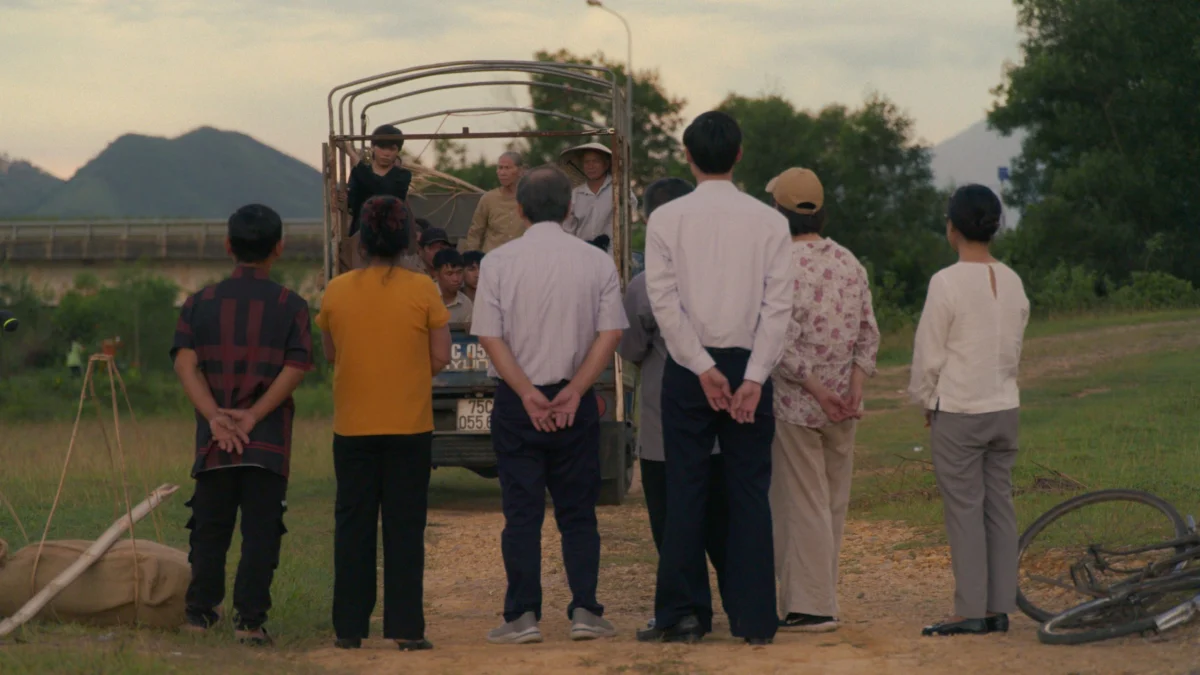
The production of Ba’s Book relied on an unconventional technical approach designed to dismantle the barriers of long-held family silence. Working with co-writer Steven Sych, Ashley Duong opted for a three-camera setup that allowed for a simultaneous capture of documentary-style footage and narrative-focused cinematography.
The film was shot on a custom-built set in Vietnam—a replica of the family home that utilized three walls rather than four. This stage-like environment allowed the relatives to inhabit the space and interact with actors who portrayed their younger selves. This choice served a dual purpose: it provided the visual structure of a period drama while maintaining the spontaneity of a documentary.
By inviting her relatives to cast the actors, design the sets, and provide input on the script, Duong transformed the filmmaking process into a collaborative therapeutic exercise. The relatives were not merely subjects; they were active participants in the curation of their own history. In one notable instance, the director’s aunt, Dang Thi Hanh, engaged in a dialogue that revealed deep-seated resentment regarding the gendered expectations of wartime Vietnam. Her labor had facilitated her brother’s education, a sacrifice that had remained largely unacknowledged until the cameras began rolling.

Contextualizing the Refugee Experience
The film contributes to a growing body of work regarding the "diaspora experience," where the physical distance between family members often mirrors the emotional distance created by trauma. According to data from the United Nations High Commissioner for Refugees (UNHCR), the 1970s and 1980s saw significant waves of displacement originating from Southeast Asia, with millions of individuals seeking asylum globally. The psychological impact of such migration is often characterized by what sociologists term "intergenerational trauma transmission," wherein the silence of the first generation regarding their experiences creates a vacuum that the second generation must navigate.
In Ba’s Book, the use of actor Duy Nguyen to play the younger version of Anh Duong provided a surrogate through which the family could address the guilt and complexities of being the "one who left." The film posits that for families divided by history, the act of performance—re-enacting scenes from the past—can serve as a mechanism for communal processing that traditional interview-based documentaries may fail to achieve.
The Role of the Filmmaker as Mediator
Throughout the production, Ashley Duong found herself in the unfamiliar position of moving from behind the lens to the center of the narrative. Her presence as the daughter of the protagonist provided a unique level of access, but it also required her to manage the emotional volatility of her relatives. The film captures moments of genuine interrogation, where the director’s aunts and uncles questioned her father on matters that had been considered taboo for decades.
This shift in power dynamics—where the children and the next generation of family members demand transparency from their elders—is a hallmark of the film’s narrative arc. The director’s acknowledgement of her debt to her Aunt Hanh, whose domestic labor enabled the family’s survival and educational opportunities, serves as a focal point for the film’s theme of reconciliation. It acknowledges that the survival of the diaspora is rarely the result of a single individual’s effort, but rather the culmination of hidden sacrifices made by those who remained in the home country.

Broader Implications and Critical Reception
The implications of Ba’s Book extend beyond the personal story of the Duong family. As a piece of cinematic work, it challenges the traditional documentary mandate of "objective observation." By embracing the "performance" of history, the film suggests that memory is inherently subjective and often requires a creative framework to be fully articulated.
Critics have noted that the film’s success lies in its ability to avoid sentimentalizing the past. By allowing for the expression of anger, guilt, and lingering resentment, the film presents a nuanced portrait of a family grappling with the consequences of political events beyond their control. It serves as a template for other families in the diaspora, demonstrating how the use of narrative devices—whether through memoirs, theater, or film—can provide the necessary distance to examine the most painful aspects of one’s lineage.
As the film continues its festival run, it remains a testament to the idea that healing is not a passive process of forgetting, but an active, and often difficult, process of remembering. By forcing these conversations to the surface, Ashley Duong has not only documented her father’s life but has also created a permanent, shared record that allows the entire family to move toward a more integrated understanding of their collective identity. The film stands as a poignant reminder that in the shadow of war and displacement, the act of telling one’s story is a radical, and essential, reclamation of agency.